20 Years Since July War in Lebanon... More Advanced Weapons and Repeating Mistakes

Summary: Twenty years have passed since the July 2006 war, a pivotal moment in the Lebanese-Israeli conflict. This anniversary returns today amid a new confrontation on the southern border, raising a fundamental question: Have the rules of war changed?
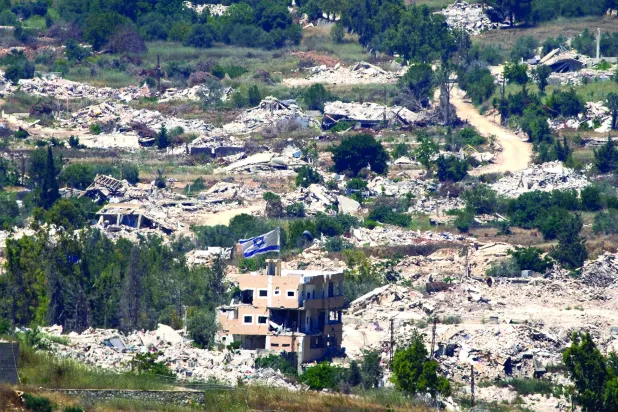
Twenty years after the July 2006 war, Lebanon finds itself in a new confrontation that has been ongoing for three years on the Lebanese-Israeli border, but this time with more advanced weapons and technologies that have changed the face of wars. While military capabilities have developed among various parties, the current reality raises a fundamental question: Have Lebanon, Israel, and Hezbollah learned from the lessons of the past, or is the region still stuck in the same cycle, with the same political and security causes?
Retired Brigadier General Dr. Khalil al-Jamil said in an audio interview with 'Independent Arabia' that twenty years have passed since the July 2006 war, which was a pivotal point in the Lebanese-Israeli conflict. This anniversary returns today amid a new confrontation on the southern border, raising a fundamental question: Have the rules of war changed? And have the parties benefited from the lessons of the past, or are they reproducing the same mistakes with more advanced tools?
He added: 'From an Israeli perspective, the July war revealed the limited ability of military force alone to achieve strategic goals. Israel faced organized resistance and extensive missile capabilities. Among its most notable mistakes at the time were excessive reliance on air power, inaccurate assessment of Hezbollah's capabilities, and unclear ultimate political objectives for the war. On the Lebanese side, the war highlighted the problem of a military decision-making process outside the state framework. Hezbollah fought the confrontation with advanced capabilities, while the Lebanese state bore the consequences of a war it did not decide to wage, demonstrating the state's limited ability to protect its borders and impose its sovereignty amid internal and regional complexities.'
He considers that Hezbollah's most prominent mistake was underestimating the scale of the Israeli response to the capture of the two soldiers, and underestimating the cost of the war on Lebanon, even though it later considered its resilience a strategic achievement.
Read more
On the anniversary of the 2006 war... History of confrontations between Israel and Lebanon
From the 1982 invasion of Lebanon to the current war: Israel maintains its superiority
A war of narratives between inside and outside... Who protects Lebanon?
Al-Jamil said: 'Twenty years on, the lessons of the July war seem incompletely absorbed. Israel has developed its intelligence and defense capabilities, and has more broadly introduced artificial intelligence and data analysis techniques in surveillance and target identification, alongside enhanced use of drones. But it still faces the challenge of dealing with unconventional threats from groups possessing missile arsenals, drones, and the ability to spread geographically. Experience has shown that technological superiority does not eliminate the need for long-term political and security solutions.'
As for Hezbollah, despite its accumulated combat experience during the Syrian war and the development of its missile, drone, and tunnel capabilities, the recent confrontations have revealed new weaknesses, especially in the field of intelligence and security penetration, and Israel's ability to gather information and target influential sites and leaders. The party has suffered significant human and material losses, along with challenges related to field control, in addition to the political and social cost of the war. It is considered that the party's ability to present the confrontation as a choice enjoying broad national consensus has declined. In contrast, precision missiles and drones, along with fiber-optic technologies used by Hezbollah, have emerged as prominent elements of modern warfare.
He continued: 'The most influential factor in Lebanon's future remains the role of the state and its ability to restore full sovereign decision-making. However, the recent period has seen an attempt to chart a new course, through the state affirming the exclusivity of weapons in the hands of legitimate institutions, strengthening the role of the army, and engaging in negotiations and diplomatic tracks aimed at stabilizing the situation and addressing outstanding files.'
Likewise, al-Jamil believes that this path faces major challenges, most notably the state's ability to practically implement these principles and secure internal consensus that allows for a gradual and organized transfer of military and security decision-making to official institutions. Meanwhile, the current war in the south confirms that the deterrence equation established after the July war was not sufficient to prevent the recurrence of confrontation. The factors that produced the escalation still exist, foremost among them weapons outside the state framework, regional conflicts, and the absence of a comprehensive political settlement.
He asked: 'Will the current confrontation be an opportunity to build new arrangements, or will it remain an additional link in a chain of repeated wars whose root causes have not been addressed?'
Original source: Independent Arabia




Comments (0)
Be the first to comment.