4 Palestinians and 2 Israeli soldiers killed in deadly clashes near Nablus
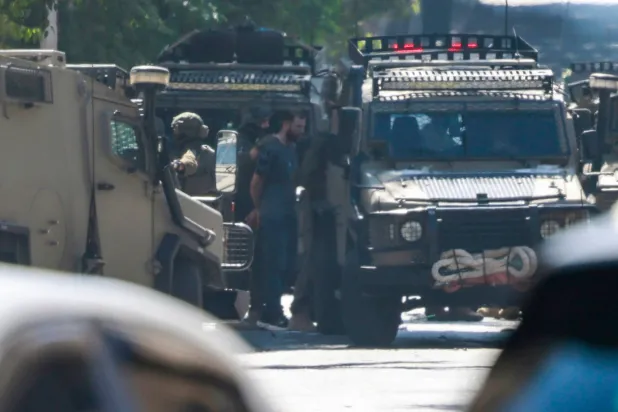
Netanyahu escalates in the West Bank, orders a broad operation, road closures, and sanctioning of settlements. The military, together with the Shin Bet, begins intensive operations after a bloody day that saw 4 Palestinians and an Israeli officer and soldier killed.
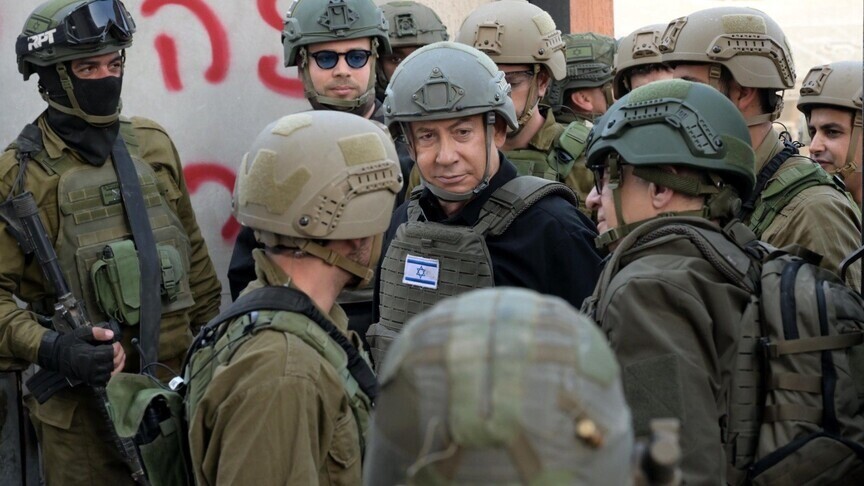
The Israeli war on the West Bank entered a new difficult phase after Israeli Prime Minister Benjamin Netanyahu and Defense Minister Israel Katz announced a major escalation against Palestinians in the West Bank through a series of decisions beginning with broad and intensive military operations to arrest Palestinians and collect weapons, revoke work permits and demolish homes, reinforce the army across the West Bank, separate movement axes, set up checkpoints, expedite the regularization of agricultural outposts (settlement farms), and establish new outposts.
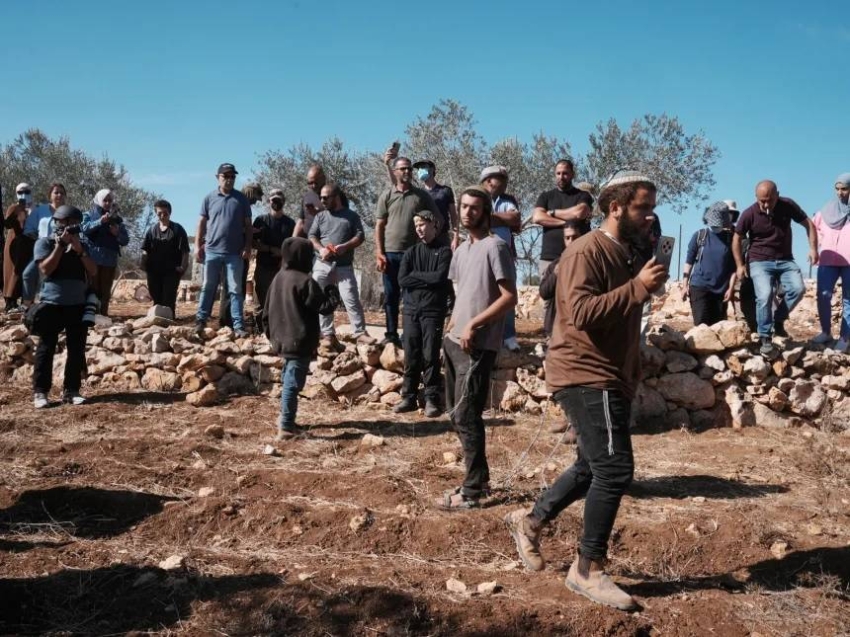
Netanyahu and Katz made the decisions after a security mini-cabinet meeting amid a bloody day in the West Bank that ended with 4 Palestinians and two Israeli officers killed after a settler attack on the village of Tel near Nablus, which quickly turned into chaos and clashes, during which a Palestinian seized a weapon from one of the attackers and opened fire on Israelis, who retaliated with gunfire, resulting in the killing of Palestinians at the scene.
During the occupation's storming of Nablus Specialized Hospital and assault on medical crews (Palestinian News Agency)
According to the Israeli military, Palestinians, and Israeli media, the events began with settlers present on the outskirts of the village of Tel in areas classified as 'A' and 'B' in the West Bank, where under Israeli law they are prohibited from being, and they arrived without coordination with the Israeli military, before Palestinians confronted them and clashes erupted that quickly turned into complete chaos that the army could not control.
Nablus Governor Ghassan Daghlas said a group of settlers stormed the village of Tel, attempted to burn houses, and opened fire on residents who confronted the attack, resulting in the deaths of some of them.
Shin Bet official David Zini at the attack site (Shin Bet)
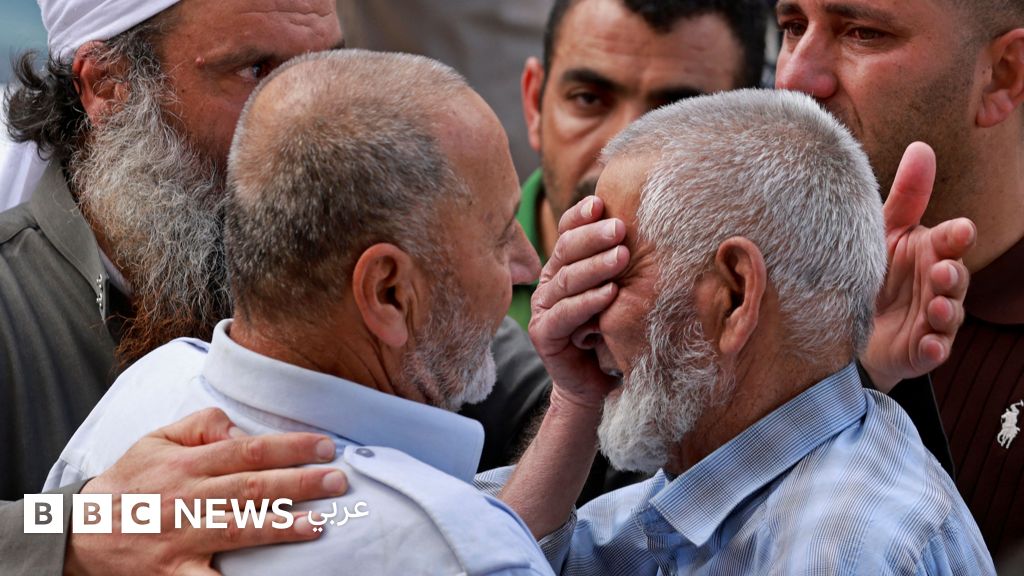
The Palestinian Ministry of Health announced the killing of 4 citizens and the injury of four others, including three in critical condition, by occupation fire as citizens confronted a settler attack on the town.
Video footage showed scuffles, beatings, and threats before a Palestinian seized a weapon from one of the attackers and fired at the attackers, then the military and settlers returned fire from very close range, while settlers shouted 'Revenge. Vengeance. Wounded Arab, yes revenge.'
תיעוד: רגעי חטיפת הנשק בפיגוע ליד חוות גלעד @HGoldich pic.twitter.com/ewsdT7Wrf3
— כאן חדשות (@kann_news) July 24, 2026
Later, the Israeli military, which said the Palestinian attack was spontaneous and unplanned, confirmed the killing of Major Yuval Ezra, a battery commander in Battalion 411, Fire Brigade (282) of the Artillery Corps, and Binyahu Milat, a member of the readiness squad in the settlement of Havat Gilad, whom the Israeli military classified as a reserve soldier.
An Israeli soldier during the siege of Nablus Specialized Hospital in Nablus in the occupied West Bank (AFP)
The incident came after a day in which the Israeli military killed 4 Palestinians on Thursday in the town of Beit Furik east of Nablus, near Haddad roundabout east of Jenin, and at the Shuafat camp checkpoint northeast of occupied Jerusalem.
According to the Ministry of Health, 87 citizens have been martyred in the West Bank governorates, including 21 by fire from terrorist settlers, since the beginning of this year.
The Yedioth Ahronoth newspaper said this is the third incident in the area within 24 hours, and the West Bank Division raised its highest alert level since Thursday after a Palestinian stabbed Itamar Cohen, a founder of farms in the West Bank, near Elon Moreh after a fire broke out in the area, then another Israeli was wounded in a stabbing incident north of the West Bank.
During the evacuation of dead and wounded from the clash site in Tel, Nablus (Israeli ambulance)
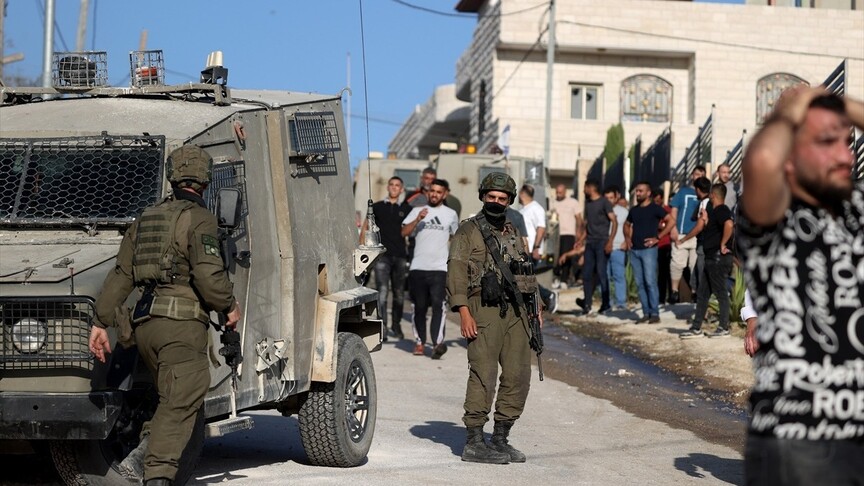
Complying with Netanyahu's orders, Israeli Chief of Staff Major General Eyal Zamir ordered, after an assessment, large-scale reinforcements for troops in the West Bank and the arrest of Palestinians, and the army pushed two battalions to the West Bank, including a paratrooper battalion to reinforce its forces in the West Bank, and besieged the northern West Bank, signaling the start of a broad military operation there.
The Israeli Broadcasting Corporation said the number of battalions in the West Bank rose to 24.
The commander of the Israeli military's Central Command, General Avi Blot, announced 'the launch of a large-scale operation in the West Bank following Friday's attack.'
Blot warned of 'a risk of escalation throughout the West Bank.'
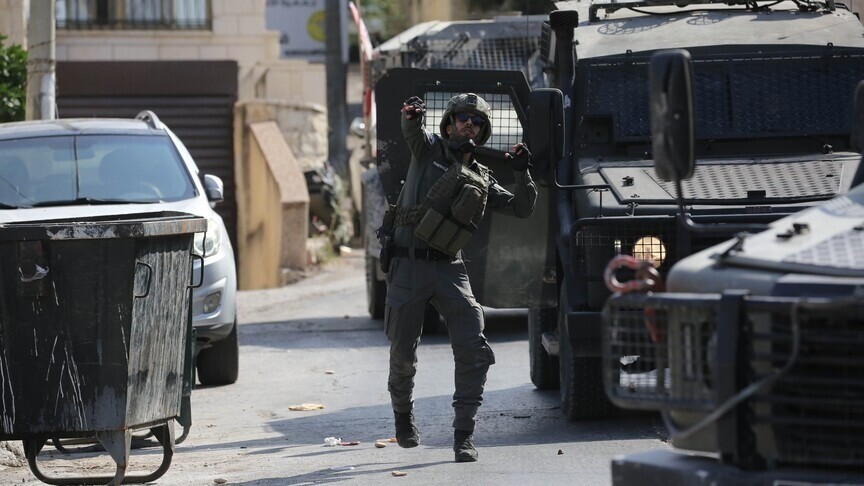
The army began its operation on Friday by besieging the northern West Bank, imposing curfews on villages, and conducting raids that included storming a hospital in Nablus and arresting wounded individuals.
Deputy Chair of the Board of Nablus Specialized Hospital, Dani al-Masri, told the official news agency that occupation forces besieged the hospital, stormed the emergency department, assaulted medical staff, handcuffed doctors and nurses, arrested two brothers, one of whom was wounded, seized camera recordings, and attempted to blow up the doors of the administration office in the hospital.
The army launched its operation in cooperation with the General Security Service (Shin Bet) and the Border Police.
The Israeli General Security Service (Shin Bet) reported that Shin Bet head David Zini conducted a situation assessment at the attack site with Shin Bet leaders and Israeli military leaders, and in this framework, instructions were given to intensify intelligence gathering operations, in addition to further offensive operations against infrastructure.
Israeli soldiers during the siege of Nablus Specialized Hospital in Nablus in the occupied West Bank (AFP)
Zini said: 'This morning's attack is serious and painful... We will take the necessary operational measures, which we will expand and deepen according to operational need... I appeal to the public not to take the law into their own hands.'
Zini's warning came consistent with the Israeli military's concerns about the coming hours and the potential for retaliatory actions by Jews in the West Bank.
An Israeli security source said: 'The atmosphere is charged with tension and vengeful feelings.'
The army says it is struggling to secure 126 'settlement farms' in the West Bank; so two weeks ago it decided to withdraw troops from other fronts in Lebanon and Gaza to move them to the West Bank.
Indeed, on Friday, settlers attacked several areas in the West Bank, in the village of Jit east of Qalqilya and in Iraq Burin near Nablus, and set fires in the village of Sarra southwest of Nablus before wide clashes erupted with Palestinians. Five settlers were injured, and they shot Palestinians in the village of Fara'ata east of Qalqilya.
The settler attacks came amid a highly incendiary atmosphere.
Extremist Israeli National Security Minister Itamar Ben Gvir said that every village and town in the West Bank should face the same fate as Beit Hanoun in Gaza after any attack. Adding, 'What we do in Gaza we must do in the West Bank.'
Meanwhile, settler platforms were filled with inciting calls to turn the village of Tel into 'a pile of rubble.'
The Palestinian Authority condemned the massacre in Tel.
Deputy President of the State of Palestine Hussein al-Sheikh said he made urgent contacts with a number of Arab brothers and countries of the world to urge them to assume their responsibilities in protecting our people from the attacks of settlers and the Israeli occupation army.
Al-Sheikh added: 'These contacts come amid escalating attacks by settlers and the occupation army, the latest of which was what the towns of Tel, Deir Jarir, al-Mughayyir, and Beit Furik, and other villages and camps of our people, witnessed in terms of killings, burning of crops, theft of livestock, and cutting down of trees.'
Original source: Asharq Al-Awsat

Comments (0)
Be the first to comment.