5 Palestinians, Including a Girl, Killed by Israeli Fire in Gaza
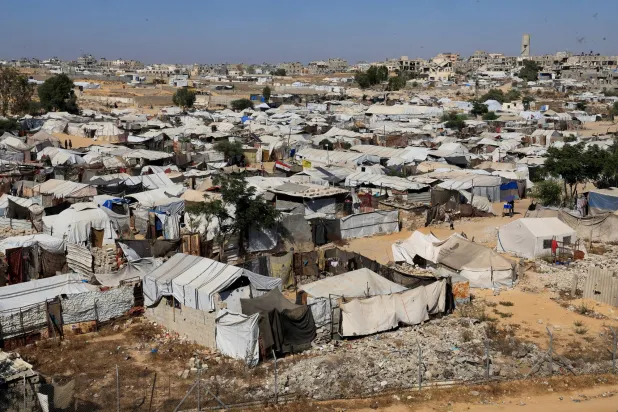
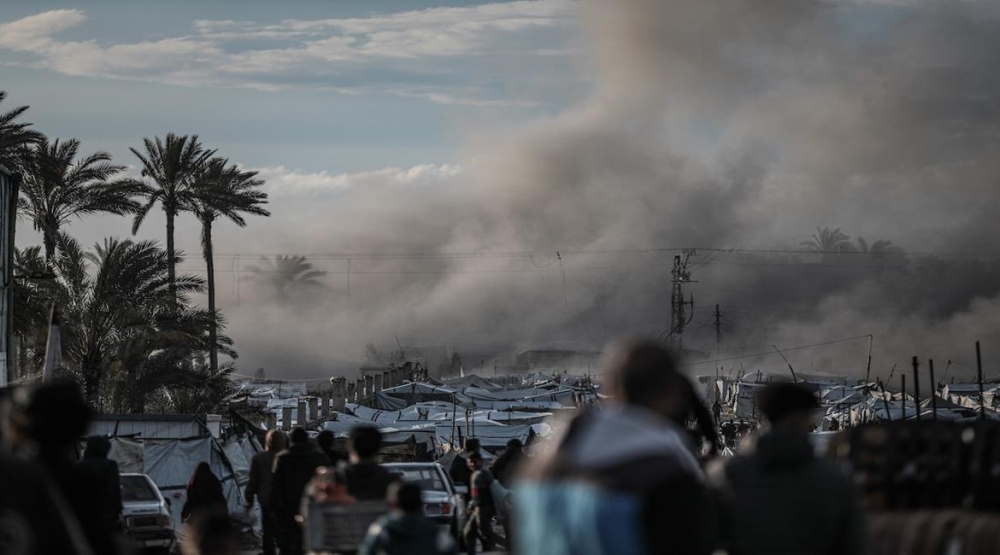
Health Ministry officials in Gaza said at least 5 people, including a 9-year-old girl, were killed in an Israeli airstrike and gunfire in the strip on Sunday.
Secrets of Mohammed Deif's Final Months: Slept in Rafah Streets... Moved Without Guard
On July 13, 2024, for approximately 3 minutes, Israeli warplanes continuously dropped tons of explosives on an open area containing a small building in the Mawasi Khan Younis area, south of Gaza Strip, which from the first moment suggested that the target was important.
Just hours later, Israel confirmed that the target was Mohammed Deif, the commander-in-chief of the al-Qassam Brigades, the armed wing of Hamas, while Hamas strongly denied it, claiming the targeted location was a shelter for displaced people from various parts of the Gaza Strip.
Destruction at a site targeted by Israel in Mawasi near Khan Younis on July 13, 2024, as part of an operation to assassinate al-Qassam commanders Mohammed Deif and Rafa Salama (AFP)
But about 6 months later, on January 30, 2025, al-Qassam acknowledged the assassination of Deif, along with Khan Younis brigade commander Rafa Salama and other leaders including Marwan Issa, Deif's deputy.
'They thought he was in Gaza City'
Three Hamas sources told Asharq Al-Awsat that the initial denial of Deif's assassination stemmed from prior information among many movement leaders who believed he was in Gaza City, not in the south of the strip, while certain leaders had confirmations that he was in the south but without knowing his exact location.
It appears that some Hamas leaders who publicly denied the assassination expected that he might be in one of the tunnels, while one source said that 'Deif did not resort to tunnels since the start of the war, and perhaps was forced to do so only once under certain circumstances.'
The place where Deif was assassinated originally belonged to Rafa Salama, the Khan Younis brigade commander who was killed alongside him, along with many of Salama's sons and security men affiliated with al-Qassam.
Image published by al-Qassam Brigades of Mohammed Deif with his obituary (Telegram)
However, Deif's final months before his assassination and his movements in Gaza remained shrouded in mystery. On the second anniversary of his killing, Asharq Al-Awsat asked Hamas sources about how Israel identified him, tracked him down, and assassinated him.
Two Hamas sources confirmed to Asharq Al-Awsat that the al-Qassam commander was actually in Gaza City at the start of the October 7, 2023 attack, and remained in the northern city until days before Israel's full control of the Netzarim corridor, particularly the coastal Rashid Street which remained open more than two weeks longer than its eastern section, Salah al-Din Street, was occupied.
'Movement Without Guard... Interrupted Communication'
The two sources, who are Gaza residents and have seen information provided by Deif's close associates, confirmed that he left Gaza City alone without his personal guard and headed south to Rafah in early November 2023.
Another informed Hamas source said that some al-Qassam leaders, including Izz al-Din al-Haddad, who later led al-Qassam before being assassinated by Israel last May, 'advised Deif before he left Gaza City to stay, assuring they could provide him security despite the conditions and widespread manhunt.' The source added that Deif 'preferred to continue field work and manage battles, and follow any political developments related to the negotiations file, which had not yet started then.'
From right: al-Qassam Brigades leaders assassinated by Israel in separate attacks: Mohammed Audeh, Rafa Salama, Abu Obeida, and Mohammed Deif (Image published by the Israeli army)
The same source reveals that 'the disruption of communication in the usual manner led to losing contact with Deif for more than 4 days, after he did not find the intermediary who was supposed to wait for him to transport him to a location; this forced him to head further south towards Rafah.'
Over the approximately four days, 'Deif could not find any lead to an al-Qassam safe site, and due to the absence of his recent photo from Israeli intelligence and the lack of his image being widely known among Palestinians, Deif was able to sleep in areas in Rafah's streets, and once in one of its mosques without anyone noticing him,' according to the source.
In the final months of 2023, Rafah was the site of displacement for over 1.3 million Palestinian refugees, the largest overcrowding during the war.
Palestinians waiting to cross into Egypt at the Rafah border crossing between Gaza and Egypt on November 1, 2023 (EPA)
Another Hamas source completed the account of how contact was reestablished with Deif, saying: 'A field activist in al-Qassam suddenly recognized Deif and moved him to a safe place, then transferred him to Khan Younis, and from there he was moved via another intermediary to where Rafa Salama was, before they both moved together to several places, finally settling in the location where they were killed.'
Unknown Image of al-Qassam Commander
The source says that although 'Deif in recent years was more visible among al-Qassam leaders and through his visits to military and other sites, Israeli intelligence could not obtain any information or form a true picture of him, and all they knew was that he was injured and had at least one foot amputated, or suffered a severe injury in one foot or hand.'
The source clarifies that 'at times when Deif was severely wounded in two incidents, there were attempts to take him out of Gaza for treatment under a false identity; but those efforts failed, and he insisted on staying in Gaza.' However, another source said: 'It seems that at a certain point, Deif left for treatment for a short period, then returned to Gaza,' a statement not confirmed by the other source or other sources.
0 seconds of 0 secondsVolume 90%
Press shift question mark to access a list of keyboard shortcuts
00:00
00:00
00:00
According to three Hamas sources, Israel could not determine Deif's health condition or even get an accurate picture of him until it found 'video clips and photos from events of al-Qassam leaders, in which the brigade commander participated, which were found inside sites deep in the strip after Israeli forces infiltrated.'
The sources clarified that these documents were transferred to Israeli intelligence, which analyzed them and recruited hundreds of informants to try to locate him and distributed his photo among them, along with analysis via artificial intelligence, and feeding intelligence tools such as drones with information including his voice from the last footage of him shortly before the war during preparations for the October 7 attack, which 'led to locating and assassinating him,' according to those sources' assessments.
Original source: Asharq Al-Awsat


Comments (0)
Be the first to comment.