Araghchi visits Oman for talks on Strait of Hormuz, Iran denies Trump's claims it sought negotiations
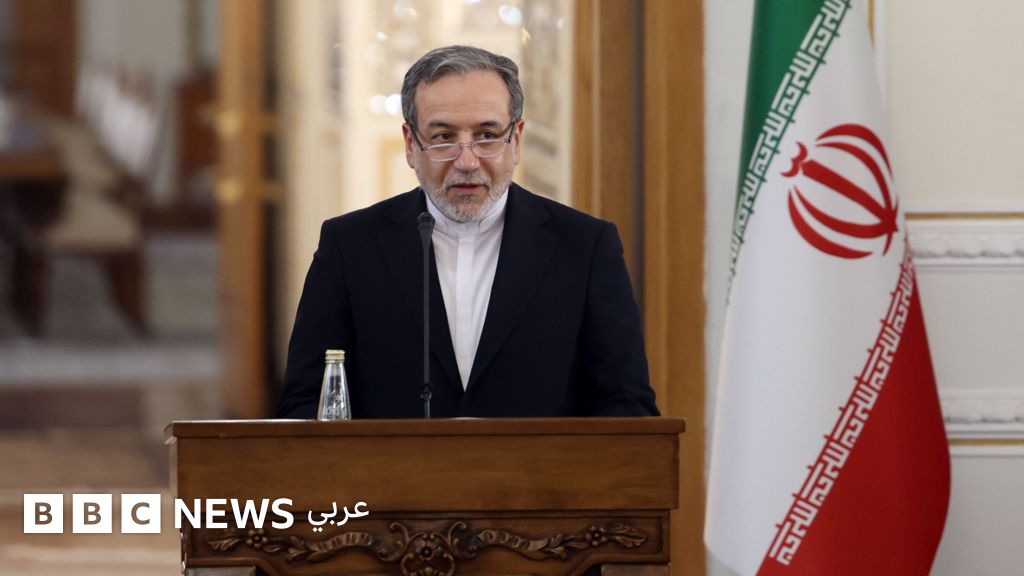
Iran's state TV quoted Foreign Ministry spokesman Esmail Baghaei as saying that Tehran did not seek negotiations with the United States, but agreed to a visit by a Qatari mediation delegation to Iran.
Araghchi visits Oman for talks on Strait of Hormuz, Iran denies Trump's claims it sought negotiations
Published 44 minutes ago
Reading time: 5 minutes
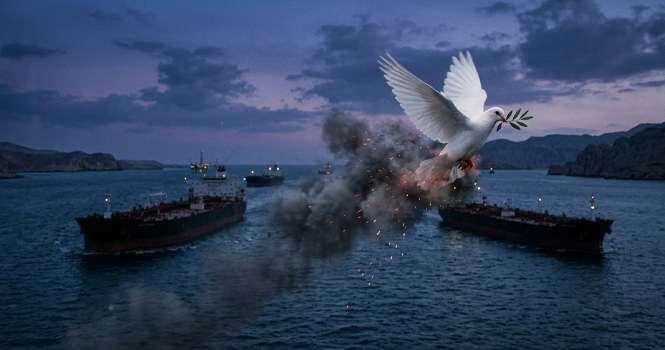
Iranian state media reported that Foreign Minister Abbas Araghchi will travel to Oman on Saturday for talks on the Strait of Hormuz, as Tehran denied US President Donald Trump's claim that it had requested negotiations with the United States.
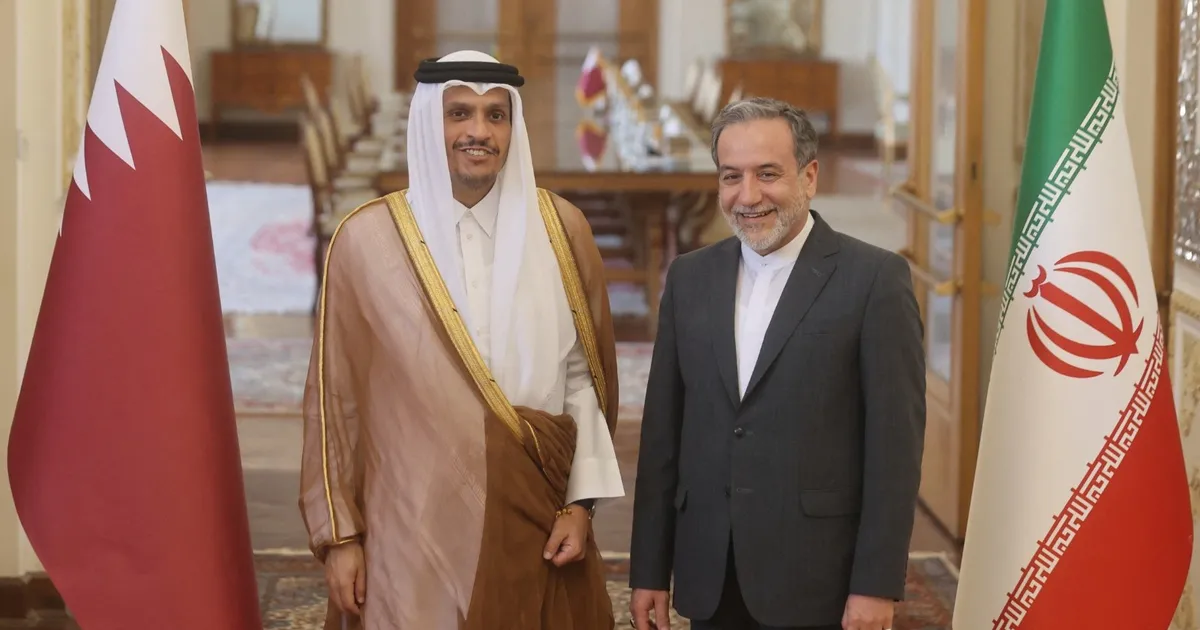
Iran's state TV quoted Foreign Ministry spokesman Esmail Baghaei as saying that Tehran did not seek negotiations with the United States, but agreed to a visit by a Qatari mediation delegation to Iran.
Trump wrote on his Truth Social platform on Friday: 'Iran asked us to continue the talks. We agreed to do so, but the United States told them in no uncertain terms that the ceasefire is over!'
Trump agrees to continue talks with Iran, Tehran threatens to bomb Israel in response to any attack on infrastructure
Meanwhile, the official Iranian news agency IRNA quoted Baghaei as saying that the visit to Oman 'will focus on the Strait of Hormuz and the safety of maritime navigation,' as 'a continuation of the consultations we started with Oman over the past two months.'
This comes as Reuters quoted senior US officials as saying that the United States is demanding that Iran issue a public statement affirming that all shipping lanes are open.
One official said: 'What we demand is that Iran issue a public statement acknowledging that all Strait of Hormuz passages are open, and that it has stopped firing on ships. Either they give us that statement, or it will not be in their interest.'
Reuters added that Tehran told US officials that the recent attacks on shipping were due to a 'system malfunction.' An official pointed to what he sees as a power struggle between hardliners and pragmatists in Iran.
Skip most read and continue reading
How did Haitham Hassan become the talk of the football street after his impressive performance against Argentina?
Bonnie Tyler... the husky voice that changed the power ballad
The volcanic eruption that produced the loudest sound in recorded history
World Cup: Merino knocks out Belgium and sets up Spain vs France semi-final
Another official said: 'We hope to reach a stage where they publicly declare that they will stop firing on ships, and at least explicitly or implicitly admit their mistake. We are working on that now.'
Another official added: 'The president has given us instructions to negotiate, but as he has shown readiness for that, if they continue firing on ships or commit any other hostile acts, we will respond.'
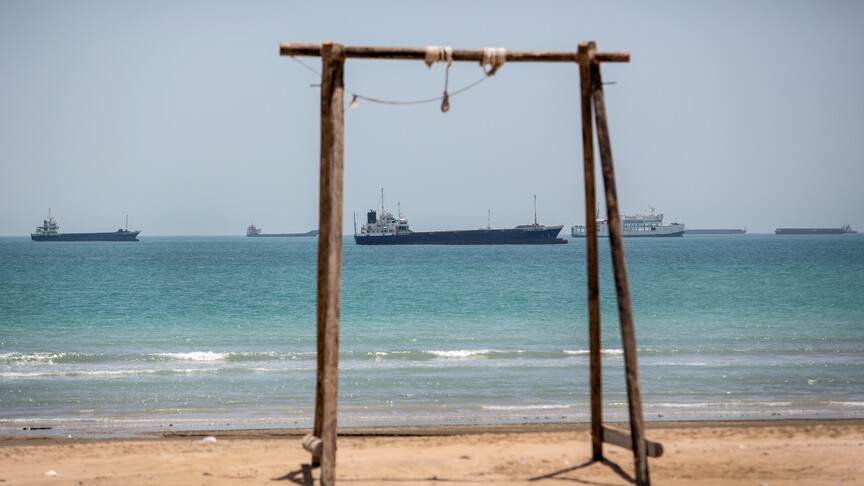
The Strait of Hormuz is a major source of contention between Washington and Tehran, which effectively closed this strategic waterway in response to the war launched by the United States and Israel against it in late February.
The conflict later ceased under a ceasefire agreement on April 8, but sporadic violence has since erupted, mostly due to disputes over the strait.
Tehran insists on its control over the waterway, which serves as a passage for a fifth of the world's oil and liquefied natural gas production, and has expressed a desire to impose fees on ships transiting it, a status it did not have before the war.
'The war will never end with Iran's surrender'
Image caption, Iranian Parliament Speaker and chief negotiator Mohammad Bagher Ghalibaf and Indonesian People's Consultative Assembly Speaker Ahmad Muzani
Skip podcast and continue reading
Worth attention
In-depth explanation of the most prominent events and topics, to help you understand the most important changes around you and their impact on your life
Episodes
End of podcast
Iranian Parliament Speaker and chief negotiator Mohammad Bagher Ghalibaf said that Tehran is ready for 'comprehensive defense' if Washington violates the memorandum of understanding signed last month, and that the war will never end with Iran's surrender.
Ghalibaf stated during a meeting with Ahmad Muzani, Speaker of the Indonesian People's Consultative Assembly, that he told US Vice President J.D. Vance during negotiations that Tehran does not trust Washington, and that he believes only those prepared for war can negotiate with the United States.
He said: 'We do not trust the Americans. During the negotiations, I made it clear to the US vice president that we do not trust you,' referring to the indirect talks with the United States in Switzerland last month mediated by Pakistan and Qatar.
He added after exchanging strikes with Washington this week: 'Whenever the Americans betray the understanding, we are ready to fully defend ourselves.'
United States announces new strikes on Iran, Trump threatens to increase intensity of strikes
In contrast, Reuters quoted senior US officials as saying that the talks between Iran and the United States were productive, but 'either an agreement is reached or not.'
The officials added that 'if we don't get the nuclear dust, there will be no agreement with Iran,' referring to Iran handing over its stockpile of enriched uranium.
New US sanctions
Amid relative calm after a week of renewed conflict between the two sides, the US Treasury Department announced on Friday new sanctions on Iran, targeting a major financier of the new Supreme Leader of Iran, Mojtaba Khamenei, and 13 other individuals and entities, following Tehran's resumption of attacks on oil tankers in the Strait of Hormuz.
The Treasury said the sanctions targeted Ali Ansari, an Iranian banker and businessman based in Dubai, who was previously sanctioned by Britain for his role in supporting the activities of Iran's Revolutionary Guard and other entities.
The Treasury explained that Ansari diverted public funds to an extensive real estate and commercial portfolio abroad, aiming to enrich himself and the elites of the government and the Islamic Revolutionary Guard Corps.
What do we know about Iran's frozen assets?
The Treasury's Office of Foreign Assets Control also targeted three exchange houses and foreign front companies based in Iran, which the office said transfer billions of dollars annually on behalf of sanctioned Iranian banks, using a chain of shell companies to conceal the government's illicit activities.
US State Department spokesman Tommy Pigott said in a statement: 'The United States is taking decisive action to cut off the financial supply lines that support Iran's ruling elite.'
He added: 'By targeting these networks, the United States directly hinders the regime's ability to access foreign currency and conduct its international financial activities.'
Qatar and Pakistan discuss US-Iran talks
Image caption, Qatar's Emir Tamim bin Hamad Al Thani and Pakistan's Prime Minister Shehbaz Sharif
On the other hand, the Qatari Emiri Diwan said in a statement on Friday that Emir Sheikh Tamim bin Hamad Al Thani discussed regional developments and the ongoing talks between the United States and Iran with Pakistani Prime Minister Shehbaz Sharif, and the two leaders stressed the need to resort to diplomacy to ease tensions and protect maritime security.
Original source: BBC Arabic


Comments (0)
Be the first to comment.