Iranian Revolutionary Guard Announces Targeting US Aircraft in Base in Jordan
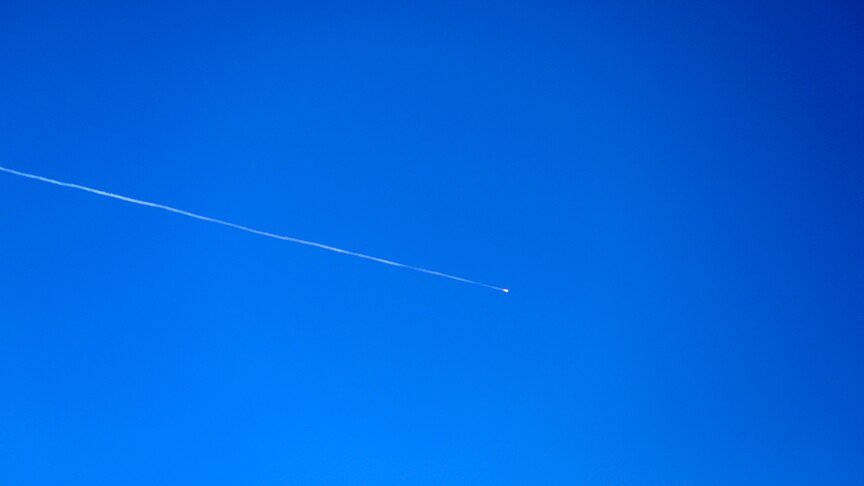
As part of the '14th wave of operations' in response to US attacks that targeted bridges, residential areas, and a water transfer center in the city of Bandar Abbas, according to a statement by the Revolutionary Guard.
Ankara / Anadolu
The Iranian Revolutionary Guard announced that it targeted US warplanes and refueling aircraft stationed at a base in Jordan, using missiles and suicide drones.
This came in a statement issued by the Revolutionary Guard on Friday, clarifying that the targeting of US aircraft was part of the '14th wave of operations' in response to US attacks that targeted bridges, residential areas, and a water transfer center in the city of Bandar Abbas.
The statement indicated that the attack was carried out in two phases, targeting US warplanes and refueling aircraft in Jordan with a large number of ballistic missiles and suicide drones, claiming to have destroyed some of them.
On Thursday evening, Jordanian Foreign Minister Ayman Safadi denied Iran's claims of US bases in his country, stressing that there is no justification for its attacks on the kingdom and Gulf states.
The Revolutionary Guard had previously announced in statements regarding the 11th and 12th waves of attacks, carrying out operations targeting US sites in Bahrain and Kuwait.
In this context, it mentioned that Al-Sakhir Air Base in Bahrain, which houses US Army reconnaissance aircraft and helicopters, was attacked by suicide drones during the 11th wave.
It also announced that the 12th wave targeted the detection and early warning radar of missile defense, weapons depots, ground-to-ground missile launchers, and a number of reserve missiles for these systems in Kuwait.
The Revolutionary Guard added that it targeted an air surveillance radar in the Ghanim area of Oman and a maritime surveillance radar at Salamah Rocks during the 13th wave.
On Thursday, the US Central Command (CENTCOM) announced the completion of a new wave of offensive strikes on Iran.
The United States has been carrying out strikes on several Iranian areas for days, while Tehran responds by targeting what it says are US targets in the region.
On June 18, Washington and Tehran signed a memorandum of understanding that included a ceasefire, and began negotiations mediated by Pakistan and Qatar to end the war launched by the United States and Israel on Iran on February 28.
However, US President Donald Trump announced on July 8 the end of the ceasefire due to renewed escalation, after Iran attacked three ships while crossing the Strait of Hormuz the day before, claiming they did not comply with the navigation path it had set, prompting Washington to launch attacks on sites inside Iran.
Washington supports the passage of commercial ships through the Strait of Hormuz on a path different from that set by Iran, which Tehran rejects, stressing that it targets any ship that does not coordinate with it before crossing the strategic strait for global energy supplies.
Original source: Anadolu Agency


Comments (0)
Be the first to comment.