Arab Welcome for Washington's Start of Procedures to Remove Syria from 'State Sponsor of Terrorism' List
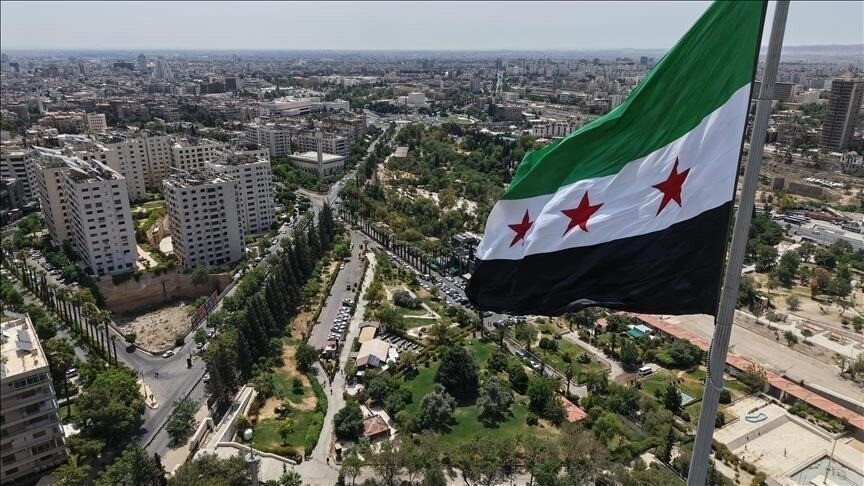
Saudi Arabia, Qatar, and Jordan affirmed their support for the positive steps taken by the Syrian government to achieve security and stability.
Istanbul / Anadolu
Jordan, Saudi Arabia, and Qatar welcomed on Thursday the US announcement of starting procedures to remove Syria from the 'State Sponsor of Terrorism' list.
Saudi Arabia said in a statement by its Foreign Ministry that it 'welcomes the US announcement of starting procedures to remove Syria from the list of state sponsors of terrorism, on which it was placed in 1979.'
It reaffirmed 'its support for all positive steps taken by the Syrian government to achieve its security and stability, contribute to building state institutions, and meet the aspirations of the brotherly Syrian people for a more stable and prosperous Syria.'
*Jordan
For its part, the Jordanian Foreign Ministry welcomed the US step.
The ministry's spokesperson, Fouad Al-Majali, said that the US measure 'represents an important step towards supporting Syria's reconstruction efforts, enhancing recovery steps, and achieving the aspirations of its people for development and prosperity.'
Al-Majali reiterated 'the Kingdom's firm position in supporting sisterly Syria in reconstruction on foundations that ensure its unity, sovereignty, security, stability, and territorial integrity, and preserve the rights of all Syrians.'
Syria: Dismantling of ISIS cells and arrest of a leader of the organization. SunExpress resumes flights to the Middle East and launches flights to Syria. Syria welcomes Washington's announcement of starting procedures to remove it from the 'state sponsor of terrorism' list.
*Qatar
For its part, Qatar welcomed the US announcement of starting procedures to remove Syria from the list of state sponsors of terrorism.
The Qatari Foreign Ministry affirmed that this step 'represents a positive development that contributes to supporting efforts to achieve stability in Syria and the region, and enhance the path of political settlement in accordance with international legitimacy resolutions, realizing the aspirations of the Syrian people.'
The ministry reiterated Qatar's firm position 'supporting the unity, sovereignty, and independence of Syria, and standing by the Syrian people to achieve their security, stability, and prosperity.'
On Wednesday, US Secretary of State Marco Rubio announced that President Donald Trump formally notified Congress of his administration's intention to remove Syria from the 'State Sponsor of Terrorism' list, after the end of the 45-day prior notification period required by law.
Rubio added in a statement that 'this is another historic step taken by President Trump to give the Syrian people a chance for a better future.'
Meanwhile, Syria welcomed the announcement, considering it 'an important development in the course of relations between the two countries, based on dialogue and mutual respect,' according to a statement by its Foreign Ministry.
The United States placed Syria on the 'State Sponsors of Terrorism' list during the era of former President Hafez al-Assad (1971-2000), alleging it provided repeated support to groups Washington designates as 'terrorist.'
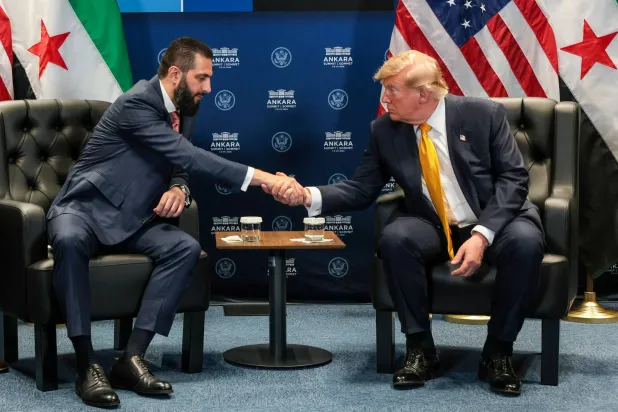
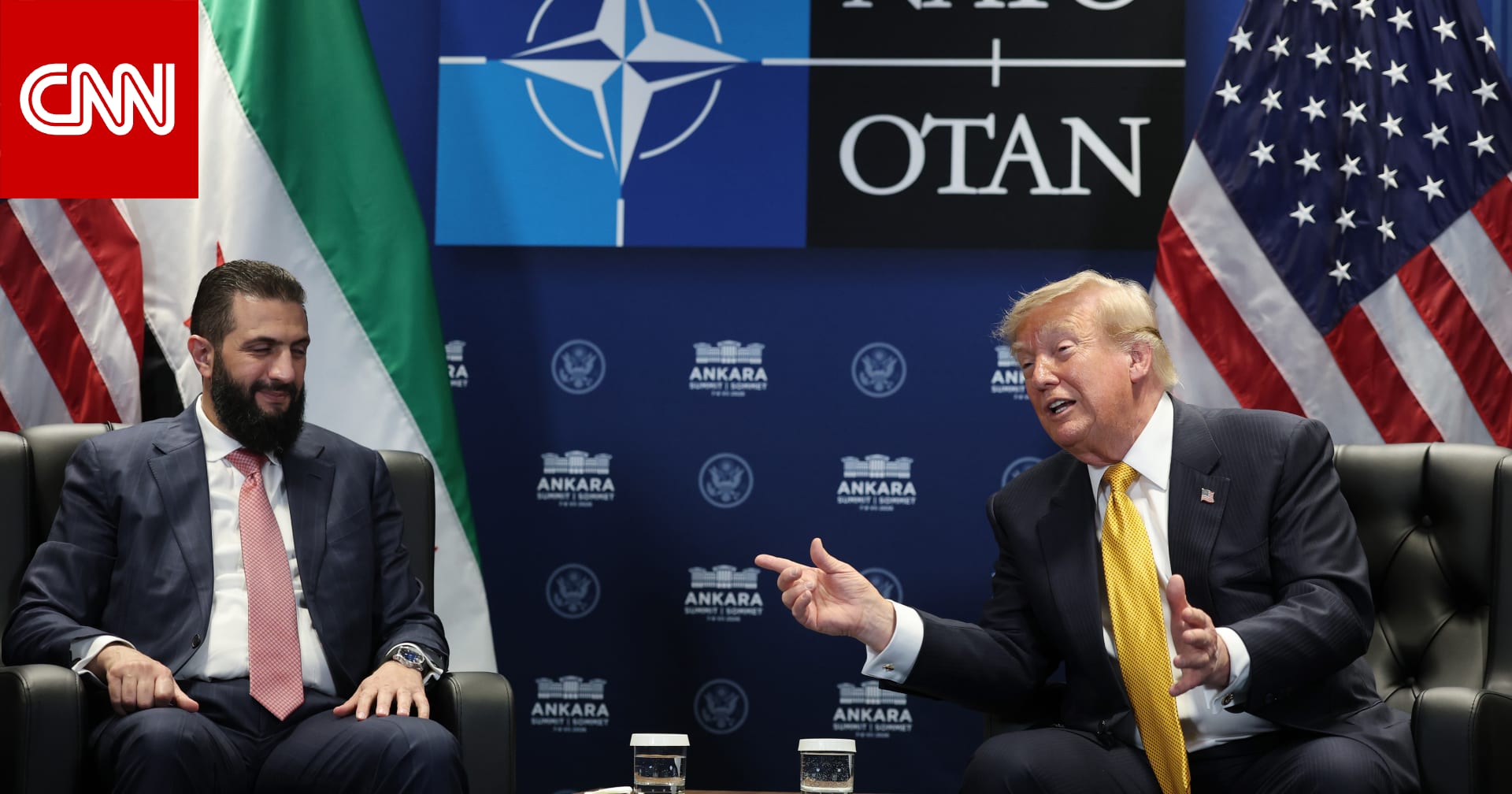
Washington's start of removing Damascus from this list comes after Trump's meeting with Syrian President Ahmed al-Shar'a in the Turkish capital Ankara on Wednesday, on the sidelines of their participation in the NATO summit, where the US President announced his intention to proceed with this step.
Despite the lifting of most sanctions on Syria after the overthrow of Bashar al-Assad's regime at the end of 2024, the country remains on the US list of state sponsors of terrorism since 1979, which American and Syrian experts and officials consider one of the most prominent remaining challenges to the recovery of the Syrian economy.
Syria's inclusion on that list is not limited to its political dimension, but entails broad legal and financial sanctions that directly affect the state and its economy.
The designation imposes restrictions on most forms of US aid, bans the export of weapons and military equipment, along with tightening restrictions on dual-use goods that could be used for civilian or military purposes.
The listing also exacerbates the isolation of the Syrian banking sector, as American and international banks fear dealing with Syrian entities for fear of secondary sanctions.
Original source: Anadolu Agency

Comments (0)
Be the first to comment.