Al-Alimi responds to Houthis with 4 decisive messages
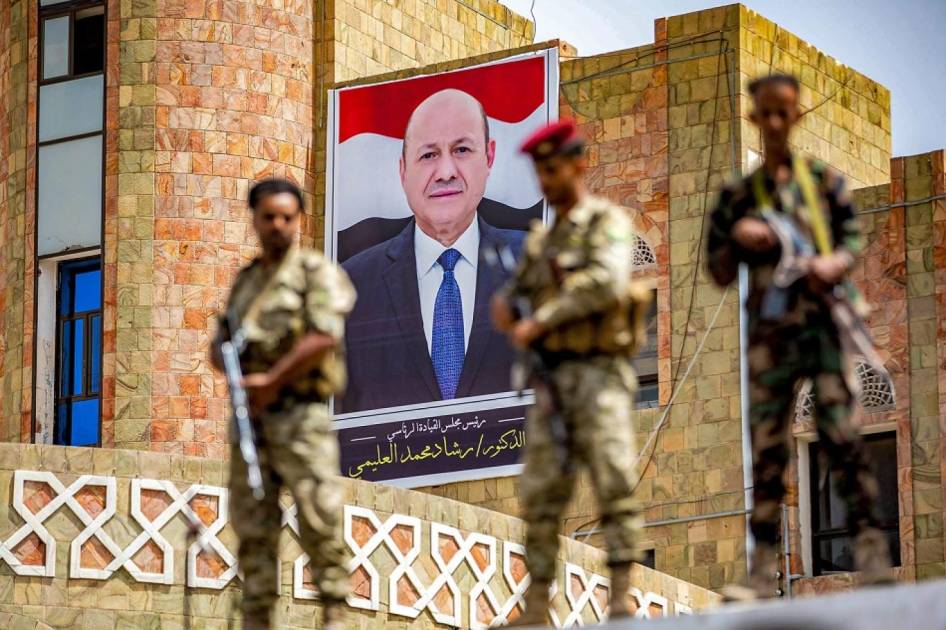
Summary: Rashad al-Alimi sent four messages in response to the Houthis, reaffirming the state's commitment to peace and sovereignty, and accusing the group of foiling initiatives and detaining Yemenia Airways planes.
The head of the Yemeni Presidential Leadership Council, Rashad al-Alimi, sent four messages to residents of areas under Houthi control, hours after threats issued by the group's leader Abdul-Malik al-Houthi, affirming that the government will not abandon the Yemenis, and that the policy of 'blackmail and escalation' will not change the course of the state or its efforts to end the coup.
In a series of posts on platform 'X', al-Alimi addressed residents of Houthi-controlled areas, saying they are the 'spirit of this republic', and that the government will not abandon their aspirations regardless of sacrifices, and that it has offered 'all possible initiatives' to alleviate their suffering, protect their lives, and open horizons for peace, but the Houthi group 'chose every time to flee to escalation and destruction'.
Al-Alimi said the government still considers peace its primary option, but he accused the Houthis of foiling political and humanitarian initiatives, explaining that the group resorts to military escalation whenever an opportunity for a settlement arises.
In his second message, al-Alimi denied Houthi accusations that the government caused the closure of Sanaa airport, affirming that the state 'was never the reason for the airport's closure', but rather proposed one initiative after another to operate flights through the national carrier, Yemenia Airways, to ensure the continuation of Yemenis' travel legally, explaining that the Houthis rejected those initiatives, and accused them of detaining Yemenia Airways planes, confiscating its funds and destroying them, 'without regard for the suffering of citizens', affirming that the group sought to use the airport to impose a fait accompli and harness it to serve its leaders and families, not all Yemenis.
In his third message, al-Alimi made a direct appeal to Yemeni tribes and to fathers and mothers, calling on them not to allow their children to be dragged into 'futile wars that do not serve the nation and its future', and said that the republic was established to preserve the dignity of all Yemenis without discrimination, and that real change begins with siding with the project of the state, justice, and equal citizenship.
Read more
Houthis escalate to cover up tribal rejection
Omani mediation returns Houthi delegation from Iran to Muscat
Is Yemen approaching a new scenario?
The fourth message focused on the future of the conflict. Al-Alimi said that experiences have proven that the policy of 'blackmail and escalation' will only bring more suffering to Yemen, affirming that the state will continue, through its institutions and armed forces, to perform its constitutional duty to protect sovereignty and safeguard citizens' interests, while keeping its hand extended to every sincere endeavor that achieves a just peace ending the coup and preserving the dignity of Yemenis.
No foreign planes without the approval of the 'legitimate government'
Al-Alimi's statements coincided with his meeting on Thursday with the acting U.S. Ambassador to Yemen, Jonathan Peicha, where the two sides discussed bilateral relations and regional and international developments and their implications for the Yemeni situation. During the meeting, al-Alimi stressed that the Yemeni Republic will not allow in the future the entry or landing of any foreign aircraft at any Yemeni airport without the approval of the legitimate government, stating that protecting national sovereignty is 'a responsibility that cannot be taken lightly', saying that the state's handling of recent developments stemmed from its legal and moral responsibility as a UN member state, and that restraint 'was not a concession of sovereignty, but a responsible exercise of it', adding that the government will not allow the exploitation of ports and airports to impose facts that violate international laws and resolutions.
The head of the Presidential Leadership Council expressed his appreciation for the international community's stance during the emergency session of the Security Council, referring to the condemnation of what he described as 'Iranian violations' of the sovereignty of the Yemeni Republic, and holding the Iranian regime responsible for supporting the Houthi group, in defiance of international legitimacy resolutions, foremost among them Resolution No. (2216).
Al-Alimi added that the Houthis' course over the past years reveals a 'fixed pattern', based on fleeing from peace entitlements, fabricating external crises, and blackmailing the regional and international communities to gain time and impose new facts by force, stating that these attempts will not change the reality of the conflict, and that peace begins with ending the coup, complying with the will of the Yemenis, and adhering to the agreed-upon solution references nationally, regionally, and internationally.
Original source: Independent Arabia





Comments (0)
Be the first to comment.