Intensive Gulf Coordination in Wake of Iranian Escalation
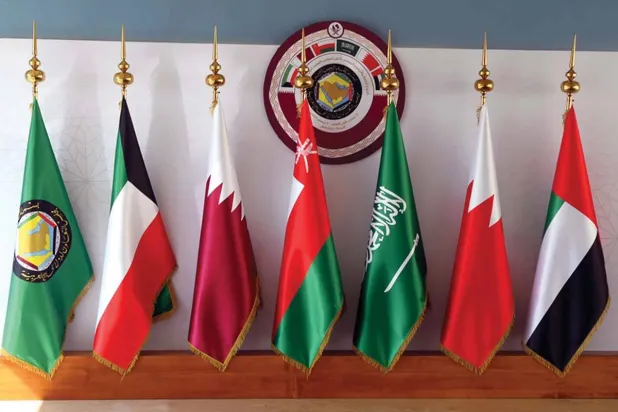
Gulf states intensified coordination and consultation among themselves over the past two days, with 7 consultations including two official visits and five phone calls.
Gulf and Arab condemnations of Iranian attacks on Kuwait, Bahrain, Qatar, and Jordan continue
Gulf and Arab states denounced the Iranian attacks that targeted Qatar, Bahrain, Kuwait, and Jordan, amid assertions that the assaults constitute a flagrant violation of national sovereignty and a direct threat to the region's security and stability, with repeated calls for de-escalation and a return to the diplomatic path.
Saudi Arabia expressed its strongest condemnation and denunciation of the repeated Iranian criminal attacks on Kuwait, Bahrain, and Jordan, reiterating its complete rejection of Iran's violation of the sovereignty of sister states and its continued threat to the security and stability of the region.
Saudi Arabia reaffirmed that these attacks violate UN Security Council Resolution 2817 of 2026 concerning the immediate cessation of all Iranian attacks on regional states, stressing the importance of respecting the sovereignty of sister states and adhering to international resolutions and laws. The Kingdom also reiterated that these violations undermine international efforts to restore security and stability in the region.
For its part, the Gulf Cooperation Council states, in a joint statement, expressed their strong condemnation and denunciation of the Iranian attack that targeted the Saudi tanker 'Wadyan' and the Qatari tanker 'Al-Rukiyat' while they were transiting the Strait of Hormuz, endangering their crews, considering it an unacceptable assault on the safety and security of international navigation and global energy supplies.
The statement also condemned the repeated Iranian brutal attacks on Bahrain and Kuwait, in grave violation of the provisions of international law and UN Security Council Resolution 2817, which guarantee freedom of maritime navigation and safe passage through sea lanes, as well as violating the memorandum of understanding between the United States and Iran, which included their agreement on a ceasefire and the reopening of Hormuz. The Gulf states affirmed their full solidarity and standing united to confront these attacks, stressing that their security is indivisible and that any attack on one is a direct attack on all, in accordance with the GCC Charter and the Joint Defense Agreement. They emphasized their right to self-defense under Article 51 of the UN Charter, which guarantees states the right to self-defense, individually and collectively, in the event of aggression, and to take all measures to preserve their sovereignty, security, and stability.
The statement held Iran fully responsible for these attacks and their repercussions, affirming that its continued hostile actions and behavior destabilizing the region undermine regional and international peace and security, threaten the safety of international navigation, and expose the stability of energy markets and the global economy to grave risks.
The Gulf states renewed their call on the international community, especially the Security Council, to condemn these attacks and assume its responsibilities by taking a firm stance to ensure safe passage through international waterways, and guarantee freedom of navigation in the Strait of Hormuz without restrictions or transit and service fees, in accordance with international law and the UN Convention on the Law of the Sea, considering that a fundamental pillar for energy security, food and medicine supplies, and the flow of global trade. They also called for taking necessary measures for a permanent, immediate, and unconditional cessation of all Iranian hostile acts, the sustainable and unconditional reopening of the Strait of Hormuz, and the rejection of any unilateral and illegitimate mechanisms or arrangements.
The statement affirmed the necessity of Iran's full compliance with Security Council Resolution 2817 and the memorandum of understanding between Washington and Tehran, and the implementation of their provisions to contribute to consolidating regional and international security and stability, and to strengthen the foundations of security and prosperity in the region and the world.
In Doha, Sheikh Mohammed bin Abdulrahman Al Thani, Prime Minister and Minister of Foreign Affairs of Qatar, received a phone call from Abbas Araghchi, Iranian Foreign Minister, during which they reviewed the latest developments in the military escalation between the United States and Iran over the past two days.
The Qatari Prime Minister expressed his country's denunciation and rejection of the attacks targeting commercial vessels in the Strait of Hormuz, despite the atmosphere of calm and efforts to de-escalate the region, stressing that such actions would undermine trust, threaten the security of international navigation, and harm efforts to consolidate regional security and stability.
The Qatari minister affirmed the need for all parties to commit to dialogue and diplomacy and to implement what has been agreed upon within the framework of the memorandum of understanding, in a way that contributes to maintaining regional security, preserving the gains achieved, and enhancing regional stability.
Sheikh Mohammed Al Thani reiterated Qatar's support for all efforts aimed at containing the escalation and reaching a comprehensive agreement that contributes to consolidating security and stability and achieving sustainable peace in the region.
For its part, the Kuwaiti Ministry of Foreign Affairs expressed its strongest condemnation and denunciation of the continued Iranian criminal attacks targeting its territory, the latest of which occurred at dawn Thursday, reflecting a repeated hostile approach in flagrant violation of Kuwait's sovereignty, a direct threat to its security, stability, and the safety of its citizens and residents, and a grave breach of international law, the UN Charter, and Security Council Resolution 2817.
The ministry affirmed in a statement that these blatant attacks constitute a dangerous escalation that would exacerbate tensions in the region, threaten regional peace and security, and undermine diplomatic efforts aimed at resolving matters through peaceful means.
The UAE condemned in the strongest terms the renewed Iranian aggressive attacks targeting Bahrain and Kuwait with missiles and drones.
The UAE Foreign Ministry affirmed in a statement that these aggressive attacks represent a flagrant violation of the sovereignty of Bahrain and Kuwait and a threat to their security and stability.
The ministry reiterated the UAE's full solidarity with Bahrain and Kuwait and its support for everything that preserves their security and stability.
Egypt also expressed its strong condemnation of the renewed Iranian attacks targeting Kuwait and Bahrain, considering it a dangerous escalation and an unacceptable violation of state sovereignty that would undermine security and stability in the Gulf region and increase regional tensions.
The Egyptian Ministry of Foreign Affairs affirmed in a statement Thursday Egypt's full solidarity with Kuwait and Bahrain and its support for all measures they take to protect their security and sovereignty.
It also stressed that the security of the Arab Gulf states is an integral part of Egyptian and Arab national security, reiterating its rejection of any practices that threaten the security of sister states or undermine the stability of the region.
Jordan renewed its condemnation of the Iranian brutal attacks on Bahrain and Kuwait, considering them a flagrant violation of their sovereignty, a threat to their security, stability, and territorial integrity, a dangerous escalation, and a blatant breach of international law and the UN Charter.
The Jordanian Ministry of Foreign Affairs and Expatriates affirmed in a statement Jordan's absolute solidarity with Bahrain and Kuwait and its standing with them in all steps they take to protect their sovereignty, security, and the safety of their citizens and residents.
Original source: Asharq Al-Awsat




Comments (0)
Be the first to comment.