Sudanese Army Expands in Blue Nile and West Darfur as It Sieges El Geneina

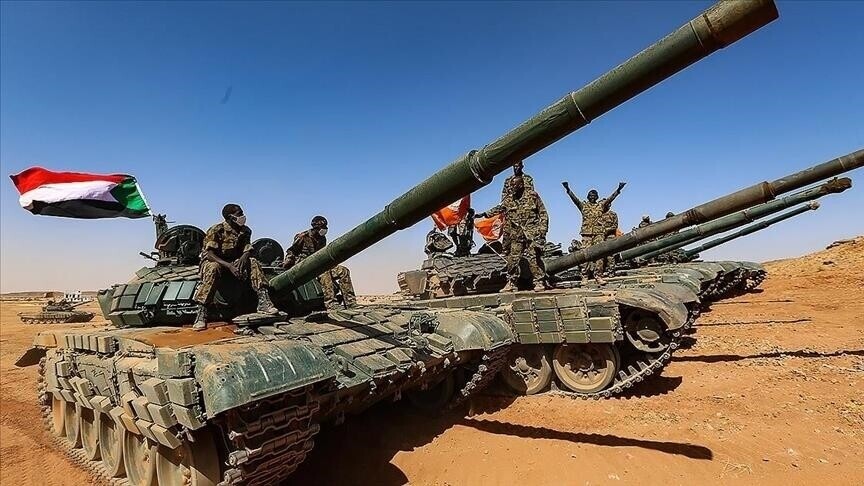
The Sudanese Armed Forces continue their offensive, securing border regions in the Blue Nile state and tightening their siege on El Geneina in West Darfur by cutting off key supply lines. Meanwhile, El Obeid struggles with humanitarian crises as mobilization efforts grow, and deadly clashes between drug traffickers erupt in the northern city of Ed Debba.
In the Blue Nile axis, the Sudanese Army announced on Tuesday that it had established full control over the Fashfon area on the country's southeastern border. This came just one day after recapturing the Sheetito area, which served as a central command hub for the Rapid Support Forces (RSF) operations in the region.
The army and joint forces have significantly tightened the siege on El Geneina, the capital of West Darfur, following their successive seizure of three towns along the internal border between West and North Darfur—Bir Saliba, Um Sarouj, and Sali'ah—over the past two days. The city is now besieged from three main fronts.
Field sources indicated that the army and joint forces succeeded in severing the militias' supply lines and seizing shipments of weapons and combat equipment. These included ammunition, portable missiles, anti-tank shells, and dozens of combat vehicles arriving from the Chadian border en route to the militias on the West Darfur front.
Two days ago, the army and joint forces recaptured the strategic Bir Um Saliba area, located 30 kilometers north of El Geneina, from the RSF following fierce battles between the two sides.
The sources noted that army drones destroyed an RSF supply convoy loaded with weapons and provisions on the road connecting the cities of El Kuma and El Fasher yesterday, which had been heading to fighters in North Darfur.
Local leaders confirmed that the joint forces have expanded their area of control after receiving new reinforcements, which increased their numbers and allowed them to operate across long routes between West and North Darfur states.
Sources stated that the capture of these towns followed battles against RSF forces, highlighting the expansion of the joint forces' presence during this period.
For nearly a month, the intensity of fighting and clashes has escalated in the border regions adjacent to Chad within Darfur. The army previously seized the city of Kulbus near the Chadian border, which serves as a logistical gateway for supplies and paves the way to El Geneina.
To counter the progress of the army and joint forces in North and West Darfur, the RSF was forced to recall large groups of its fighters from West Kordofan, Sirba, and Kabkabiya, deploying them on three axes in the vicinity of El Geneina and Kulbus.
In the Blue Nile axis, the Sudanese Army announced on Tuesday that it had established full control over the Fashfon area on the country's southeastern border, one day after recapturing the Sheetito area, a hub for RSF operations in the region.
Last weekend, the army announced its control over the strategic city of Kurmuk in the Blue Nile, following fierce battles against the RSF and its ally, the Sudan People's Liberation Movement-North (SPLM-N) led by Joseph Tuka.
According to an army statement, forces from the 13th Brigade of the 4th Infantry Division, supported by Special Operations forces, managed to clear the Fashfon area after a decisive battle that resulted in significant enemy losses in lives and equipment.
The statement added that army forces continue to pursue the remnants of the enemy, extending combing and security operations to eradicate the militias completely, restore security, and achieve stability in all locations.
The Fashfon area is a natural geographical extension of military operation zones along the Sudanese-Ethiopian border.
The army had previously strengthened its military positions alongside its new advances by taking control of the Deim Sa'ad and Yara areas in the Blue Nile state, after thwarting an attack launched by the RSF and its allied SPLM-N on those two locations.
Observers believe that the recent army advance in seizing the Fashfon area confirms it is very close to establishing control over the entire Blue Nile region and securing the eastern border strip. This includes border crossings, mountain paths, and secondary roads used for movement and supplies across the long border, as well as the establishment of permanent observation posts to prevent any return or infiltration by the RSF and SPLM-N.
In North Kordofan, the state capital, El Obeid, is struggling to cope with the humanitarian crisis left by RSF drone strikes on water and electricity infrastructure, following the breakdown of water pumps, fuel and energy facilities, and a sharp rise in food prices in the markets.
The commander of the 5th Infantry Division (Al-Hajana) in the city, Major General Al-Siddiq Al-Jili, affirmed the intention of the armed forces, regular forces, joint forces, and support groups to implement a widespread deployment in the coming days to secure North Kordofan state and enhance the protection of the city, vital roads, and service centers.
During a ceremony held by the popular resistance in North Kordofan to graduate a new batch of recruits, the state governor, Abd al-Khaliq Abd al-Latif, confirmed that his government is working to expand training and qualification programs, sponsor the technicians' battalion and drone operators, and increase the recruits' capabilities to perform their national duties in eliminating the rebel militias.
The head of the National Committee for Mobilization and Federal Popular Resistance, Lieutenant General Bashir Makki al-Bahi, praised the significant efforts made by the state government in supporting mobilization and recruitment programs.
In contrast, the RSF announced the arrival of additional reinforcements to the vicinity of El Obeid, which have already taken up their positions.
Through its social media platforms, the RSF urged the citizens of El Obeid to stay away from military command headquarters and army outposts, to remain in their homes, and to avoid mobilization and carrying weapons to ensure their safety.
Separately, eight people were killed and 14 others wounded in clashes between a group of drug traffickers in the city of Ed Debba in northern Sudan, local authorities announced on Wednesday.
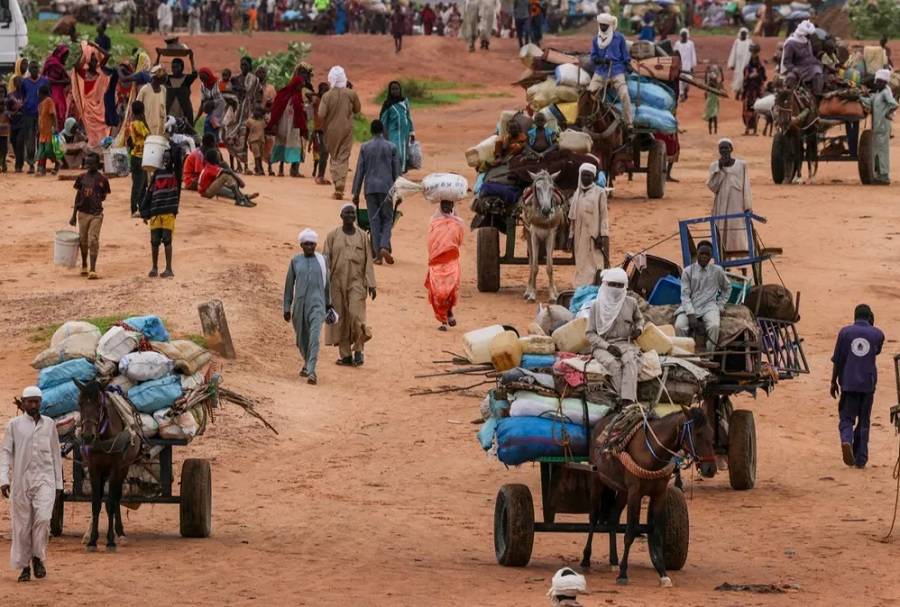
The city, which hosts more than 100,000 displaced persons according to the United Nations, witnessed gunfire and explosions on Tuesday.
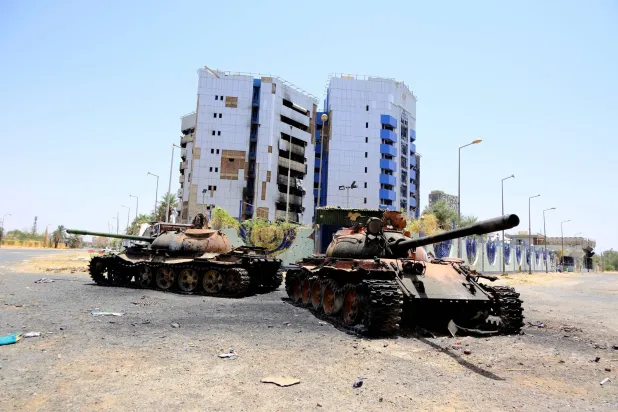
Ed Debba is located about 300 kilometers north of Khartoum and had largely remained shielded from the conflict between the Sudanese Army and the RSF, which has been ongoing for more than three years.
Last year, it became a safe haven for displaced people from El Fasher, the capital of North Darfur, after the RSF took control of that city.
Since then, Ed Debba has seen escalating tension among local communities due to scarce resources and weak infrastructure, as well as a high number of fighters and armed groups.
The Security Committee of Ed Debba locality described the clashes as security breaches between two groups working in drug trafficking at a palm farm west of the city market. It noted that the clashes in a densely populated area led to injuries among citizens, stating that they are still counting the wounded and will announce the official toll in a later statement. The committee's statement confirmed that the army, security apparatus, and support forces intervened, regained control of the situation, and restored calm to the city.
Addressing unofficial accusations suggesting its involvement, the Joint Forces denied having any connection to the events in the city of Ed Debba in the Northern State.
Original source: Independent Arabia

Comments (0)
Be the first to comment.