Lebanese Army Deploys in First Pilot Areas in the South
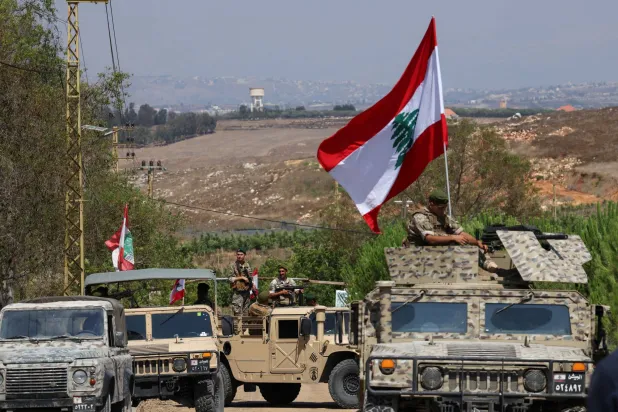
The Lebanese army deployed on Tuesday in the first towns from which Israeli forces withdrew as part of the ‘pilot area’ implementation, and began security measures for inspection and dismantling of war remnants and munitions, with residents expected to return to inspect the war's aftermath in the town after hazards are removed.
The Lebanese army command announced in a statement from the ‘Directorate of Guidance’ that military units began deploying on Tuesday morning in the town of Zawtar al-Gharbi in the Nabatieh district in southern Lebanon, based on communications with the Military Coordination Group for Lebanon MCG4L. The army command reiterated its call on citizens not to head to the town until the security situation stabilizes, and to adhere to the directives of deployed military units to ensure their safety.
Following up on the previous statement regarding the army's continued implementation of its missions in the southern areas, military units began deploying this morning in the town of Zawtar al-Gharbi - Nabatieh based on communications with the Military Coordination Group for Lebanon MCG4L. The army command reiterates its call on citizens not to head to... pic.twitter.com/636K6UiYwk
— Lebanese Army (@LebarmyOfficial) July 21, 2026
A military source in the army told Asharq Al-Awsat that military units have already entered Zawtar al-Gharbi, explaining that ‘engineering units are working in the town to remove war remnants and munitions, and to ensure there is no danger to returning residents.’ He pointed out that residents ‘will not enter the town on Tuesday, pending confirmation that it has been cleared of any munitions that could pose a risk to people.’
The source confirmed that there is no direct coordination with the Israeli army, emphasizing that coordination is carried out through the American side, referring to the Military Coordination Group for Lebanon. The source said the Israeli army ‘completed its full withdrawal from Zawtar al-Gharbi, thus there is no direct contact with the Israeli army,’ which still occupies the adjacent town of Zawtar al-Sharqi.
Israeli Obstruction
The Israeli army attempted to obstruct the Lebanese army's deployment in the town. The army command said in a later statement that ‘while military units were carrying out the deployment operation in Zawtar al-Gharbi, Israeli occupation forces opened fire in the vicinity of these units.’ The army command affirmed that ‘this assault would hinder the implementation of deployment steps in the pilot areas, which are being carried out within the framework of communications with the Military Coordination Group for Lebanon MCG4L.’
Residents of Zawtar al-Gharbi wait for permission from the Lebanese army to enter the town after the army began its deployment there (Reuters)
The Israeli army was present on the southeastern outskirts of Zawtar, but scenes from inside ‘show that the Israeli army was continuously entering the town, carrying out demolition and explosions throughout the past period,’ according to the military source, noting that traces of tank and armored vehicle tracks are still visible on the town's roads and neighborhoods.
While military units were carrying out the deployment operation in Zawtar al-Gharbi - Nabatieh, Israeli occupation forces opened fire in the vicinity of these units. The army command affirms that this assault would hinder the implementation of deployment steps in the pilot areas, which are being carried out within the framework of communications with the Military Coordination Group... pic.twitter.com/RooHcDxYcA
— Lebanese Army (@LebarmyOfficial) July 21, 2026
No Trace of Life
Zawtar al-Gharbi was home to about 4,500 people before the war. Initial information showed no trace of life in the devastated town, as ‘the Israeli army left no signs of life in it,’ referring to extensive destruction inflicted on the town.
The town's mayor, Abdel Aziz al-Din, told Asharq Al-Awsat that residents have not entered the town pending an official statement from the Lebanese army allowing entry. He noted that ‘there is no definitive information on the extent of destruction, but initial information confirms that total destruction exceeds 50 percent of the town's homes, and the devastation is immense, with a high level of destruction; there is no infrastructure and no signs of life.’
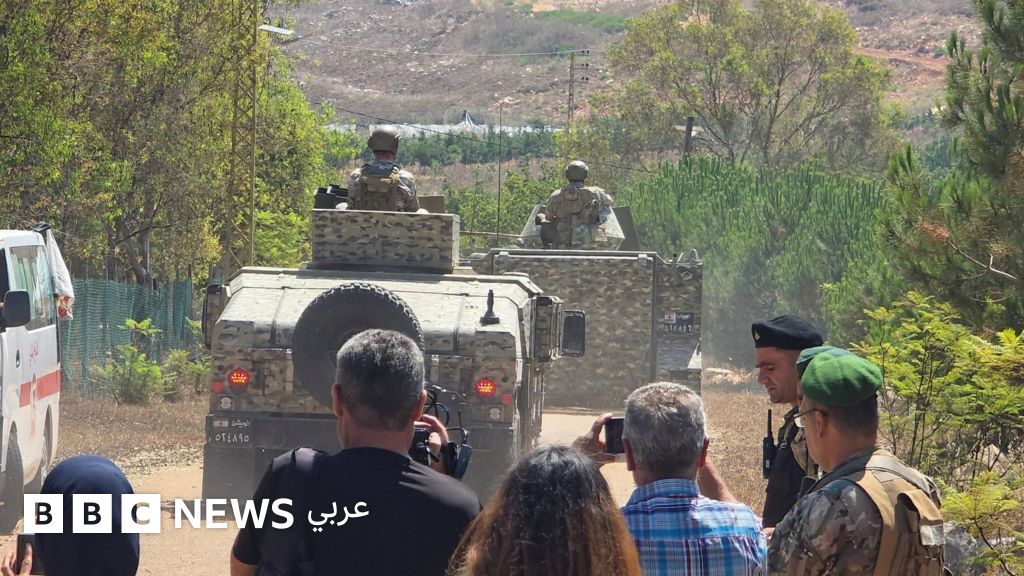
Residents waited for a long time on Tuesday morning at the town's entrance from the Qaaqiyat al-Jisr side, waiting for an official army notice to enter, and watched army armored vehicles and military machinery enter the town.
Lebanese army soldiers at a checkpoint in the town of Sarifa in southern Lebanon (AFP)
Zawtar al-Gharbi is one of three towns included in the ‘pilot areas’ stipulated in the agreement between Lebanon and Israel in the fifth round of negotiations held under American sponsorship in Washington, which provides for the disarmament of Hezbollah, Israel's gradual withdrawal from the territories it occupied in southern Lebanon, and the deployment of the Lebanese army starting from ‘two pilot zones.’
Security Measures in Frun
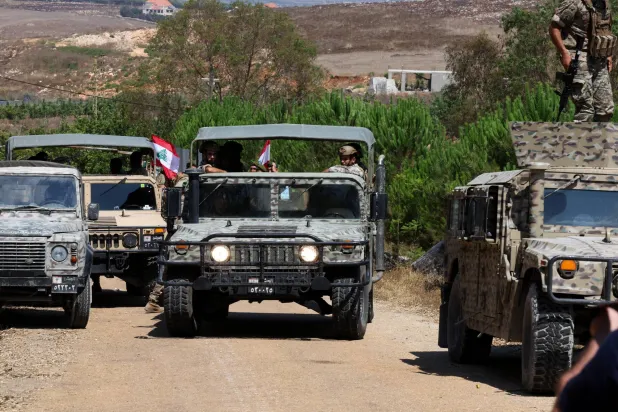
The agreement includes the towns of Frun and Sarifa, which were not occupied, but the Israeli army had fire control over them. The Lebanese army carried out a wide deployment in the two towns and other adjacent towns starting last week, and set up identity checkpoints and vehicle inspections on those roads, which was also evident on Tuesday.
Local sources said that residents returned to the two towns weeks ago, with the ceasefire agreement taking effect, and some families resumed living there, especially in homes that were not completely destroyed.
A Lebanese woman stands on the rubble of her destroyed home in the town of Frun in southern Lebanon (AP)
First Practical Test
The Israeli army announced on Monday night that it would make adjustments to its positions ‘in one of the pilot areas,’ referring to Zawtar al-Gharbi. An Israeli military official said: ‘These pilot areas are a test of the sovereignty of the Lebanese armed forces in the three pilot villages, as the only official authority authorized to bear arms in the region.’ Israeli officials expressed skepticism about Lebanon's ability to disarm Hezbollah, but Israel sees the agreement, reached last month, as a crucial step toward building long-term peace with Lebanon.
The start of the army's deployment in the area occupied by Israel, extending to a depth of ten kilometers from its border, is considered the first practical test for the Lebanese state. Military expert Hassan Jouni told Agence France-Presse that the start of the army's deployment constitutes ‘a real test, first and foremost, of the seriousness of the occupation army in withdrawing’ from the area, and it is also ‘a test of Hezbollah's field position on this matter.’
He explained that ‘the third test is how Israel will deal with any potential threat in the areas that the army will take over,’ adding: ‘All of this will be tested during this first phase’ of implementing the agreement. But ‘the biggest challenge,’ according to Jouni, remains ‘in continuing withdrawals from other pilot areas that are actually occupied and from which the occupation army withdraws.’
Original source: Asharq Al-Awsat



Comments (0)
Be the first to comment.