Israel Maintains Operational Control After Withdrawal from Zouatar al-Gharbiya
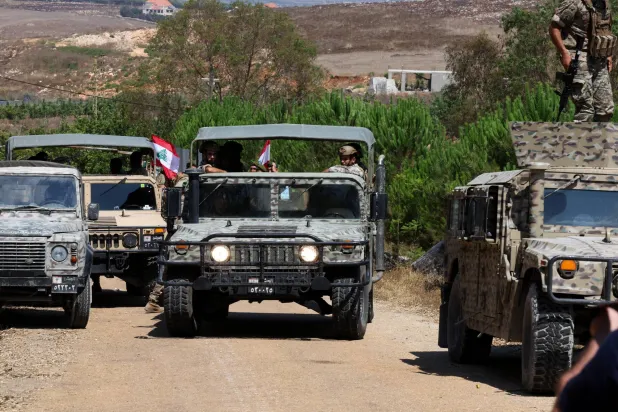
Southern Lebanon begins an unprecedented security test as the Lebanese army enters the first 'experimental zones' evacuated by the Israeli army. However, this shift does not necessarily reflect a decline in Israeli military influence, as it coincides with a broader redeployment based on establishing commanding positions, enhancing surveillance and targeting capabilities, and maintaining the ability to intervene from outside the towns. Thus, the scene shifts from the direct occupation of villages to a redistribution of fire control.
In exchange for evacuating specific villages and handing them over to the Lebanese army, Israel retains commanding positions that give it broad oversight of southern Lebanon, supported by drones, artillery, and electronic equipment deployed within the area it still occupies.
This reality puts the first phase to a test that goes beyond the mere entry of the army into Zouatar al-Gharbiya, Frun, and Sarifa; the actual criterion is not just the withdrawal of Israeli soldiers from inside the towns, but also the positions they are redeployed to, and their ability to monitor, target, or return to the evacuated areas at the first disagreement over the interpretation of the agreement.
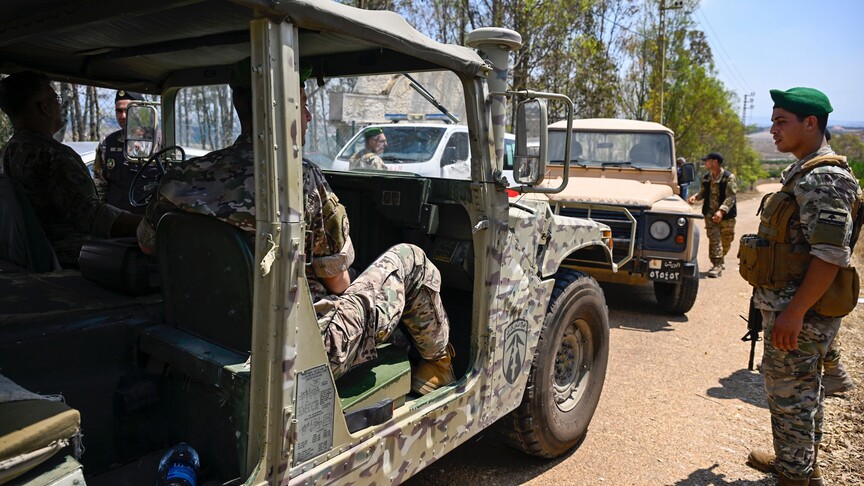
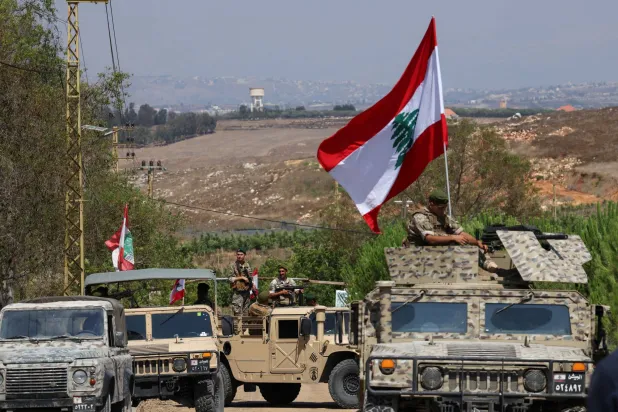
Lebanese army soldiers next to an armored vehicle after deploying in the town of Sarifa in southern Lebanon, coinciding with the start of implementing field arrangements related to the agreement with Israel and the meeting of the Lebanese president with his US counterpart in Washington (AFP)
23 positions inside the occupied area
A Lebanese security source had revealed to Asharq Al-Awsat that the Israeli army has established about 23 new positions inside the occupied area in southern Lebanon, indicating that most of them contain military vehicles and equipment, though it is not yet clear whether Israel intends to keep them throughout its occupation or if they are points linked to changeable field requirements.
According to the source, these positions stretch along the occupied strip, from the vicinity of Naqoura and Bayada on the coast, through the heights of the western sector, then the central sector overlooking the Saluki and Hajir valleys, to the heights of the eastern sector and other points along the border, including a large position established in the town of Maroun al-Ras.
Superiority Remains in Commanding Positions
Retired Brigadier General Said Qozah said to Asharq Al-Awsat: 'The withdrawal from Zouatar al-Gharbiya does not represent a substantive military loss for Israel, as long as it controls more important positions that give it oversight over wide areas of the south.' He explains that 'Zouatar is a vantage point overlooking the surrounding areas, including Frun, Ghandouriya, and Sarifa, but Israeli forces are still stationed in more important positions extending from Bayada, through the heights of the western sector, to Shaqif Castle.'
He adds that these positions 'overlook Nabatieh, Iqlim al-Tuffah, Marj al-Litani, and the opposite areas in Galilee,' considering that their remaining under Israeli control means that the withdrawal from Zouatar 'does not deprive Israel of a basic military advantage, because the main monitoring and surveillance points are still in its hands.'
Qozah believes 'that the entry of the Lebanese army into Frun, Sarifa, and Zouatar al-Gharbiya consolidates the state's presence inside the villages, but it does not change much in the military balance as long as Israel retains the commanding positions that give it the ability to monitor and exercise fire control over the surroundings.'
Control from the Air... and Disagreement over the Right to Intervene
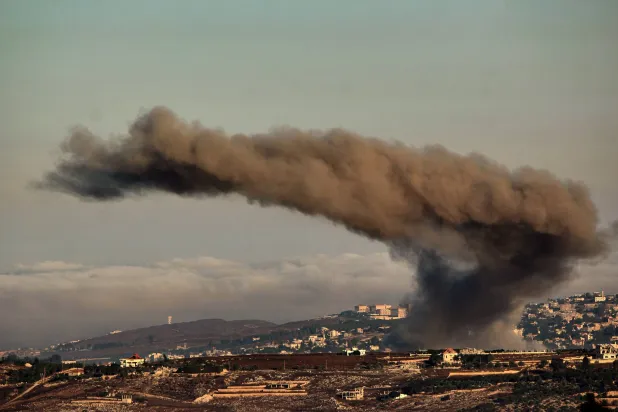
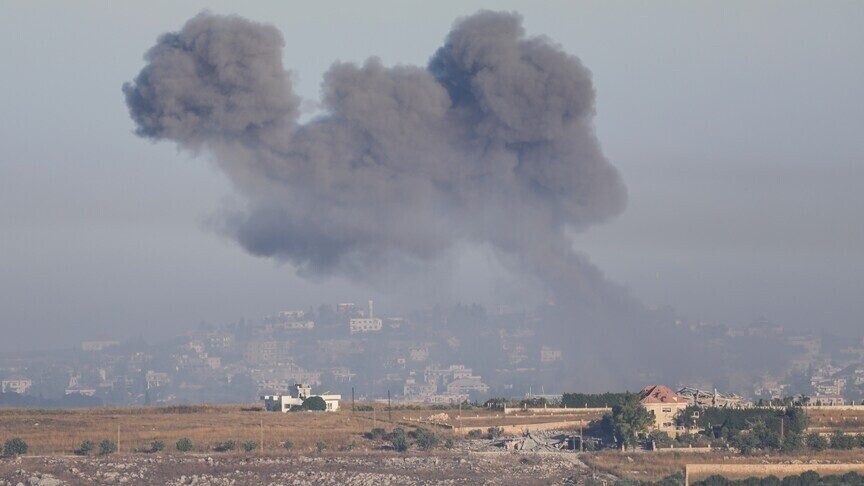
The new Israeli approach is not based solely on positioning in the heights, but also relies on air and intelligence superiority; even with the Lebanese army deployed inside the towns, drones, electronic surveillance means, and long-range artillery remain tools that allow Israel to monitor movements in the areas it has withdrawn from, without the need for a permanent military presence inside them.
Military experts say this model reduces the cost of ground deployment and lowers the risks faced by Israeli forces, while maintaining the ability to intervene quickly when needed. Hence, the success of the first phase is measured not only by the withdrawal of soldiers from inside the villages, but also by whether Israel will cease using its air and fire superiority in these areas.
Retired Brigadier General Said Qozah stresses that 'one of the main reasons for the delay in launching the first phase was the Lebanese side's insistence on obtaining clear guarantees preventing Israel from targeting the areas entered by the Lebanese army or re-infiltrating them after withdrawal.'
He told Asharq Al-Awsat: 'Verification that these areas are clear is not undertaken by Israel, but rather through a joint mechanism that includes the US side and the Lebanese army, and therefore Israel does not have the right to return to targeting these areas, carry out military operations in them, or reoccupy them after the state's authority has been established.' He adds that these guarantees 'came as a result of US pressure and negotiations accompanying the agreement, and constituted one of the foundations that allowed the transition from the negotiation phase to the implementation phase of withdrawal and the deployment of the Lebanese army.'
Deployment of units of the Lebanese army at the entrance of the town of Zouatar al-Gharbiya in southern Lebanon after the withdrawal of Israeli forces from the town as part of the first phase of implementing the US-backed plan, which stipulates an Israeli withdrawal in exchange for the deployment of the Lebanese army in the areas covered by the agreement (Reuters)
Fears of Expanding the Margin of Intervention
In contrast, retired Brigadier General Naji Malaeb warns that some proposals circulated by Israeli media could open the door to a different interpretation of the agreement if they are treated as part of the implementation mechanism.
He told Asharq Al-Awsat: 'Granting Israel the right to enter to verify the implementation of understandings is a very serious matter; because it will return each time to say it has information requiring intervention, which practically means enshrining a permanent right to enter and exit Lebanese territory under security pretexts.'
Original source: Asharq Al-Awsat


Comments (0)
Be the first to comment.