Ben Gvir leads hundreds of Jews into Al-Aqsa Mosque to mark religious anniversary

Far-right Israeli National Security Minister Itamar Ben Gvir led hundreds of Jews into the courtyards of the Al-Aqsa Mosque in Jerusalem to observe a Jewish fast day marking the "Remembrance of the Destruction of the Temple".
Israeli far-right National Security Minister Itamar Ben Gvir led hundreds of Jews on Thursday into the courtyards of the Al-Aqsa Mosque in Jerusalem to observe a Jewish fast day marking the "Remembrance of the Destruction of the Temple" according to the Jewish calendar, violating the decades-long status quo at the site, according to Agence France-Presse.
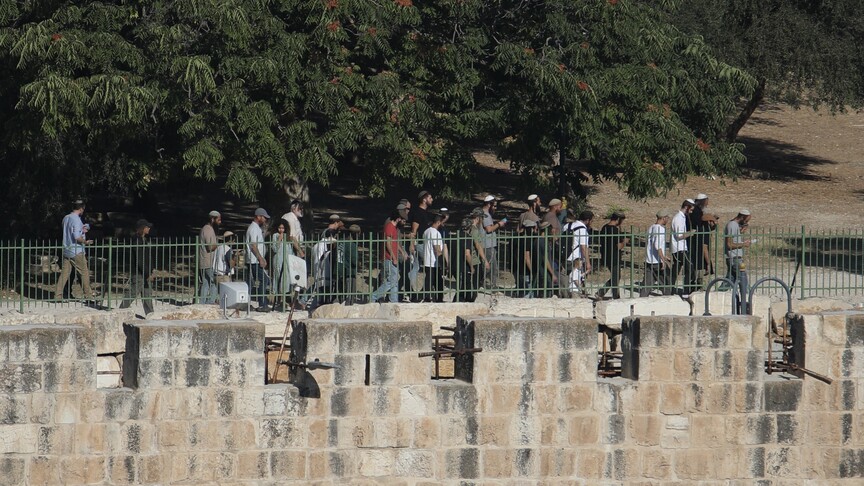
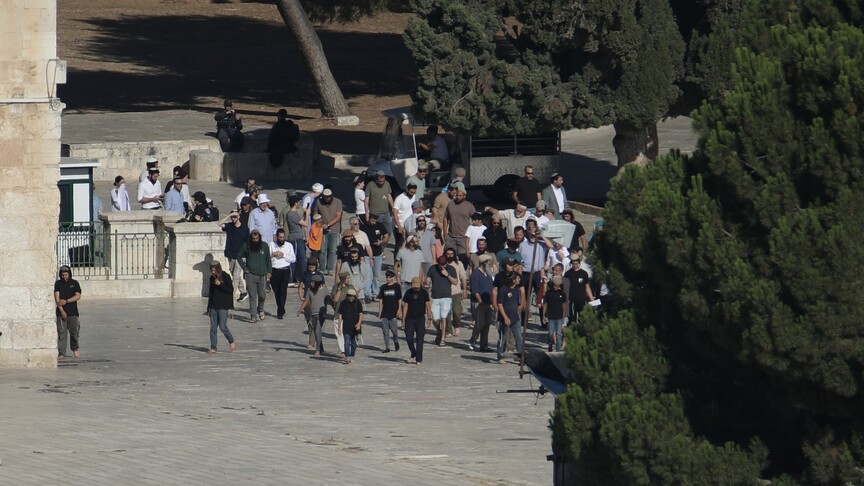
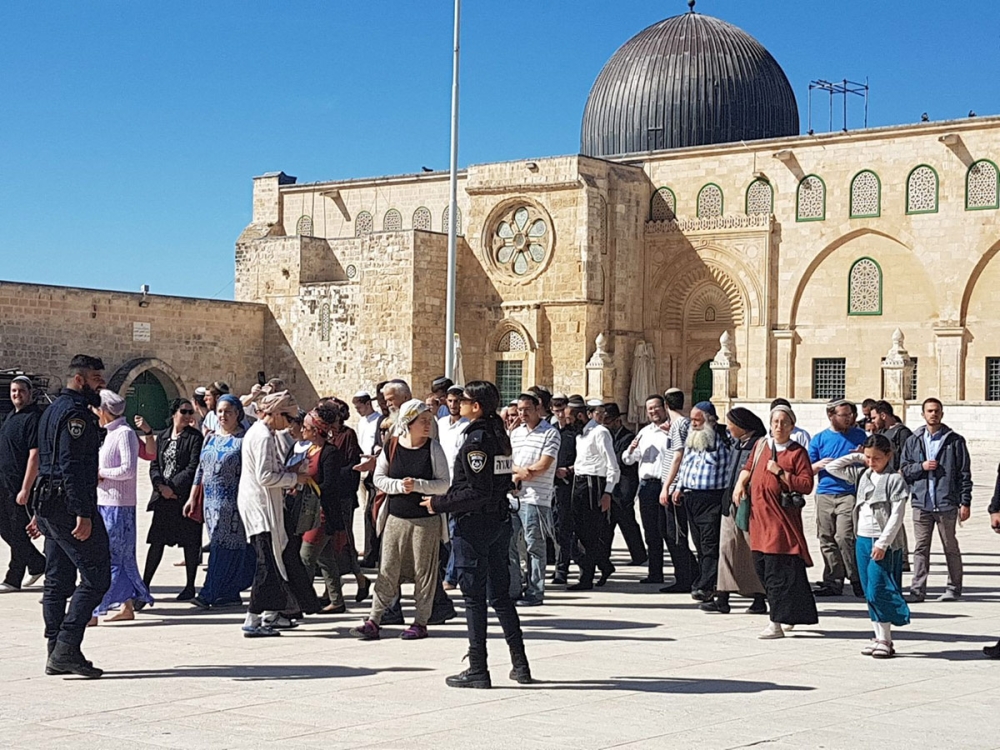
Footage captured by agency photographers showed Ben Gvir in the courtyards of the Al-Aqsa Mosque accompanied by hundreds of Jewish worshippers, including settlers who lined up from the early morning hours to enter the site.
The visit comes on the occasion of "Tisha B'Av", the Jewish fast day commemorating the destruction of the First and Second Temples.
Many Jews performed prayers inside the courtyards of the sanctuary.
In a video clip filmed inside the sanctuary and published on his Telegram channel, Ben Gvir said: "Look at what is happening here. Jews are praying and feeling that they have the right here."
He added: "Everywhere, people realize that the State of Israel is the sovereign. There is still more to be done, and with God's help, we will continue to move forward."
Israeli National Security Minister Itamar Ben Gvir visits the courtyard of the Al-Aqsa Mosque in Jerusalem on July 23, 2026 (Reuters)
Jordanian condemnation
Jordan condemned Ben Gvir's "storming" of the Al-Aqsa Mosque and the accompanying "attacks on worshippers, provocative behavior, raising of Israeli flags, and inflammatory calls by extremist groups."
The Jordanian Ministry of Foreign Affairs stated in a release that this constitutes "a flagrant violation of the historical and legal status quo in the blessed Al-Aqsa Mosque, a desecration of the sanctity of the mosque, a condemned escalation, a barbaric act, and an unacceptable provocation."
Israel, which signed a peace treaty with Jordan in 1994, recognizes Jordan's oversight of the Islamic holy sites in Jerusalem, which are at the core of the Palestinian-Israeli conflict.
Israel occupied the eastern sector of Jerusalem and annexed it in 1967, then declared all of Jerusalem as its "eternal capital" in 1980, a move not recognized by the international community.
Access to the site is organized under "status quo" arrangements in place for decades between Israel and Jordan, whose Awqaf department manages its religious affairs.
Under these arrangements, Jews are permitted to visit the site but are not allowed to pray there, while Islamic worship is supposed to continue uninterrupted.
However, in recent years, Ben Gvir and Jewish visitors have tested these restrictions and repeatedly breached them, including by openly performing prayers inside the sanctuary, sparking condemnations from Jordan, the Palestinian Authority, and Islamic religious institutions.
Israeli National Security Minister Itamar Ben Gvir prays at the Western Wall in the Old City of Jerusalem on July 22, 2026 (AP)
Since taking office, Ben Gvir has stormed the site more than ten times, and on previous occasions used Tisha B'Av gatherings to call for harsher measures against Palestinians in the Gaza Strip and the West Bank.
For his part, the official spokesperson for the Jordanian Ministry of Foreign Affairs, Fouad Al-Majali, warned of "the consequences of the continued incursions and violations of Islamic and Christian holy sites and of the historical and legal status quo in Jerusalem and its sanctities."
He stressed that "Israel has no sovereignty over the occupied city of Jerusalem and its Islamic and Christian holy sites."
The Jewish state publicly asserts that its policy regarding the status quo has not changed, even though incidents of this nature continue to fuel the Israeli-Palestinian conflict.
Original source: Asharq Al-Awsat


Comments (0)
Be the first to comment.