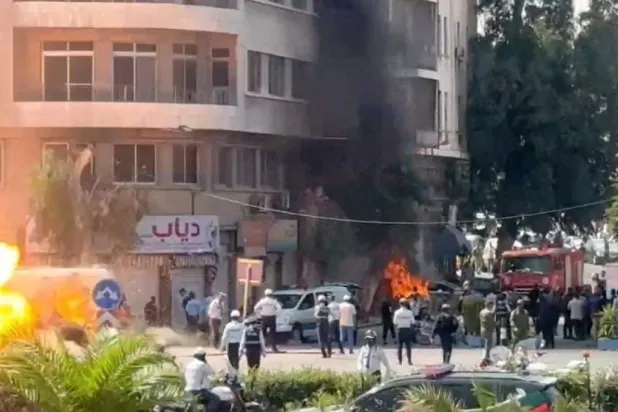
From Damascus Bombings to Africa: How IS is Changing Strategies and Redeploying?
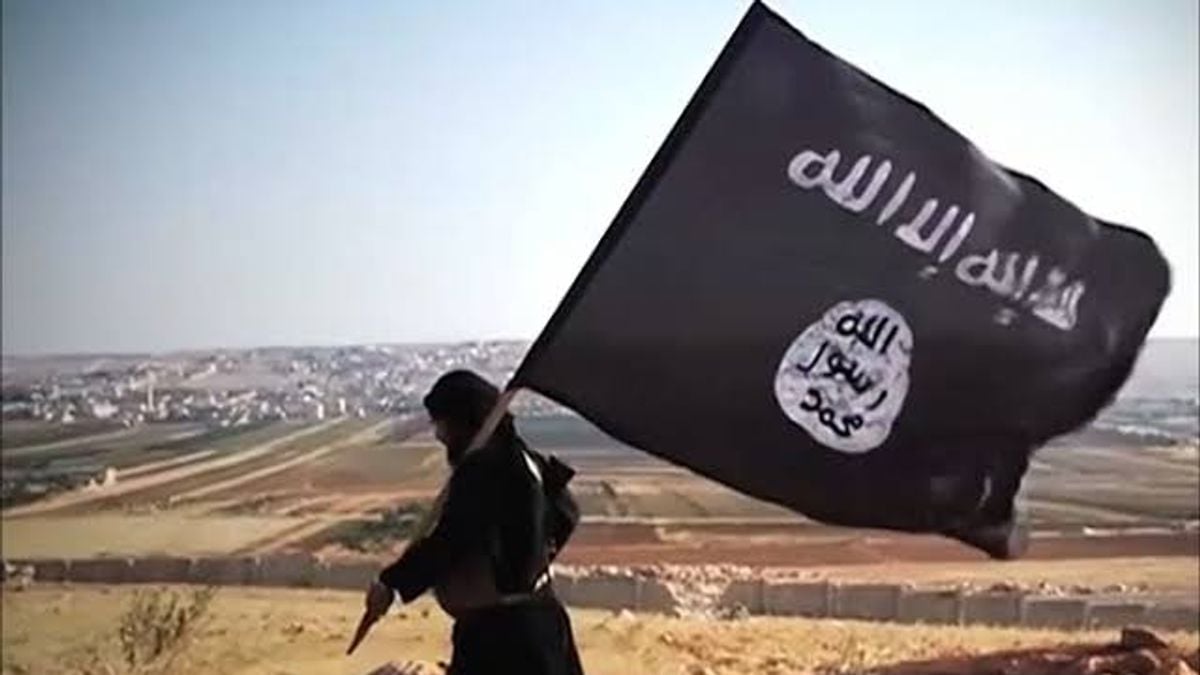
What is ISIS?
This Sunni group emerged in Iraq and Syria and soon declared a "caliphate," sidelining al-Qaeda in the region to a large extent.
The group's strength peaked between 2014 and 2017, when it controlled vast swathes of both countries and imposed its rule on millions. At that time, the group was based just a 30-minute drive from the Iraqi capital Baghdad and also controlled the city of Sirte on the Libyan coast overlooking the Mediterranean Sea.
Inside the areas it controlled, the group sought to govern like a central government, strictly imposing its harsh interpretation of Islamic law, and engaged in shocking brutality including public executions and torture.
The group's militants carried out or inspired attacks in dozens of cities around the world.
The "caliphate" eventually collapsed in Iraq and Syria after a US-led military campaign.
Where is the group active now?
After being forced out of its strongholds in the Syrian city of Raqqa and Iraq's Mosul, the group retreated to remote areas in both countries.
It still maintains a significant presence in Syria, Iraq, parts of Africa, as well as in Afghanistan and Pakistan.
The group's fighters are spread across independent cells, its leadership operates in secrecy, and its overall size is difficult to determine. The United Nations estimates its membership at 10,000 in its core areas.
Africa has now become the focus of the group's operations.
The Armed Conflict Location & Event Data Project (ACLED), a crisis monitoring organization, said the group has shifted toward Africa since suffering major setbacks in the Middle East, with the continent accounting for 86% of its global activity in the first three months of 2026.
Northeastern Nigeria serves as the main base for the group's largest branch, Islamic State West Africa Province (ISWAP), but other affiliated or linked groups operate in the Sahel, Somalia, Mozambique, and the Congo.
Morocco's counter-terrorism agency said in July it had foiled plans by a cell loyal to an IS branch in the Sahel to carry out attacks on sensitive sites and target public security.
A number of foreigners have joined Islamic State Khorasan Province (ISKP), named after the historical region that once included parts of Iran, Turkmenistan, and Afghanistan.
IS-affiliated groups remain active in areas of the southern Philippines, especially Mindanao, where pro-IS militants seized the city of Marawi in 2017.
Where has the group carried out its latest attacks?
Leaders in the Middle East and Western allies have warned that ISIS might exploit the ouster of Assad in late 2024 to regain momentum in Syria and Iraq.
The group has entered a new phase of operations in Syria against the government of President Ahmad al-Sharaa, carrying out a series of attacks since February, including one that killed four government security personnel near Raqqa.
Sources told Reuters that since Assad's fall, the group has reactivated sleeper cells, surveilled potential targets, and distributed weapons, silencers, and explosives.
A report by the UN Office of Counter-Terrorism indicated that al-Sharaa and two senior ministers were targets of five assassination attempts attributed to ISIS.
The group has also inspired lone-wolf attacks that are difficult to detect before they occur.
A shooting during a Hanukkah celebration at Bondi Beach in Sydney, Australia in 2025—the worst mass shooting in Australia in nearly 30 years—raised questions about whether the group was again inciting such operations.
Police said indicators showed the attackers, who killed 15, were influenced by ISIS ideology.
Demonstrating its cross-border ambitions, Islamic State Khorasan Province, the group's Afghan branch, claimed responsibility for a mass shooting at a concert hall near Moscow in 2024 that killed 149.
The group has also been linked to several attacks in other countries in recent years, alarming intelligence agencies.
What are its goals and methods?
ISIS seeks to spread its extremist interpretation of Islamic law and impose its rule over Muslims, and has adopted new tactics since the collapse of its main fighting force and other setbacks in the Middle East.
Iraqi security officials say the group has undergone a major transformation since losing the territories it once controlled, shifting from a conventional military force into a secret underground movement.
Instead of gathering fighters in large formations, the group now relies on covert cells, loosely connected operatives, and secret mediation and communication networks to deliver instructions, maintain contact, and plan attacks.
It has also increasingly adopted a decentralized structure, granting smaller groups and lone militants greater autonomy in decision-making, reducing their dependence on direct orders from top leadership.
Recent intelligence from field sources indicates that this model is already being implemented in Iraq and Syria. Security officials say this approach helps the group survive ongoing counter-terrorism campaigns in both countries.
Original source: Ajel.sa


Comments (0)
Be the first to comment.