Hossam Abu Safiya: Warnings of a threat to his life after repeated assaults inside an Israeli prison
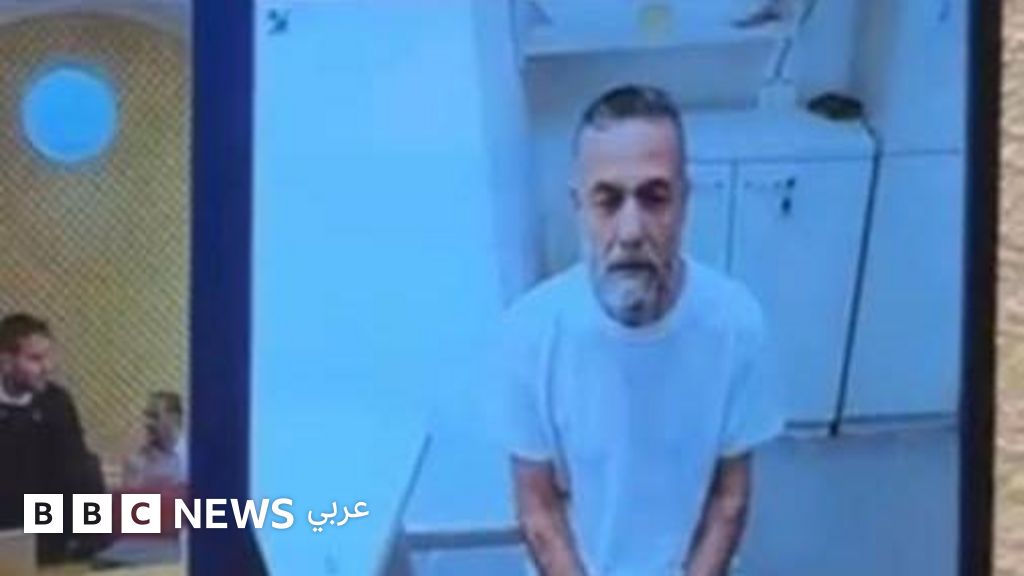
Lawyer of Hossam Abu Safiya warns of a threat to his life after health deterioration in Nitzan Prison, demands urgent transfer.
Hossam Abu Safiya: Warnings of a threat to his life after repeated assaults inside an Israeli prison
Article Information
Author, Magdi al-QousRole, BBC News Arabic
Published 7 June/June 2026Last updated 1 hour ago
Reading time: 8 minutes
Lawyer Nasser Odeh, the representative and counsel of Dr. Hossam Abu Safiya, director of Kamal Adwan Hospital, along with Physicians for Human Rights, warned of a serious deterioration in Abu Safiya's health, asserting that he faces an 'imminent danger to his life' after being transferred to the underground investigation section 'Rekevet' in Nitzan Prison in the city of Ramla.
In a press statement issued on Saturday, the organization and Abu Safiya's lawyer demanded his immediate transfer from the 'Rekevet' section, and an urgent visit by a judge to review his detention conditions and health condition before it is too late, according to the statement.
Lawyer Nasser Odeh explained that these demands came after a visit he made to his client on July 2 of this month inside the 'Rekevet' section, where he said he saw him in a 'very deteriorated health condition'.
According to the lawyer's written affidavit, Abu Safiya was brought to the visitation room with his hands and feet shackled and surrounded by a number of masked guards, while his body showed recent and serious injuries including to the head, around the eyes and ears, and the neck, noting that his features had changed to the point that it was difficult to recognize him.
He added that the examination showed Abu Safiya suffering from difficulty breathing and speaking continuously, in addition to severe weakness and inability to sit steadily, with repeated signs of loss of consciousness.
The lawyer also noted, according to the statement, signs of severe fear and evident psychological exhaustion on his client, along with his hesitation to speak freely for fear of punishment, considering that these indicators point to an immediate danger to his life.
Abu Safiya told his lawyer that he was subjected to a violent assault after the appeal hearing before the Israeli Supreme Court on June 10, while held in solitary confinement in Ganot Prison, explaining that four or five guards stormed his cell and assaulted him using a hammer and batons, causing injuries to various parts of his body.
Abu Safiya had appeared to have lost weight compared to his appearance since his arrest at Kamal Adwan Hospital in Beit Lahia, northern Gaza about a year and a half ago, as he appeared via video link in the court session on June 10.
Skip most read and continue reading
Do you really need to avoid gluten?
"A meal I ate during my vacation ended up with 38 parasites in my brain"
Ukraine strikes a major oil station in the Russian city of Saint Petersburg
Funeral music and 'selected verses,' how social media platforms read the farewell ceremony of Khamenei?
He added, according to his lawyer's account, that since his transfer to the 'Rekevet' section, he is subjected daily to beatings and violence, and has lost consciousness several times, without receiving appropriate medical treatment.
Physicians for Human Rights called for urgent intervention to ensure the safety of Dr. Hossam Abu Safiya, warning that his continued detention under current conditions could pose a direct threat to his life.
Adnan al-Bursh: Death of the most famous Palestinian doctor in an Israeli prison
Gaza war.. With tearful eyes, a Palestinian doctor bids farewell to his two children while at work
Lawyer Nasser Odeh, representative and counsel of Dr. Hossam Abu Safiya, director of Kamal Adwan Hospital, told BBC earlier: 'We asked the court to release Dr. Abu Safiya, and we consider his detention arbitrary and illegal, as he is a member of the medical staff who was working at Kamal Adwan Hospital during the incursion.'
The lawyer did not give estimates regarding the possibility of an imminent release of his client, confirming that the case is still pending before the Israeli judiciary.
"Solitary confinement"
Image caption, Hossam Abu Safiya, director of Kamal Adwan Hospital, receives treatment from his colleagues for his injuries from an Israeli strike on November 23, 2024. Archive
Skip podcast and continue reading
Worth attention
In-depth explanation of the most prominent events and topics, to help you understand the most important changes around you and their impact on your life
Episodes
End of podcast
The Southern District Attorney's Office of Israel submitted a 'secret file' against Dr. Hossam Abu Safiya, claiming that he poses a threat to Israel's security.
Earlier, Nasser Abu Odeh, the lawyer of Palestinian doctor Hossam Abu Safiya, told BBC that the last contact with his client was in late May, during a visit by lawyers inside the prison, noting that these visits are the only available means currently to communicate with Palestinian prisoners.
Abu Odeh explains that Israeli authorities 'have banned visits by families of Palestinian prisoners since the outbreak of the war,' and also ban visits by human rights organizations and the International Committee of the Red Cross, adding that communication is limited to lawyers and within specific restrictions.
He notes that he cannot disclose many details about what took place during the visit due to a publication ban on the case, saying: 'We cannot disclose any information, and we are bound by the details allowed to be shared.'
"I waited until the last prisoner got off the bus, but I didn't see him": Incomplete joy in the West Bank
He adds that what can be confirmed is that Abu Safiya faces 'harsh and very difficult detention conditions from all aspects,' explaining that this includes food, drink, and medical care conditions.
He says: 'Medical treatment is the most important issue. Dr. Hossam suffers from chronic diseases and needs medications continuously, and recently he has been prevented from obtaining these treatments.'
Abu Odeh revealed a new development in the case, 'which is the transfer of Abu Safiya several days ago to solitary confinement' in Nafha Prison, adding: 'Since then we have no details about him, and we do not know if he is receiving the medications he needs for treatment.'
Regarding the legal path of the case, Abu Odeh explained that Abu Safiya is detained under the 'Unlawful Combatant' law, which, according to him, allows for the detention of individuals for indefinite periods without a clear time limit.
The commander of the Southern Command in the Israeli army had issued an order on February 12, 2025 to convert Dr. Hossam Abu Safiya to detention under the 'Unlawful Combatant' law instead of regular trial.
Earlier, media quoted Elias Hossam Abu Safiya, the doctor's son, saying 'that moving his father to solitary confinement increased the family's concerns about Abu Safiya's conditions given the limited information reaching them about his situation inside the prison.'
Abu Safiya told Al Jazeera network that time passes very slowly for family members who await any information that reassures them about their father's safety.
He renewed his appeal to human rights and humanitarian organizations and media to continue shedding light on his father's case and the issues of Palestinian prisoners in general, considering that 'the family's message is not political, but humanitarian in the first place.'
"A message to a murdered journalist"
Image caption, Abu Safiya did not know that journalist Anas al-Sharif was killed by Israeli fire when he had his son deliver a message about the conditions of prisoners.
Original source: BBC Arabic



Comments (0)
Be the first to comment.