How Did 45 Billion Disappear from an Iraqi Bank?
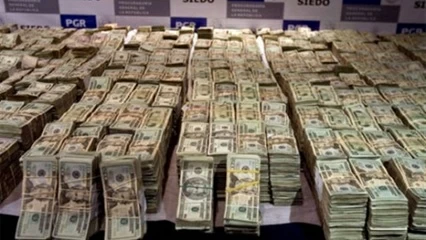
In one of the strangest and most complex financial corruption cases, new details have emerged regarding the disappearance of bags of money estimated at 35 to 45 billion Iraqi dinars from the Baiji branch of the Iraqi bank in Salah al-Din province in 2014. A case that began with a narrative of "kidnapping and armed robbery" on the eve of the ISIS terrorist organization's invasion of the city, only to transform years later into a clue that decodes the purchase of official positions and the expansion of influence within high-level official institutions.
According to Iraqi media outlets, the beginning of the story dates back to 2014, just hours before the fall of the city of Baiji:
Transferring the billions: The bank manager at the time (A.Q.) proceeded to collect the massive financial sums and transfer them accompanied by one of his relatives (A.J.) and others, leaving the building before the arrival of the terrorist organization's elements.
The kidnapping ruse: The manager later surrendered to the authorities in Baghdad, claiming that the organization seized the money after kidnapping and detaining him.
The craftsman's testimony: A simple employee working as a "craftsman" named (N.A.) gave testimony before the judiciary confirming the validity of the manager's claims, upon which the accused was acquitted and the file was judicially closed under the pretext of "force majeure."
Iraqi journalistic sources revealed that the missing billions did not vanish with the dust of war, but were rather recycled in the black market to purchase influence and administrative positions within a banking and oil network:
Record promotions: The acquitted manager (A.Q.) was assigned the management of the Rafidain Bank branch in Baiji, before being promoted to the position of Northern Region Delegate supervising 22 bank branches.
The witness's reward: The craftsman employee who provided the testimony (N.A.) was rapidly promoted to assume the management of the bank branch, succeeding his manager.
Tributes and oil contracts: The group imposed illegal fees amounting to 350,000 dinars for each bank transfer, while data indicates the use of a portion of the funds to purchase a leadership position in one of the oil institutions to guarantee fixed percentages from contracts.
Iraqi media outlets stated that the crime "was not merely a theft of wealth amid war, but rather an entry ticket into the class of officials, where percentages are deducted from contracts and tributes are imposed on transfers to sustain influence." Despite the administrative changes witnessed by Rafidain Bank between 2024 and 2025 and the formation of ministerial committees for review:
Official ratification: The committees recommended transferring (N.A.) to be the delegate for the northern region, and transferring (A.Q.) to manage the Nineveh branch—recommendations that the Minister of Finance officially ratified during 2025.
Continuation of the mechanism: Iraqi media outlets confirm that those involved are still practicing their duties and achieving financial gains from transfer commissions and contract management until now.
Judicial demands: According to what Iraqi media published, this data remains an open report awaiting action from the specialized regulatory and judicial agencies to audit and hold those involved accountable.
In one of the strangest and most complex financial corruption cases, new details have emerged regarding the disappearance of bags of money estimated at 35 to 45 billion Iraqi dinars from the Baiji branch of the Iraqi Bank in Salah al-Din province in 2014. This case began with a narrative of "kidnapping and armed robbery" on the eve of the ISIS invasion of the city, only to evolve over the years into a thread that unravels the code of buying positions and expanding influence within high-level official institutions.
According to Iraqi media, the story dates back to 2014, just hours before the fall of the city of Baiji:
Transfer of billions: The bank manager at the time (A.Q) gathered the large sums of money and transferred them along with a relative (A.J) and others, leaving the building before the arrival of the terrorist organization’s members.
Kidnapping ruse: The manager later surrendered to the authorities in Baghdad, claiming that the organization seized the money after kidnapping and detaining him.
Craftsman’s testimony: A simple employee who worked as a "craftsman" named (N.A) testified in court confirming the manager's claims, which led to the acquittal of the accused and the closure of the case on the grounds of "force majeure."
Iraqi journalistic sources revealed that the missing billions did not vanish with the dust of war but were recycled in the black market to buy influence and administrative positions within a banking and oil network:
Record promotions: The acquitted manager (A.Q) was assigned to manage the Rafidain Bank branch in Baiji, before being promoted to the position of representative for the northern region overseeing 22 bank branches.
Witness reward: The craftsman employee who provided the testimony (N.A) was swiftly promoted to manage the bank branch, succeeding his manager who was a driver.
Bribes and oil contracts: The group imposed illegal fees amounting to 350,000 dinars for each bank transfer, while data indicates that part of the money was used to purchase a leadership position in one of the oil institutions to ensure fixed percentages from contracts.
Iraqi media stated that the crime "was not just a theft of resources amid war, but a ticket for entry into the class of officials, where percentages are cut from contracts and bribes are imposed on transfers to sustain the influence." Despite the administrative changes witnessed by the Rafidain Bank between 2024 and 2025 and the formation of ministerial committees for review:
Official endorsement: The committees recommended transferring (N.A) to be the representative for the northern region, and transferring (A.Q) to manage the Ninawa branch, recommendations that were officially endorsed by the Minister of Finance in 2025.
Continuing the mechanism: Iraqi media confirms that those involved are still carrying out their duties and making financial gains from transfer commissions and contract management to this day.
Judicial demands: According to what Iraqi media has published, this information remains an open report awaiting action from the relevant regulatory and judicial authorities to audit and hold the involved parties accountable.
Original source: Okaz


Comments (0)
Be the first to comment.