International Criminal Court Warns of Repeat of Darfur Atrocities in Sudan's El Obeid
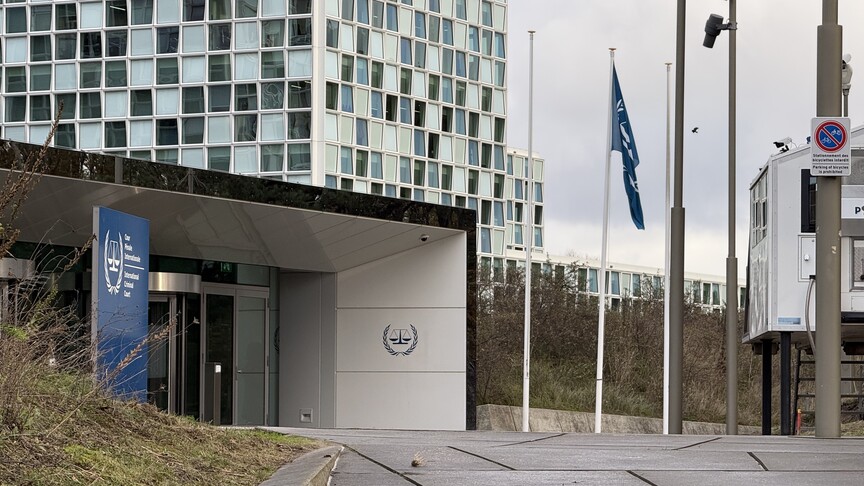
Said that 'the most serious international crimes may be about to occur in the city of El Obeid,' the capital of North Kordofan state in southern Sudan
Istanbul / Anadolu
The Deputy Prosecutor of the International Criminal Court, Nazhat Shameem Khan, warned Wednesday of the risk of 'repeating the atrocities' witnessed in the Darfur region in western Sudan two decades ago, in the city of El Obeid in central Sudan.
Khan said that 'the most serious international crimes may be about to occur in El Obeid,' the capital of North Kordofan state in southern Sudan.
This came during the semi-annual briefing presented by Khan to the UN Security Council on Wednesday regarding the court's activities related to the situation in Darfur, which the Council referred to the International Criminal Court in 2005, according to the United Nations website.
In 2003, the armed movements 'Sudan Liberation' and 'Justice and Equality' declared rebellion against the government of Sudan, accusing the regime of marginalizing the Darfur region.
With the outbreak of war in Darfur, Western countries demanded the deployment of UN peacekeeping forces to protect civilians in the region, and Khartoum rejected this until it agreed in 2004 to deploy African Union forces.
In 2005, the International Criminal Court began an investigation into war crimes in Darfur under a mandate from the Security Council, but the government refused to recognize the court's authority.
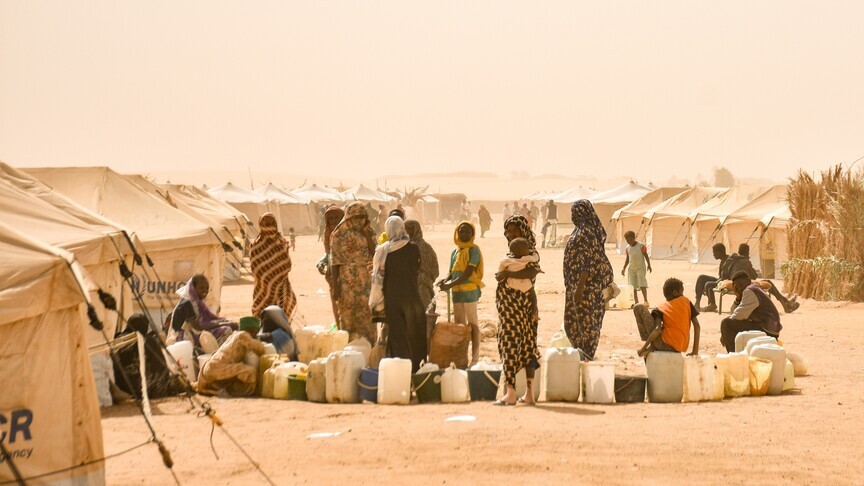
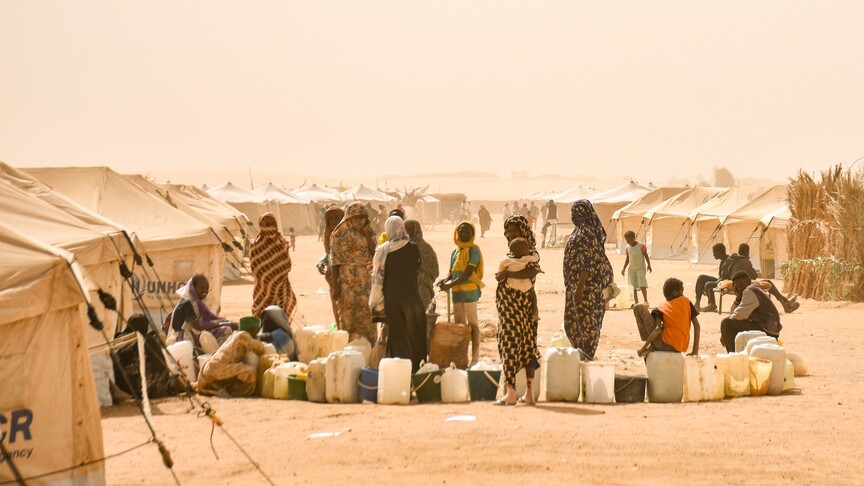
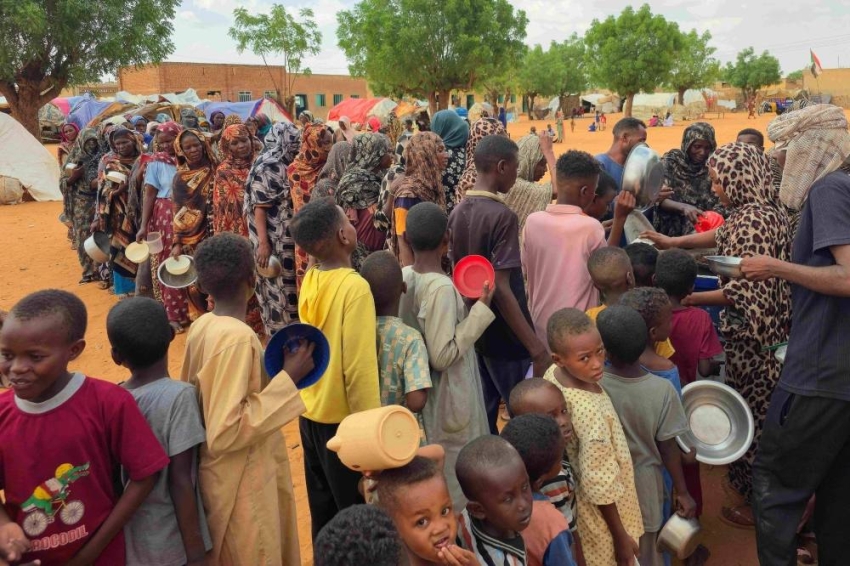
Speaking via video, Khan said in her briefing Wednesday that she recently visited eastern Chad, 'where she met a number of refugees fleeing Darfur and listened to their testimonies about the violations they suffered.'
She added: 'A real sense of despair prevails in those camps, with a clear and repeated belief that the world has largely forgotten them, that their lives are not valued the same, and that the scale of their suffering has not been met with a meaningful response.'
Khan explained that the testimonies she heard reflect the suffering of the entire Darfur community.
She noted that 'many refugees witnessed the killing of their fathers or the rape of their mothers before their eyes, while children were repeatedly subjected to attacks and rape, and still suffer from the effects of psychological trauma.'
Khan said, 'What we heard from them reflects the same picture of the widespread pattern of crimes that led to the referral of the situation in Darfur to this Council in 2005.'
She added that the same crimes, the same methods of intimidation and humiliation, are being repeated, and that the population fears that 'the worst is yet to come.'
**Warning about El Obeid
In a related context, Khan said that the Office of the Prosecutor agrees with the assessment of the United Nations High Commissioner for Human Rights that the most serious international crimes may be about to occur in El Obeid.
She added: 'We cannot say we did not know.'
Khan called on the Security Council and member states to act to prevent further atrocities.
She said: 'The responsibility now lies with this Council and all states to act to prevent further atrocities.'
For the past month, El Obeid has been witnessing drone attacks carried out by the Rapid Support Forces, targeting the main power station, fuel stations, and other civilian sites, resulting in the death and injury of dozens of people.
On May 12 last, the United Nations warned of an escalation of drone attacks in Kordofan, saying the strikes had killed at least 880 civilians between January and April 2026.
The three states of the Kordofan region—North Kordofan, West Kordofan, and South Kordofan—have been witnessing fierce clashes between the Sudanese army and the Rapid Support Forces since October 25 last.
In a related context, the Deputy Prosecutor said: 'Our office is moving forward at a rapid pace, and nothing will deter us from our goal of holding accountable the main perpetrators of the crimes committed in El Fasher in 2025, as well as the historical crimes that began more than two decades ago, whose effects continue to fuel acts of violence and bloodshed to this day.'
She explained that the Office of the Prosecutor has achieved 'real and tangible progress' in recent months, including conducting interviews with key witnesses that helped directly link the crimes to their perpetrators.
She said: 'This represents a radical transformation and an important breakthrough, and sends a clear message to those leading these attacks, those planning them, and those supporting the commission of atrocities from afar and believing they will gain from them: you are wrong.'
According to local and international institutions, the Rapid Support Forces' seizure of El Fasher, the capital of North Darfur state in western Sudan, on October 26, 2025, was accompanied by massacres against civilians there, amid warnings of entrenching a geographical division of the country.
On October 29 last, Rapid Support Forces commander Mohamed Hamdan Dagalo 'Hemedti' acknowledged the occurrence of 'excesses' by his forces in El Fasher, claiming the formation of investigative committees.
The humanitarian crisis in Sudan is worsening due to the war between the army and the Rapid Support Forces, ongoing since April 2023 over a dispute regarding the unification of the military institution, which has left tens of thousands dead and nearly 13 million displaced.
Original source: Anadolu Agency
Comments (0)
Be the first to comment.