Iranian Attacks Strike at the Heart of Life in Kuwait

Summary: Iranian attacks on electricity, water, and oil facilities in Kuwait drag the consequences of war into the lives of residents, despite the country declaring its neutrality and commitment to dialogue.
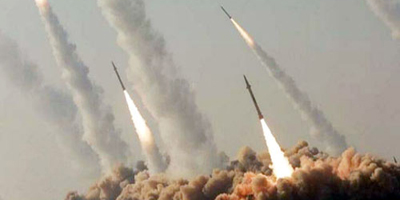
Iranian attacks on vital and civilian facilities in Kuwait continue, in a brutal escalation that has targeted the arteries of electricity, water resources, and the country's energy, leaving fires and destruction at generation and distillation plants. The country holds Iran legally and morally responsible for targeting its facilities, affirming its right to take all necessary measures to defend its security and sovereignty in accordance with Article 51 of the United Nations Charter.
In this context, Kuwaiti political and strategic analyst Khaled Al-Sallal said in an audio file with 'Independent Arabia' that the continued targeting of Kuwait raises political and legal questions, especially since it declared from the start of the US-Iran war that it is not a party to the conflict and will not allow its territory, airspace, or territorial waters to be used in any military action against Iran.
Al-Sallal said that the war that erupted between the United States and Iran on February 28 raised questions in Kuwait and the Gulf states about the reasons for the attacks shifting to countries not participating in the fighting, despite Tehran's constant assertion that its confrontation is directed against the United States.
He added that many analysts believe Iran avoids directly targeting US forces for fear of widening the war, and therefore seeks to raise the cost of confrontation by targeting infrastructure in Gulf countries, even though they are not parties to the conflict and are not involved in it.
He explained that Kuwait has never taken a hostile stance toward Iran, but rather has been keen to adopt dialogue, mediation, and de-escalation, noting that the Emir of Kuwait, Sheikh Mishal Al-Ahmad Al-Jaber Al-Sabah, affirmed before and during the war that Kuwait would not allow its territory, airspace, or coasts to be used in any military action against Iran, and that this position was conveyed to the Iranian side through diplomatic channels.
Escalation Targeting the Heart of Daily Life
The Kuwaiti politician believes that the continuation of the attacks despite this stance raises questions about the justifications for the escalation, noting that targeting electricity plants, desalination plants, oil facilities, and Kuwait International Airport represents an escalation that hits civilian facilities that are the lifeline of daily life.
He pointed out that targeting electricity and water at the peak of summer, with temperatures exceeding 50 degrees Celsius, does not affect only the facilities but extends to hospitals, basic services, the economy, and the lives of citizens and residents. He explained that the attacks did not come from Iran alone, but also involved its allied armed factions inside Iraq using drones and cruise missiles, in conjunction with Iranian ballistic missiles and drones, which multiplies the pressure on the Kuwaiti air defense system.
Read more
How did Kuwait read the 'Revolutionary Guard' statement?
After targeting Kuwait and Bahrain... What does Iran want from the Gulf?
Kuwait International Airport shows resilience in the face of crises
Al-Sallal confirmed that Kuwait, despite the escalation, has not changed its political approach and remains committed to dialogue and respect for state sovereignty as the path to security and stability. At the same time, he praised the performance of state institutions, foremost among them the armed forces, the National Guard, the Ministry of Interior, the Fire Service, the Ministry of Electricity and Water, and the Kuwait Petroleum Corporation, in containing the effects of the attacks and maintaining vital services.
He added that the repeated targeting of electricity and water plants and civilian facilities raises questions about the effectiveness of international law in protecting civilians and infrastructure during armed conflicts, considering that the continued threat to navigation in the Arabian Gulf and the Strait of Hormuz requires a firmer international stance, because energy and maritime corridor security is a shared international responsibility.
Al-Sallal concluded by emphasizing that logic dictates that, as long as Iran declares its dispute is with the United States, the conflict should remain with the party it considers its adversary, not with a country that has clearly declared its neutrality and refusal to use its territory for any military action against it.
He added that the continued targeting of Kuwait undermines opportunities for building trust and stability in the region and deepens Iran's international isolation, affirming that Kuwait will remain a state of peace, but at the same time it will defend its sovereignty, security, protection of its people, and vital facilities.
Original source: Independent Arabia


Comments (0)
Be the first to comment.