Iranian Escalation Targets Gulf Region and Jordan Amid Defensive Alert
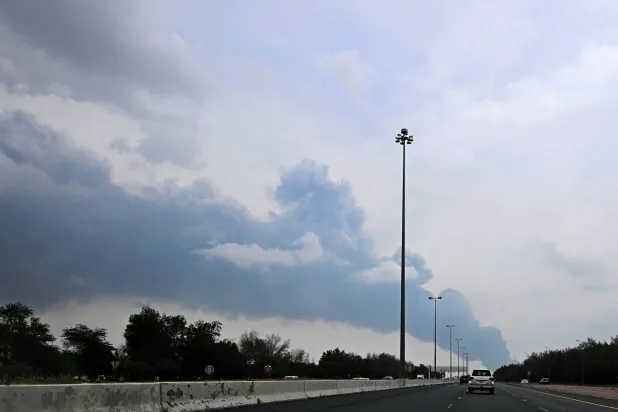
The Gulf region and Jordan experienced a new military escalation on Monday after Bahrain announced it had thwarted Iranian attacks with missiles and drones targeting its territory.
On Monday, the Gulf region and Jordan witnessed a new military escalation, as Bahrain announced it had thwarted Iranian attacks using missiles and drones targeting its territory, while Kuwait and Jordan managed to intercept hostile targets and missiles. At the same time, Iran's Islamic Revolutionary Guard Corps (IRGC) announced it had targeted US military bases and facilities in Bahrain, Kuwait, Jordan, and Oman.
This escalation comes amid rising regional tensions that have been ongoing for months, with exchanges of accusations and threats between Tehran, Washington, and their allies.
The General Command of the Bahrain Defense Force stated that air defense systems managed to intercept and destroy a number of Iranian aerial attacks targeting civilians in the kingdom with missiles and drones, affirming that all military branches and units are on maximum alert to carry out their duties in protecting and defending the country.
The siren has been sounded. We ask citizens and residents to remain calm, proceed to the nearest safe location, and follow the news through official channels.
— Ministry of Interior (@moi_bahrain) July 13, 2026
The General Command urged citizens and residents not to approach any foreign or suspicious objects resulting from the aftermath of the attacks, and to report them immediately, noting that Royal Field Engineering Unit teams are on full readiness to safely handle such objects to ensure public safety.
It stressed that targeting civilians and private property with missiles and drones constitutes a blatant violation of international humanitarian law, holding Iran responsible for the attacks, while also praising the combat readiness and high vigilance shown by Bahrain Defense Force personnel in dealing with the attacks.
For its part, the Bahraini Ministry of Interior announced the reactivation of sirens, calling on citizens and residents to remain calm and head to the nearest safe location, while following updates through official channels. This came hours after it had announced the sounding of sirens following the interception of Iranian aerial attacks by air defense systems.
The armed forces are currently engaging hostile aerial targets within Kuwaiti airspace. The General Staff of the Army notes that any sounds of explosions, if heard, are the result of air defense systems intercepting hostile attacks. Everyone is requested to comply with the security and safety instructions issued by the competent authorities.... pic.twitter.com/KGkTXfQIyM
— KUWAIT ARMY - الجيش الكويتي (@KuwaitArmyGHQ) July 13, 2026
In Kuwait, the General Staff of the Army announced that air defenses are engaging hostile aerial targets within Kuwaiti airspace, explaining that any sounds of explosions that may be heard are the result of interception operations carried out by air defense systems. It called on everyone to adhere to the security and safety instructions issued by the competent authorities.
On Monday, the Kuwaiti Ministry of Foreign Affairs expressed its strongest condemnation and denunciation of the sinful aggression launched by Iran and its loyal factions and militias in Iraq against Kuwait, through attacks targeting a number of border posts and an offshore drilling platform belonging to the Kuwait Oil Company, resulting in human casualties and material losses.
In a statement, the Ministry renewed its affirmation that the continued aggression by Iran and its proxies in Iraq is a blatant violation of Kuwait's sovereignty, a serious threat to the security and safety of its citizens and residents, a flagrant challenge to international legitimacy and UN Security Council Resolution 2817 of 2026, and an irresponsible undermining of regional and international efforts aimed at achieving security and stability in the region.
It also stressed Kuwait's inherent right to take whatever measures it deems appropriate to preserve its sovereignty and maintain its security and stability, in accordance with the provisions of international law and the UN Charter.
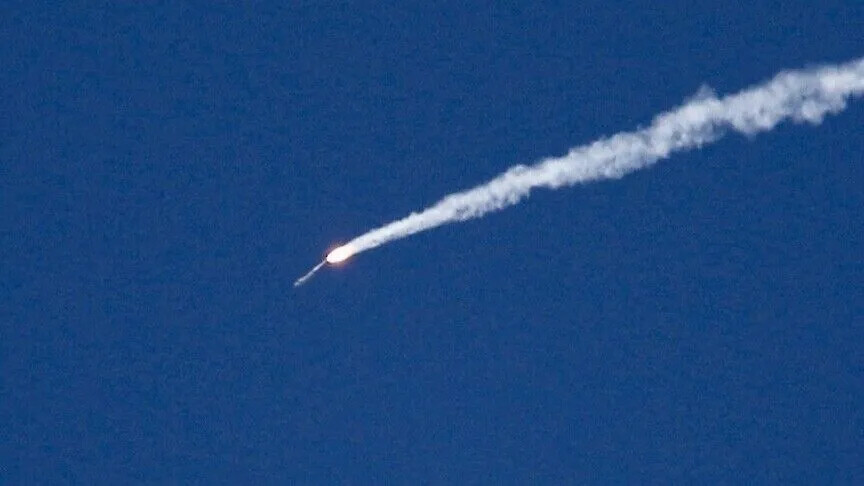
In Jordan, the armed forces announced the interception of four missiles launched from Iran toward Jordanian territory, confirming that the interception was carried out with high efficiency and without any casualties or material damage, while Royal Engineering Corps teams dealt with shrapnel that fell in several locations.
A military source in the General Command of the Jordanian Armed Forces, according to the Jordan News Agency (Petra), said that the armed forces are monitoring developments and updates with the highest level of readiness, stressing that any attempt to violate the kingdom's sovereignty will be met with firmness.
In contrast, the Iranian Revolutionary Guards announced on Monday morning that they had targeted US military sites and bases—according to their claim—in Jordan, Bahrain, Kuwait, and Oman. In statements carried by official Iranian media, they said the attacks included Prince Hassan Air Base in Jordan, a command center for US drones in Bahrain, Ali Al Salem Air Base in Kuwait, as well as military facilities and infrastructure in the Juffair area in Bahrain. They also claimed to have destroyed radar systems, including a ship surveillance radar in Oman.
This escalation demonstrates the capability of air defense systems in the targeted countries to counter missiles and drones, indicating a high level of readiness to face any future threats. The announced Iranian attacks also highlight the widening scope of confrontation in the region, with a focus on US military bases. Attention remains fixed on developments in the coming hours and the possibility of international or regional responses.
Original source: Asharq Al-Awsat



Comments (0)
Be the first to comment.