"Before the blockade".. US strikes continue on targets in Iran

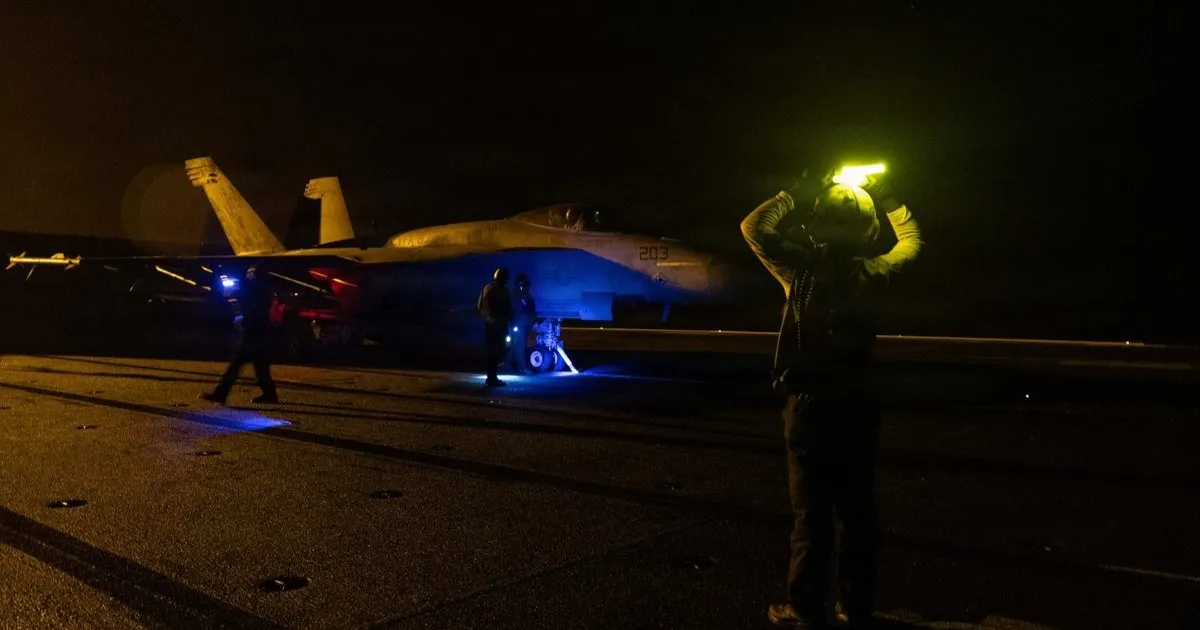
US forces continued Tuesday their bombardment of sites in Iran, just hours before the blockade on Iranian ports was to take effect.
A US official told Reuters that US forces carried out several additional strikes on military targets in Iran on Tuesday to eliminate what they described as 'emerging threats,' while official Iranian media confirmed that various sites were subjected to missile bombardment.
The official also announced that the United States is about to launch additional strikes on Iran in anticipation of a blockade that has been threatened at the Strait of Hormuz.
For its part, Iranian state media reported that American projectiles and missiles hit a target on Qeshm Island, located in the strategic Strait of Hormuz, without providing details on the nature of the targeted site or the extent of damage and losses resulting from the attack.
These strikes represent the latest round of skirmishes between the United States and Iran, which began last week against the backdrop of Iranian attacks on commercial vessels in the Strait of Hormuz.
Striking targets inside Iran
Explosions were heard Tuesday evening on Qeshm Island near the Strait of Hormuz, according to the Fars news agency, adding that the Masn area on the island had been subjected several times in recent days to strikes carried out by 'the American enemy'.
Iranian state television reported five explosions near the Strait of Hormuz, in the vicinity of the coastal city of Bandar Abbas, an area that has been targeted by US strikes in recent days.
State television said: 'Minutes ago, five explosions were heard west of Bandar Abbas,' without providing further details, amid the ongoing tension between Iran and the United States over control of the strategic Strait of Hormuz.
The US military also bombed the coastal city of Bushehr, home to Iran's only nuclear power plant, according to local authorities, as tensions between Washington and Tehran escalate.
The bombardment also hit the city of Abadan, which houses the oldest oil refinery in the Middle East, as well as the coastal city of Mahshahr, also a petrochemical industrial zone, according to IRNA.
Related News
Naval Blockade
On Monday, the US military announced details of the naval blockade it intends to impose on Iranian ports, amid the return of military escalation between the two sides.
The US Navy-led Joint Maritime Information Center said the US military will begin enforcing the blockade on all Iranian ports and Iranian coastal areas at exactly 8:00 p.m. GMT on Tuesday.
The center added that 'the blockade covers the entire Iranian coast, including but not limited to Iranian ports and oil terminals.'
And he stressed that the American blockade 'applies to all vessel traffic (to and from Iranian ports), regardless of the flag flown on the vessels.' The center clarified that 'the blockade will not impede the passage of neutral ships through the Strait of Hormuz to and from non-Iranian destinations.' It also stated that 'it will allow the transit of humanitarian aid shipments, provided they undergo inspect' [incomplete].
Trump backs down from imposing fees in Hormuz
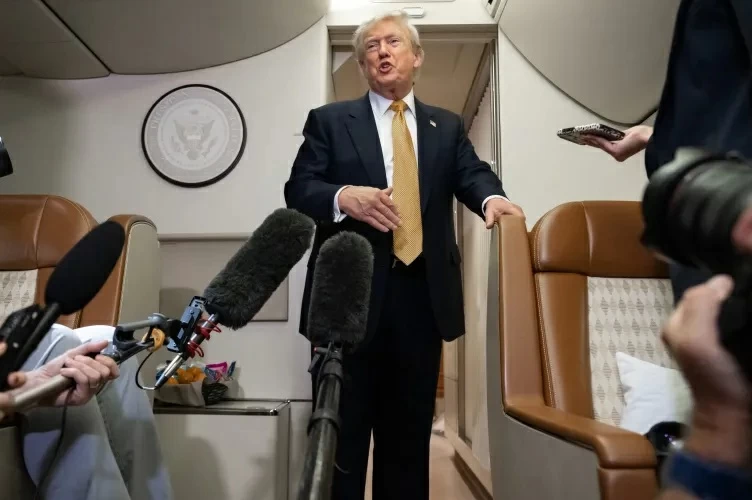
Concurrent with the ongoing escalation, US President Donald Trump said he believes no one should impose fees for passage through the Strait of Hormuz.
Trump, who proposed on Monday that the United States impose a 20 percent transit fee, added: 'I don't think any party should impose fees.'
He continued in remarks: 'I don't like the concept of fees, but at the same time, it's not fair for us to protect this strait for the benefit of the entire world.'
Original source: Sky News Arabia



Comments (0)
Be the first to comment.