How Does Escalation with Iran Threaten America's Ability to Fight Future Wars?
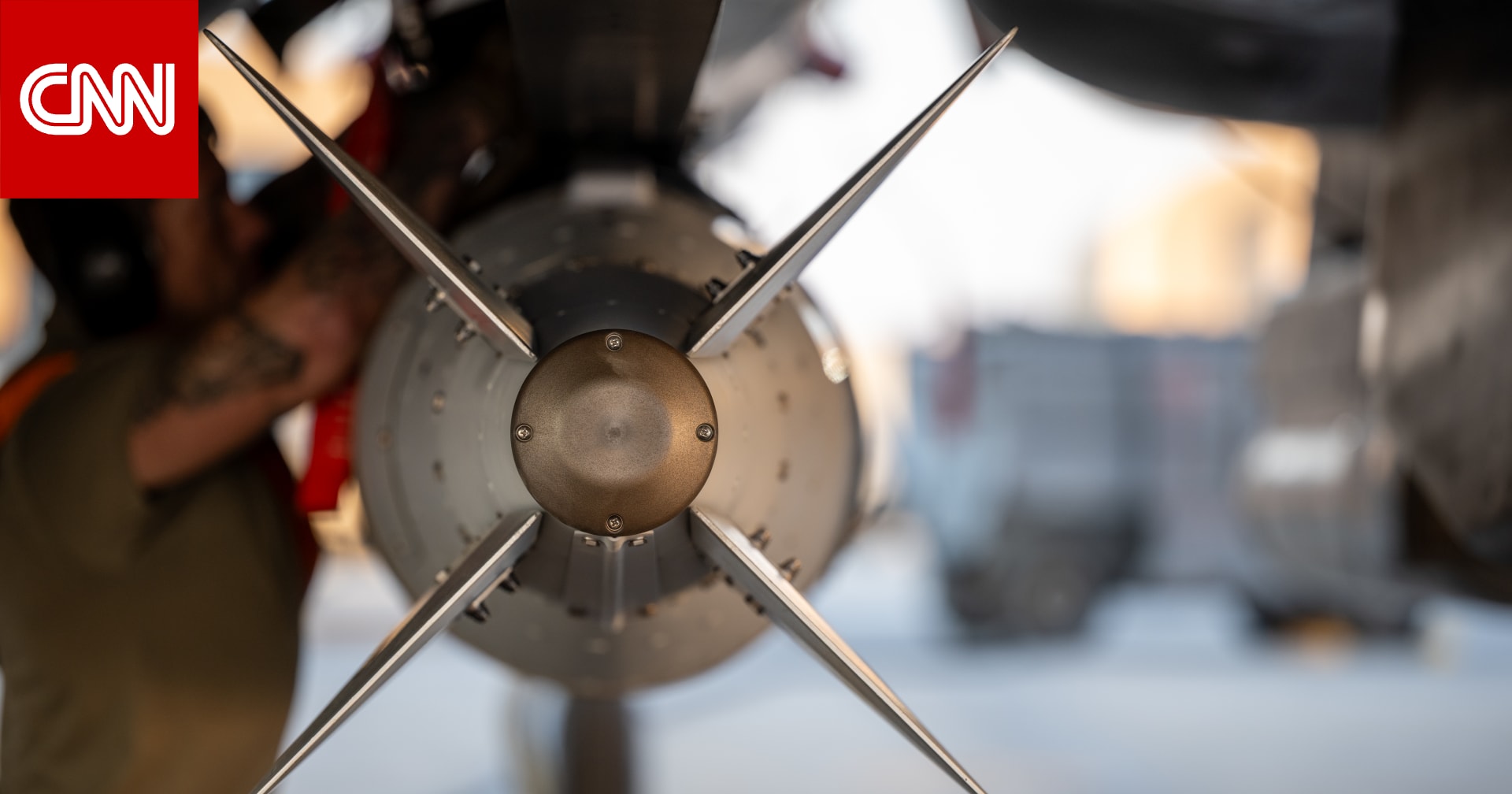
(CNN)-- The stockpile of key US weapons remains significantly low, and will face greater pressure if strikes on Iran continue at the current pace, as US President Donald Trump confirmed on Friday that the ceasefire has ended.
Experts told CNN that the state of weapons stockpiles could affect the US military's ability to fight a potential future war with China or even North Korea.
Retired US Marine Corps Colonel and defense analyst at the Center for Strategic and International Studies, Mark Cancian, said: 'If the war continues at the pace we have seen over the past five days... that will significantly deplete stockpiles, creating a new and higher level of risk in the Indo-Pacific region.'
According to analysts and previous CNN reports, the US military in the first phase of the conflict with Iran, called 'Operation Epic Fury,' expended thousands of key missiles used for long-range precision strikes and for defense against enemy air and missile attacks.
Also, the head of foreign policy research at the Brookings Institution, Michael O'Hanlon, said there is 'no doubt' that stockpiles are 'lower than we would like.'
When the all-out fighting between the US and Iran stopped in April, the Pentagon had used at least half of its THAAD ballistic interceptor missiles, about half of its Patriot air defense interceptor missiles, and about 30% of its Tomahawk land-attack missiles, according to an analysis by the Center for Strategic and International Studies.
CNN previously confirmed the accuracy of the analysis through three sources familiar with the Pentagon's internal stockpile estimates.
The ceasefire spared the US missile stockpile, as the low-level tit-for-tat strikes in subsequent months required only a smaller number of missiles.
But replenishment rates are low for key missiles, as Cancian stated. According to delivery schedules for the current fiscal year, the Pentagon receives about 15 Tomahawk missiles and 20 Patriot missiles per month.
There are no expectations of delivering any THAAD missiles in 2026. CSIS estimated that replenishing stockpiles to pre-Iran-war levels would take three years or more.
Elaine McCusker, a senior fellow at the American Enterprise Institute who previously served as acting deputy secretary of defense and comptroller at the Pentagon, told CNN that 'the timeline for replenishing munitions will likely take years, from two to five years in most cases.'
John Ferrari, a defense acquisition expert and retired US Army major general, also affiliated with the American Enterprise Institute, confirmed that 'Congress has not allocated a single dollar to replace a single missile' since the war began, maintaining 'the usual slow peacetime annual process.'
In recent weeks, the White House formally requested additional funding from lawmakers to cover the costs of the Iran conflict (and some other programs), but this measure faces many difficulties in Congress.
A Pentagon official told CNN that the department is 'committed to rapidly expanding the defense industrial base.' Trump had activated the Defense Production Act in June to remove regulatory complexities and speed up missile production, and the Defense Department has signed agreements with manufacturers to expand their production lines.
The Pentagon official stated: 'The department is striving to integrate the best American innovations, wherever they are, to achieve large-scale production and enhance supply chain resilience.'
For his part, Cancian said activating the Defense Production Act is 'helpful,' but 'its impact will be limited.' Expanding production capacity also takes time.
Licensing agreements that allow other countries, such as Germany and Ukraine, to produce Patriot interceptor missiles locally could ease pressure on US production lines amid growing global demand.
On Thursday, Trump announced granting the license to Ukraine on the sidelines of the NATO summit in Turkey.
But the agreements are moving slowly; Japan took three years to build its Patriot missile factory, and Germany has not produced a single Patriot missile yet despite starting work on its production line in 2022.
Other missile stockpiles, such as precision strike missiles and long-range joint air-to-surface missiles, will recover faster, and are expected to reach pre-war levels by mid- to late 2027, according to CSIS analysis.
Cancian warned that the scenario of a conflict with China is not the only risk the Pentagon might face if it continues to spend key missiles at a high rate. Analysts believe that war plans with North Korea require a large quantity of US missiles, both to strike enemy targets and to defend US forces and Seoul from the massive strikes expected from Pyongyang's forces.
Pentagon spokesman Sean Parnell said in a statement identical to a similar one he gave to CNN in April that 'the US military is the strongest in the world and has everything it needs to execute at the time and place of the president's choosing.'
Parnell added: 'We have executed many successful operations across combatant commands, while ensuring the US military has a vast arsenal of capabilities to protect our people and interests.' But O'Hanlon of the Brookings Institution indicated that he does not believe the US military's ability to deter Chinese or North Korean aggression 'has been damaged so far.'
But the expert warned that deterrence could decline 'at some point.' He added: 'It is impossible to measure or know that stage, because it largely depends on the psychology of the adversary.'
Original source: CNN Arabic



Comments (0)
Be the first to comment.