Iran’s 'Pickaxe' Facility: What do we know about the site threatened by the US President?
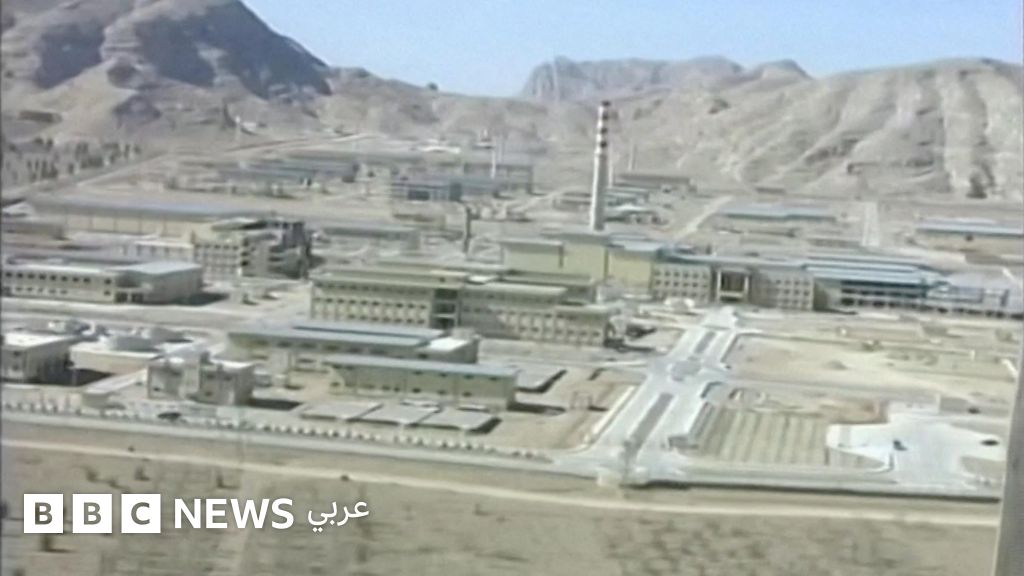
US President Donald Trump has vowed to destroy Iran’s "Pickaxe" facility, a highly fortified secret underground tunnel complex near Natanz believed to be intended for centrifuge development.
Iran’s 'Pickaxe' Facility: What do we know about the site threatened by the US President?
Published October 7, 2024
Last updated 30 minutes ago
Reading time: 8 minutes
US President Donald Trump said on Monday that the United States would destroy the "Pickaxe Mountain" nuclear site in Iran, vowing that Washington would continue to strike the country with force.
"We are going to take out Pickaxe Mountain. Tell the Iranians to get ready," Trump added.
Trump continued, "We are watching the site very closely. We don't see any activity there. They are not doing well with their nuclear situation. Every time we hear about it, we blow it up. So they don't like to talk about it. But we will likely give Pickaxe a hit in the relatively near future."
So, what do we know about this site?
"Pickaxe Mountain," or "Kuh-e Kolang Gaz La" in Persian, is known as a tunnel complex located inside a mountain about 1.6 kilometers south of the Natanz uranium enrichment facility.
The site has drawn the attention of analysts since 2020 after satellite imagery showed extensive excavation and tunneling work, while Iran has not officially announced the nature of the facility or its purpose. IAEA inspectors have not been able to enter the site, and the agency has not officially described it as a nuclear facility, confirming that being denied access prevents them from verifying the activities taking place inside.
According to analyses published by the Institute for Science and International Security (ISIS) and the Center for Strategic and International Studies (CSIS), the site consists of four tunnel entrances extending into the mountain, with depths believed to range between 80 and 100 meters below the rock, making it more fortified than some other Iranian nuclear facilities.
The Institute for Science and International Security believes that the Pickaxe complex could become a site used by Iran to rebuild its centrifuge program, starting from component production, through to the assembly of centrifuges, and eventually to uranium enrichment. However, it confirms that the site is not yet ready for operation and there are no indications that it is currently active or contains a stockpile of enriched uranium.
Skip Most Read and Continue Reading
Houthis target Abha airport and warn against flying in Saudi airspace
Iran expands attacks to Bahrain and targets two tankers in Hormuz, while Washington continues its strikes
Why did Haaland transform from a football star into a cultural phenomenon?
Why do mosquitoes bite some people more than others?
Reuters described the site as housing two deep tunnel complexes near Natanz, while citing experts as saying that its fortifications might exceed the capacity of some US bunker-buster bombs.
Previous Strikes
Skip Podcast and Continue Reading
Worth noting
An in-depth explanation of the most prominent events and topics to help you understand the most important developments around you and their impact on your life.
Episodes
Podcast End
On June 21, 2025, during the 12-day war, Trump announced the targeting of three Iranian nuclear facilities: Fordow, Natanz, and Isfahan, with "extensive and precise" airstrikes, noting that they were completely destroyed.
The US President described the operation at the time as a "tremendous military success," noting that the Fordow facility was the most difficult and highly fortified target, and it had been "completely obliterated."
Reports indicated that Washington used GBU-57 bunker-buster bombs in the bombing of the Fordow facility, which are bombs designed to penetrate deep underground fortifications.
So, what do we know about Iran’s nuclear facilities?
Israel announced that it had targeted nuclear facilities, including Natanz and Arak. Nuclear facilities in Iran are distributed into four main categories: research centers, dedicated enrichment sites, nuclear reactors, and uranium mines.
Under the 2015 nuclear deal, Iran agreed to limit uranium enrichment to 3.67 percent, but after the United States withdrew from the agreement under President Donald Trump in 2018, Iran began enriching at higher levels, eventually reaching 60 percent. The maximum enrichment level required for nuclear weapons is 90 percent.
Natanz Uranium Enrichment
Natanz is the primary site for uranium enrichment in Iran, located about 250 kilometers south of Tehran.
The plant began operations in February 2007, in violation of UN Security Council resolutions demanding a halt to uranium enrichment, as it is the focus of international negotiations and subject to rigorous inspection by the IAEA.
The facility consists of two parts: the Pilot Fuel Enrichment Plant (PFEP) and the main Fuel Enrichment Plant (FEP), which was built underground to resist airstrikes. There has been debate for years over the extent of the damage a potential Israeli airstrike could inflict on the facility.
It is capable of operating up to 50,000 centrifuges, while there are currently about 14,000 centrifuges installed there, with about 11,000 in operation to purify uranium up to the 5 percent level.
The Natanz plant produces low-enriched uranium, containing 3-4 percent U-235 concentration, which makes it suitable for producing fuel for nuclear power plants.
However, it can also be enriched to the 90 percent level required for nuclear weapons. Analyses of environmental samples conducted by the IAEA in November 2014 confirmed that the facility was used to produce low-enriched uranium, raising concerns about Iran’s nuclear intentions.
Natanz has been a target for cyberattacks and sabotage, including the "Stuxnet" computer virus, which was discovered in 2010 and is widely believed to have been a joint operation between the United States and Israel.
In 2020, the facility suffered a fire that Iranian authorities claimed was caused by a "cyber" sabotage operation. In 2021, Iran announced that the facility had been subjected to an "act of nuclear terrorism."
Iran’s Natanz nuclear facility: What is it and what is the secret behind the repeated incidents there?
Khondab (Arak Heavy Water Reactor)
The first information about Iran's Khondab reactor, formerly known as the Arak Heavy Water Reactor, appeared in December 2002, when satellite imagery was published by the Institute for Science and International Security. The spent fuel from the reactor contains plutonium, which can be used in the manufacture of a nuclear bomb.
In August 2011, the IAEA visited the site, and Iran reported plans to commission the reactor in early 2014.
The adjacent heavy water production plant provides water to the reactor, but it is not currently subject to inspection by the agency. Nevertheless, the agency continues its monitoring via satellite imagery. In 2012, the agency confirmed that the plant remained operational.
World powers are seeking to dismantle the Arak reactor due to concerns about nuclear proliferation. An interim agreement was reached in November 2013 between (the US, Russia, China, the UK, France, and Germany) and Iran regarding its nuclear program. According to this agreement, Iran agreed to impose restrictions on uranium enrichment and stockpiling, in addition to closing or modifying facilities at several nuclear sites.
Original source: BBC Arabic



Comments (0)
Be the first to comment.