Sisi calls on conflict parties in region to return to negotiations
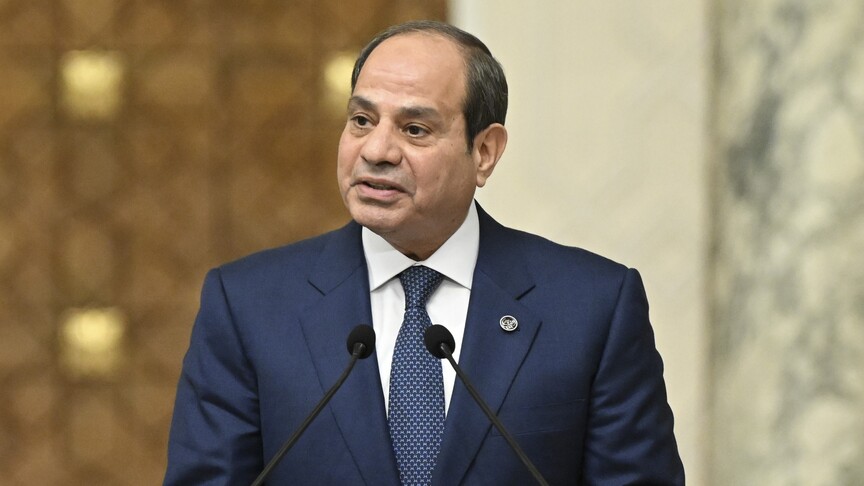
In a speech marking the 74th anniversary of the July 23 Revolution, the Egyptian president called for stopping the use of force, de-escalation, and exercising restraint.
Cairo / Anadolu
Egyptian President Abdel Fattah al-Sisi urged parties to conflicts in the Middle East region to end escalation and return to negotiations, stressing that establishing just peace is the surest way to ensure stability and prosperity for peoples.
These repeated Egyptian calls come at a time when the region is suffering from overlapping crises that threaten international peace and security.
This call came during a speech he delivered on the occasion of the 74th anniversary of the July 23, 1952 Revolution, which ended monarchical rule in Egypt.
Al-Sisi said: "I call on the countries of the world to make every effort to stop wars and conflicts, especially in the Middle East region, and to confront destructive tendencies aimed at perpetuating hatred, bloodshed, and destruction."
He stressed "the necessity of not stopping serious and intensive efforts to achieve a just peace that ensures stability and prosperity for all peoples, for the world is wide enough for everyone."
Al-Sisi explained that "violence only brings more violence, and its known result is ruin and destruction."
He called on "all concerned parties to refrain from using force, exercise restraint, stop escalation, and return to the negotiating table, to uphold the value of peace and protect the rights of peoples."
Al-Sisi's statements come amid ongoing regional tensions, as confrontations between the United States and Iran renewed after the collapse of an initial de-escalation agreement, following the Israeli-American war on Tehran in late February last year, which included US strikes and Iranian responses targeting sites in the region.
The region is also witnessing escalating tension in Yemen, after the Iran-backed Houthis targeted a Saudi ship on Thursday, coinciding with the continuation of the Israeli genocide in the Gaza Strip, despite the ceasefire agreement in effect since October 2025.
These developments coincide with the continuation of the regional state of tension linked to the conflicts in Gaza and Yemen and the confrontations related to Iran. Egyptian diplomacy has traditionally been a voice calling for calm and political solutions in the face of entrenched crises in the region. The real test remains linked to the extent of the concerned parties' response to international and local calls for restraint and a return to the negotiation track. These positions affirm Egypt's steadfast stance on the necessity of elevating the language of reason and preserving peoples' rights to live in safety.
Original source: Anadolu Agency



Comments (0)
Be the first to comment.