Tehran Warns Against Targeting 'Mount Axe' as US Strikes Escalate
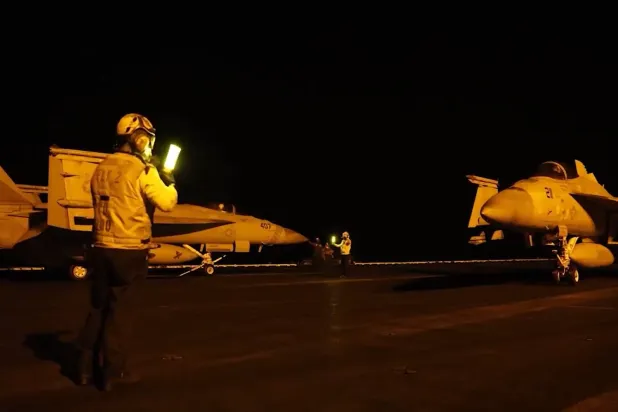
Iran warned that any US strike targeting the 'Mount Axe' nuclear facility in Isfahan would widen the war as US forces continued their raids for the 11th night.
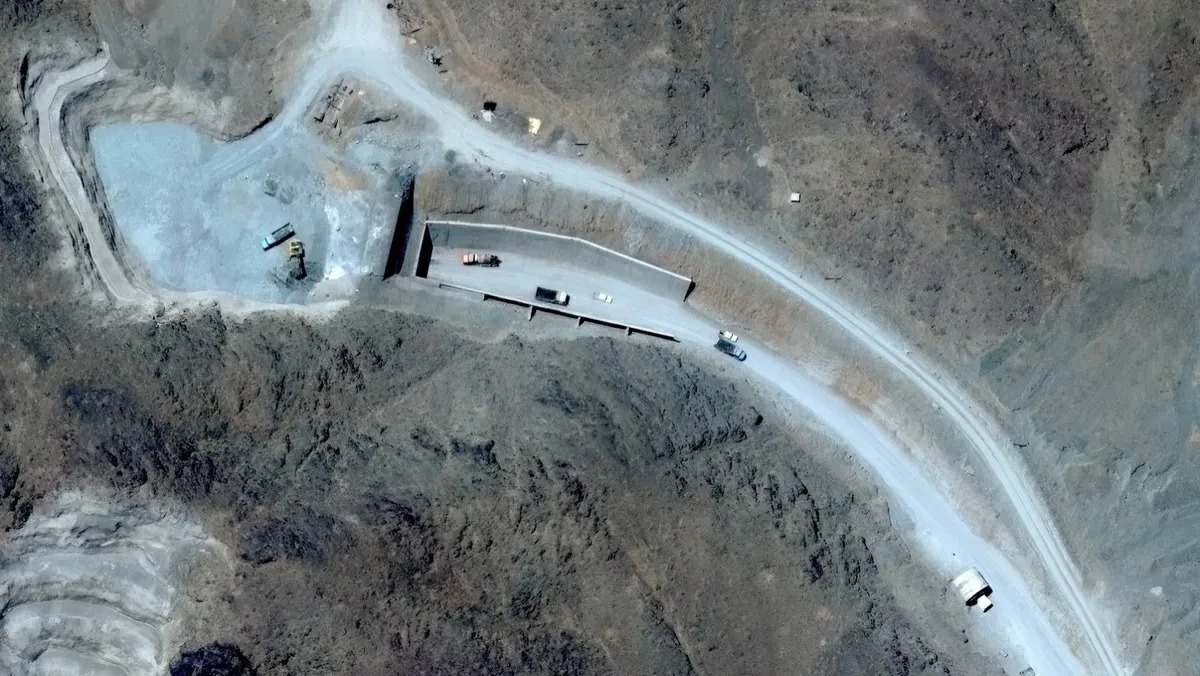
Iran warned Wednesday that any US strike targeting an underground site at 'Mount Axe' near the Natanz nuclear facility would widen the scope of the war, while denying the existence of nuclear activities at the site, after US forces continued their raids inside the country for the 11th consecutive night amid an exchange of attacks that extended to Jordan, Kuwait, and Bahrain.
US President Donald Trump had said that US forces might target 'very soon' an underground site in the mountain, which US reports say houses a nuclear facility under construction near the Natanz uranium enrichment facility, while Tehran denies any nuclear activity there.
Iranian Foreign Ministry spokesman Esmail Baghaei said there is 'no nuclear activity' taking place at 'Mount Axe', known in Iran as 'Kuh-e Kalang', and accused Washington of using the site as a 'pretext' to justify attacks. He added that Iran's nuclear activities are declared to the International Atomic Energy Agency.
Earlier, Iranian state television quoted the Armed Forces General Staff's operations as saying that targeting the site would be considered an expansion of the war, vowing to strike the interests of the United States and its allies.
Trump had said from the Oval Office that Washington has not ended its operations in Iran, and that withdrawal at this stage would give Tehran an opportunity to rebuild its capabilities. He added that Iran may need between 20 and 25 years to recover from the damage inflicted, affirming that the United States 'will not leave now'.
US Central Command said the 11th round targeted military operations centers, naval capabilities, aircraft hangars, drone storage facilities, and military logistics infrastructure.
Iranian media reported explosions or raids over a wide area including Bushehr, Mahshahr, Behbahan, and Amidieh in Khuzestan province; Sirik, Chabahar, and Konarak in the south; Tabriz in the northwest; areas near Kabudrahang in Hamadan, Abdanan in Ilam, and Baneh in Kurdistan in the west. Iranian state television announced activation of air defenses in west, east, and northeast Tehran.
IRNA and residents in the capital reported hearing explosions and activation of air defenses in parts of Tehran. The Revolutionary Guard-affiliated Fars news agency also reported that residents in Tehran heard explosions during the early hours of Wednesday, coinciding with air defense activity over the capital.
Later, the Revolutionary Guard in Tehran province denied circulating reports about activation of defense systems or casualties in the Pakdasht area east of the capital.
Ehsan Jahaniyan, the deputy governor of Bushehr for political and security affairs, said three US strikes in the province did not result in casualties. He added that areas near Khvormuj were bombarded, while Bushehr city was targeted in two phases, and one strike hit a power station near the nuclear facility, causing a power outage in Bandarkah village before it was fully restored within less than two hours. Authorities did not report damage to the nuclear facility.
An Iranian Health Ministry official said the US strikes since the resumption of operations have killed 53 civilians and wounded around 500, without specifying the time period covered by the tally. It could not be independently verified.
Regional Iranian Attacks
In response, Iranian forces announced launching missile and drone attacks on what they said were US military positions in Jordan, Kuwait, and Bahrain.
The Iranian army said it targeted buildings and equipment storage facilities at Al-Azraq Air Base in Jordan, then attacked warehouses and aircraft maintenance hangars at Sheikh Isa Air Base in Bahrain using Arash drones.
The Kuwaiti army announced that its air defenses repelled drone attacks originating from Iran, while Bahrain said it intercepted Iranian attacks after sirens sounded. Jordan also confirmed intercepting missiles and drones.
Sirens sounded in the Jordanian city of Aqaba, and Israeli officials said Iranian missiles targeted Jordan. Video footage taken from the nearby city of Eilat showed smoke columns in the skies above Aqaba. The Jordanian army said it intercepted four missiles and four drones, while two missiles landed in uninhabited areas near Aqaba.
The Iranian army said it targeted residential buildings and equipment storage facilities inside Al-Azraq Air Base.
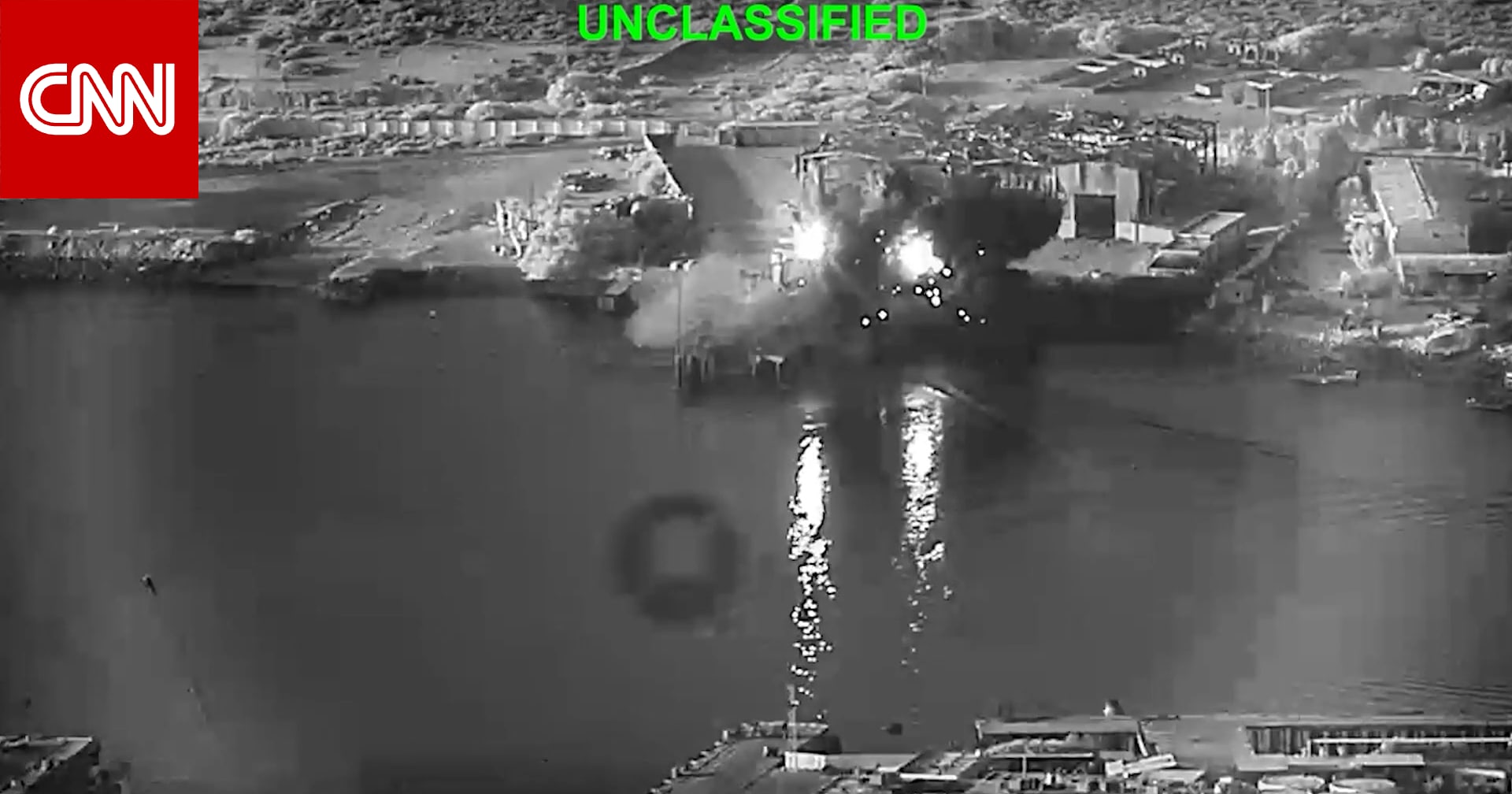
Screenshot from a video showing strikes on military sites inside Iran during the 11th night of US operations early Wednesday.
Iranian state media quoted a statement by the Revolutionary Guard saying the attacks targeted air defense systems, radars, and administrative facilities, vowing more severe waves of missile and drone attacks.
The new round came after four US servicemen were killed in attacks in recent days in Jordan and Iraq, raising the number of US troops killed since the war began on February 28 to 18.
Trump said US forces intercepted most of the projectiles targeting their positions, but acknowledged that some penetrated defenses in Jordan. He vowed that Iran would pay 'many times over' for every US soldier killed.
Escalation in the Strait of Hormuz
The strikes coincided with ongoing confrontation in the Strait of Hormuz, after a tanker was attacked Tuesday and its crew was forced to abandon it.
The UK Maritime Trade Operations had said an 'unknown projectile' struck a tanker off the coast of Oman, while the Revolutionary Guard announced the interception of two oil tankers that it said attempted to cross the strait in violation, after large fires broke out on them.
US Central Command said its latest strikes target Iranian capabilities used to threaten navigation, as control of the strait has become a major focus in the renewed war.
CENTCOM said Iran has attacked more than 30 commercial vessels in the past three months, and its strikes aim to reduce the capabilities used to threaten navigation.
The escalation in the Strait of Hormuz coincided with threats by the Houthis in Yemen to close the Bab el-Mandeb strait and target ships violating what they described as a naval blockade.
Screenshot from a video showing strikes on military sites inside Iran during the 11th night of US operations early Wednesday.
Trump warned that the United States would deal with the Houthis if they attempted to carry out their threat, and said Bab el-Mandeb has not been closed yet, and Washington would respond if it happens.
Navigation monitoring companies reported that several tankers changed course in the Red Sea after the threat, indicating the war's impact expanding from the Strait of Hormuz to the maritime corridor at the entrance of the Red Sea.
Read also
Original source: aawsat.com


Comments (0)
Be the first to comment.