The American War on Iran Enters a New Phase
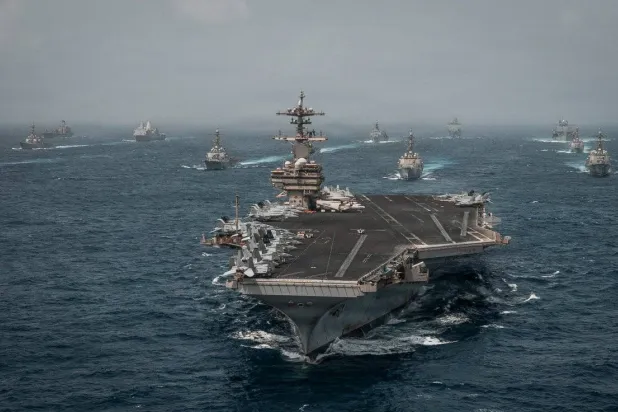
The Trump administration has again plunged into a war with Iran that had never truly ended. When it began more than four months ago, US forces targeted Iranian military bases.
With the publication of details about the Mossad (Israeli foreign intelligence) plan to topple the Iranian regime, which failed miserably, voices are rising calling for the ouster of Prime Minister Benjamin Netanyahu and David Barnea, the former Mossad chief who devised the plan.
Israeli media reported Wednesday that security officials said the plan was naive and amateurishly drafted, and that most American officials rejected it as doomed to fail.
Security and political sources in Washington and Tel Aviv had revealed details of the plan in reports published by the New York Times last Sunday and Haaretz on Sunday and Monday.
The plan was drawn up before the latest US-Israeli war on Iran and included several elements, foremost among them killing Iranian Supreme Leader Ali Khamenei, exploiting the expected chaos after his death to drive Iranians to protest, recruiting armed Kurdish groups to invade Tehran with members of other minorities, using Azerbaijan to launch an attack from the north, and enlisting former Iranian President Mahmoud Ahmadinejad to later install him as the new president after toppling the regime.
0 seconds of 0 secondsVolume 90%
Press shift question mark to access a list of keyboard shortcuts
00:00
00:00
00:00
Early US Rejection
Netanyahu presented the plan to President Donald Trump and his aides during his visit to the White House on February 11, 2025. Barnea joined the meeting via video link from Mossad headquarters in Glilot.
According to Haaretz, the initial outcome of the meeting was deceptive, as Trump was convinced that the time had come to overthrow the regime. But the picture changed completely when he met with his advisers the next day: Vice President J.D. Vance expressed skepticism about the Israeli plan, while Secretary of State Marco Rubio appeared more decisive, calling it "nonsense." CIA Director John Ratcliffe also mocked it, calling it a "farce."
Senior intelligence officials concluded that the expectation that a Kurdish invasion would topple the regime was "detached from reality." Trump, seemingly convinced by his advisers' logic, ended the discussion by saying regime change would be "their problem."
The two newspapers published data indicating that former President Ahmadinejad had agreed to work with Israel in preparation for his appointment as president, but his office issued a strongly worded statement denying that.
Ahmadinejad's office said what the newspaper published was "completely false," describing it as containing "Hollywood claims" and a "ridiculous scenario" in an attempt to "create confusion and wage psychological warfare" against Iranians.
A statement published on Ahmadinejad's website Dolat-e Bahar said the former president continues his "ongoing affairs" and works in service of citizens, categorically denying that he is under house arrest or that he has any ties to Israel.
Mossad Under Fire
Haaretz published a series of reactions that deemed Netanyahu and Barnea's plan a failure. A senior security official said: "There is a failure of Mossad here, stemming from their belief that they could topple a regime with such limited capability."
Other sources expressed similar views, noting that this ambitious plan, which was supposed to be the fruit of years of work, was put together in months.
Former Mossad chief Tamir Pardo said: "When I headed a special operations unit, I always oversaw an effective strategic operation. We worked for two years to achieve a result."
Ram Ben Barak, former deputy Mossad chief and member of the Knesset Foreign Affairs and Security Committee, said: "It's impossible to implement a plan to change a regime in a few months. I estimated this plan would take at least a decade. Finding alternative leadership, appointing a leader, recruiting personnel, and bringing in weapons—all are arduous efforts and endless failures."
Another Mossad source added: "This was a massive event that was supposed to last 15 years. It was supposed to be passed from one chief to another, but it can't be done this easily. Mossad is a huge ship; moving it takes time."
A fourth source, who previously served as a head of division in Mossad, said: "Such an operation requires enormous effort," adding: "You have to build a huge system, and even after building it, you cannot be certain that success is guaranteed."
Israeli Prime Minister Benjamin Netanyahu (left) and Mossad Director David Barnea in Jerusalem on April 4, 2023 (dpa)
The source also pointed to another aspect: arrogance and clinging to the goal at any cost, to the point of blindness. Just as Netanyahu did not consult his predecessors and was not swayed by the intelligence directorate's warnings, the same was true for senior Mossad leaders.
A security source said: "In the midst of preparations, Mossad contacted me and asked me to meet with the head of the influence division. He was the one leading the plan. I said I would come gladly. I came, said hello, but it was clear he didn't need help; he already knew what to do. I thanked him profusely and left."
A security source wondered: "Where were all those who should have stood up and said this is all nonsense? Experts should have said: Enough, stop, you're raising unfounded ideas. All these people, and no one says the king is naked?"
In ongoing discussions, some believe the entire plan was a grave strategic error. A security source said: "You followed an illusion and created a victory narrative for the Iranians." He added that Mossad bears significant responsibility for this failure because it implied a high probability of success, and Netanyahu bears part of the responsibility, as he sought to implement the plan from the outset and persisted even after being told it was futile.
Ahmadinejad speaking with his ally Saeed Jalili, adviser to Iran's Supreme Leader, on the sidelines of the opening ceremony of the Assembly of Experts in Tehran (archival - ILNA)
Disagreement Over Results
In contrast, other voices urge caution, arguing that although the plan did not succeed, the overall results of the campaign may not become clear for years. Proponents of this view say Israel ended the Second Lebanon War with a sense of bitterness but then enjoyed 17 years of quiet.
Barnea himself still believes the Iranian regime is doomed to collapse, expecting it to happen within one to three years. However, he also acknowledges that if the United States and Iran reach an agreement that leads to the release of assets and lifting of sanctions, there is a high chance the regime will survive.
In such a scenario, the regime would have withstood widespread protests, resisted an attack by the world's biggest power, and not surrendered to a prolonged pressure campaign over the Strait of Hormuz. Money would flow in, and defense production could see a major boost. Yet the gamble Netanyahu took may cost Israel dearly.
Ofer Shelah, former head of the Knesset Foreign Affairs and Security Committee, wrote in a Haaretz article Wednesday that "the damage to Israel's security and international standing is great, no less than the damage of the October 7 massacre," attributing it to inherent flaws in Israeli culture and way of thinking.
A photo released by the official IRNA news agency of Ahmadinejad offering condolences to Khamenei's sons Mostafa and Masoud; the picture also shows National Security Council Deputy Secretary Ali Bagheri Kani making a statement to state television in Tehran on Monday
Original source: Asharq Al-Awsat



Comments (0)
Be the first to comment.