US Military Mission to Beirut to Assess Lebanese Army Needs
Lebanon is on the verge of entering a new political phase as the Washington summit between Lebanese President General Joseph Aoun and his US counterpart Donald Trump convenes.
Lebanon is on the verge of entering a new political phase after the conclusion of the Washington summit between Lebanese President General Joseph Aoun and his US counterpart Donald Trump, especially if their agreement on political and security frameworks to activate the Lebanese-Israeli "Framework Agreement," under US auspices, has begun to pave the way for implementation. This would lead to the joining of political forces and figures to the pro-agreement camp, after they had previously recorded a set of observations that are supposed to be taken into account and included in its provisions, allowing for modification during implementation.
In this context, the stance of the Progressive Socialist Party, which supports Aoun, was notable. It came following an exchange of friendly messages between Aoun and former party leader Walid Joumblatt, as Asharq Al-Awsat learned, which preceded his trip to Washington and continued after his meeting with Trump, rekindling their relationship.
The Framework Agreement has advanced over the US-Iranian Memorandum of Understanding, which is besieged by the blazing fires between the two signatories, causing embarrassment for Hezbollah, according to a political source familiar with the atmosphere of the Washington summit speaking to Asharq Al-Awsat. Hezbollah still clings to it, unlike its ally Speaker of Parliament Nabih Berri, who deals realistically with the political agendas emphasized by Trump and Aoun, which formed a point of convergence between them. His stance oscillates between waiting and openness to ensure their implementation, allowing him to act accordingly, because the lesson, as he told Asharq Al-Awsat, remains in execution.
Berri and Hezbollah Diverge
Berri, according to the source, differs from Hezbollah by giving what Aoun and Trump agreed upon a chance to be implemented, with the coming days expected to see the beginning of its application, given talk of Washington's readiness to pressure Israel to expand the geographical scope of the experimental zones, this time to include towns that are still occupied, and not be limited to the town of Western Zoutar.
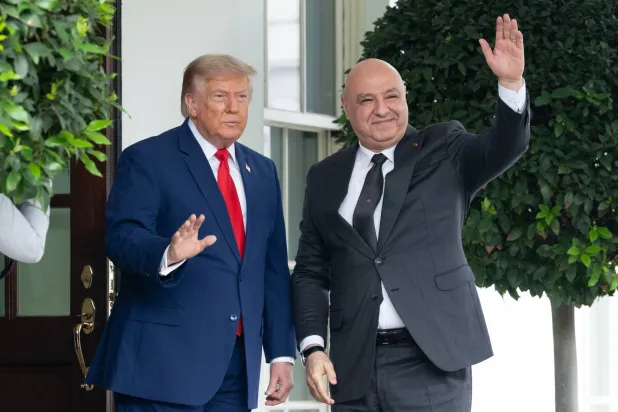
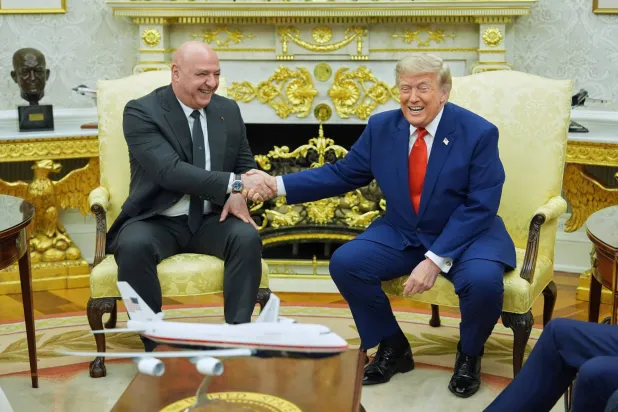
Presidents Donald Trump and Joseph Aoun at the White House (AP)
He revealed that Trump pledged before Aoun to rein in Israeli Prime Minister Benjamin Netanyahu's behavior and prevent him, as much as possible, from sliding toward escalation. He also showed responsiveness to what Aoun proposed, particularly regarding providing all forms of support to the Lebanese army, and during the summit requested his Defense Secretary Pete Hegseth, who attended, to dispatch a military mission to Beirut to assess the army's needs as part of developing and strengthening the military cooperation program between the two countries.
The source noted that Trump would intervene as soon as Aoun presented what Lebanon needed in terms of support and what it aspired to obtain from the United States to extend state authority over all its territory, interrupting him before finishing his remarks by saying, "Tell me what you want," showing full responsiveness to his demands. A member of the Lebanese delegation was quoted as saying, "Positive atmospheres dominated the meeting from beginning to end, to the point that we almost felt as if they had met before and had prior acquaintance, because we were surprised by this degree of political chemistry between them."
US Military Delegation to Beirut
The source confirmed that Trump showed understanding of Aoun's request to expand the experimental zones by including towns that are still occupied. He said that the commander of the US Central Command (CENTCOM), Admiral Brad Cooper, will visit Beirut very soon, preceded by General Joseph Cleverfeld, who heads the special military coordination group for Lebanon, and that their presence together comes in the context of verifying the army's deployment in the two experimental zones and their clearance from any armed presence other than Lebanese military units, in reference to Hezbollah.
The source believed that Admiral Cooper's presence opens the door for discussions on expanding the experimental zones, and predicted that the political and military tripartite meeting of the member states of the Framework Agreement in Rome on August 4 will be a station to finalize their expansion in light of the outcome of verifying the army's deployment in the two zones and their clearance from any illegal weapons.
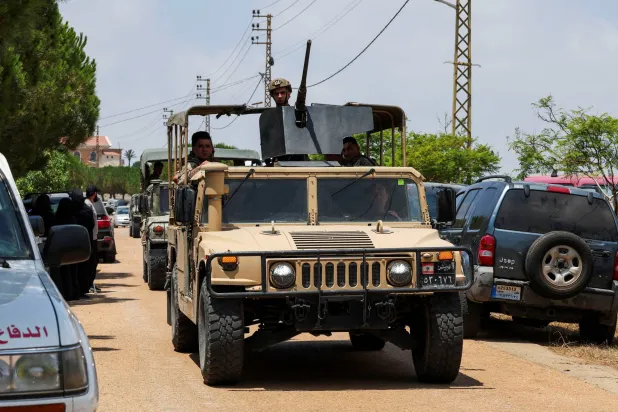
Lebanese soldiers alongside local residents waiting for permission to enter the town of Western Zoutar after the Israeli army withdrew from it (AFP)
Regarding Hezbollah, the source stopped at what Aoun said in his speech during the dinner hosted in his honor by the Lebanese ambassador to the United States, Nada Hamadeh Maawad, to the effect that Israel's withdrawal hastens the disarmament of the party. He said that extending state authority over all its territory is not sufficient merely by US pressure on Israel, unless coupled with what is required from Lebanon, specifically concerning the party's weapons.
He asked: Does Hezbollah, by rejecting the Framework Agreement, still place all its cards in the Iranian basket, explaining its displeasure with the outcome of the Washington summit and its firing at it, in the political sense of the word, before it convened? And what will it say to the general Shiite mood that seeks stability through Israel's withdrawal and the extension of state authority over all its territory, allowing the displaced to return to their villages? Although their return, from a security perspective, is insufficient unless coupled with the state rehabilitating infrastructure, which the prime minister pledged during his visit to Western Zoutar.
Hezbollah Alone
Although Hezbollah is politically fighting, until further notice, to overthrow the Framework Agreement, and is almost alone if the outcome of the Washington summit translates into tangible steps with political cover from Berri. Hezbollah still controls its movement under the ceiling of political objection and has not resorted to using the street, even though its Secretary-General Naim Qassem had threatened not to return to the situation as it was before March 2, in reference to non-compliance with the ceasefire in response to continued Israeli attacks, though his threat remains ineffective on the ground.
Will the party reconsider its calculations, taking into account the pulse of the Shiite street for stopping the war, because it has had enough of further bloodshed, bulldozing of towns, and destruction of homes, by joining the Framework Agreement if it translates into executive steps, instead of betting on the Memorandum of Understanding, which remains suspended on the blazing war between Tehran and Washington?
Therefore, Aoun succeeded in separating the Lebanese track from Iran, and in consolidating Lebanon's inclusion on the map of international interest. He enjoys an Arab-international umbrella and, at the same time, takes a step toward restoring the state's decision on war and peace in conjunction with the implementation of the Framework Agreement under US pressure with all its implications.
Original source: Asharq Al-Awsat
Comments (0)
Be the first to comment.