US Military Mission to Beirut to Assess Lebanese Army Needs
Lebanon stands on the verge of entering a new political phase following the Washington summit between Lebanese President General Joseph Aoun and his US counterpart Donald Trump.
Lebanon stands on the verge of entering a new political phase with the conclusion of the Washington summit between Lebanese President General Joseph Aoun and US President Donald Trump. This comes if their agreement on the political and security outlines to activate the Lebanese-Israeli "Framework Agreement"—sponsored by the United States—begins to pave its way toward implementation. Such a step would lead political forces and figures to join the pro-agreement camp, after previously registering a set of observations that are supposed to be taken into account and incorporated into its clauses to allow for amendments during application.
In this context, the stance of the Progressive Socialist Party supporting Aoun was noteworthy, following an exchange of friendly messages between Aoun and former party leader Walid Jumblatt, as "Al-Sharq Al-Awsat" learned, which preceded Aoun's trip to Washington and continued after his meeting with Trump, thereby restoring warmth to their relationship.
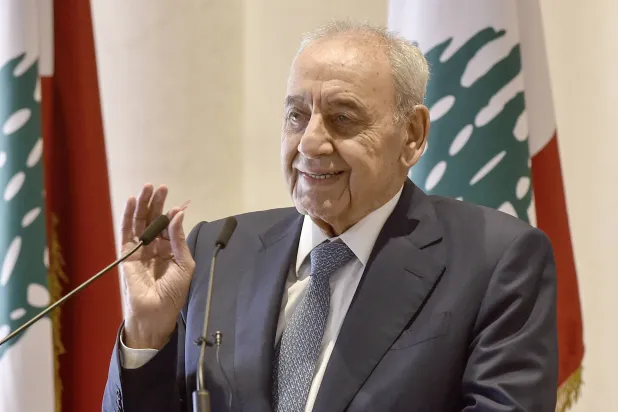
The "Framework Agreement" has begun to outpace the US-Iranian "Memorandum of Understanding," which is besieged by the raging fires between the two signatory parties. According to a political source close to the atmosphere prevailing at the Washington summit who spoke to "Al-Sharq Al-Awsat," this poses an embarrassment for Hezbollah, considering that the party still clings to the memorandum—unlike its ally, Parliament Speaker Nabih Berri, who is dealing realistically with the political themes emphasized by Trump and Aoun that formed a point of convergence between them. Berri's position oscillates between waiting and openness to ensure its implementation, allowing him to act accordingly, because the proof, as he told "Al-Sharq Al-Awsat," remains in the implementation.
Berri and Hezbollah Diverge
According to the source, Berri is distinguishing himself from Hezbollah by giving what Aoun and Trump agreed upon a chance to be put into effect, with the coming days witnessing the beginning of its application in light of talks about Washington's readiness to pressure Israel to expand the geographical scope of the experimental areas. This time, the expansion would include towns that are still occupied, rather than being limited to the town of Zawtar el-Gharbiyeh.
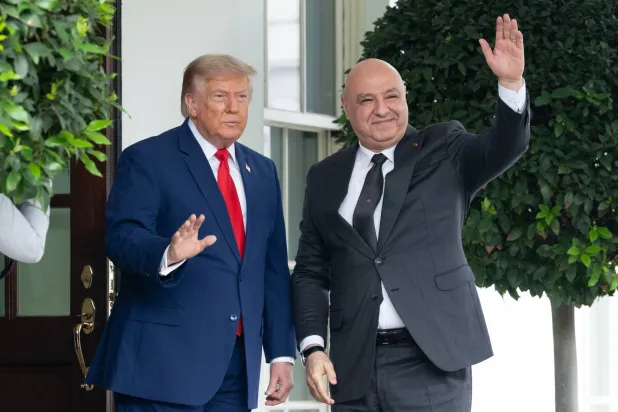
Presidents Donald Trump and Joseph Aoun at the White House (AP)
The source revealed that Trump pledged to Aoun to rein in the performance of Israeli Prime Minister Benjamin Netanyahu and prevent him, as much as possible, from sliding toward escalation. Trump also showed responsiveness to Aoun's proposals, particularly regarding providing all forms of support to the Lebanese Army. During the summit, Trump asked his Defense Minister Pete Hegseth, who participated in the meeting, to dispatch a military mission to Beirut to assess the army's needs as part of developing and enhancing the bilateral military cooperation program.
The source pointed out that whenever Aoun presented Lebanon's support needs and what he hoped to obtain from the United States to extend state authority over all its territory, Trump would immediately intervene, interrupting him before he finished his remarks by saying, "Tell me what you want?", showing total responsiveness to his demands. A member of the Lebanese delegation was quoted as saying that "positive vibes dominated the meeting from start to finish, to the point that we almost felt as if they had met before and had a prior acquaintance, because we were surprised by the degree of political chemistry between them."
US Military Delegation to Beirut
The source confirmed that Trump showed understanding for Aoun's request to expand the experimental areas by incorporating towns that are still occupied. He stated that the commander of the US Central Command (CENTCOM), Admiral Brad Cooper, will visit Beirut very soon, following General Joseph Clearfield, who heads the special US military coordination group for Lebanon. Their joint presence comes within the context of verifying the army's deployment in the two experimental areas and ensuring they are free of any armed presence other than Lebanese military units, in a reference to Hezbollah.
The source considered that the presence of Admiral Cooper opens the door to discussing the expansion of the experimental areas. He anticipated that the tripartite political and military meeting of the member states of the "Framework Agreement," scheduled in Rome on August 4, will serve as a milestone to put the finishing touches on this expansion, depending on the outcome of the verification of the army's deployment in the two areas and their clearance of any illegal weapons.
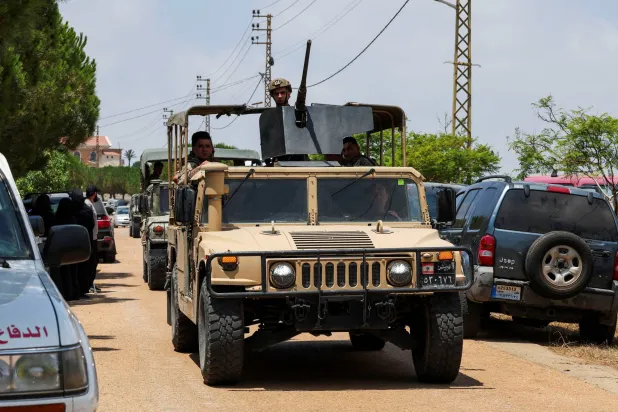
Lebanese soldiers alongside local residents waiting for permission to enter the town of Zawtar el-Gharbiyeh following the withdrawal of the Israeli army from it (AFP)
Regarding Hezbollah, the source highlighted what Aoun said in his speech during the dinner hosted in his honor by Lebanon's Ambassador to the United States, Nada Hamada Maouad, to the effect that Israel's withdrawal expedites the disarmament of the party. He said that extending state authority over all national territory is not achieved simply through US pressure on Israel, unless it is coupled with what is required of Lebanon, specifically regarding the party's weapons.
The source asked: Is Hezbollah, by rejecting the "Framework Agreement," still placing all its eggs in the Iranian basket, which explains its resentment over the outcome of the Washington summit and its political-level targeting of it even before it convened? And what will it say to the general Shia mood that seeks stability through Israel's withdrawal and the extension of state authority over all territory, enabling displaced persons to return to their villages? Although their return from a security standpoint is insufficient unless coupled with the state's rehabilitation of infrastructure, a task the Prime Minister pledged during his visit to Zawtar el-Gharbiyeh.
Hezbollah Isolated
Although Hezbollah is fighting politically until further notice to defeat the "Framework Agreement," it stands almost alone if the outcomes of the Washington summit are translated into concrete steps backed by Berri's political cover. Hezbollah still keeps its actions under the ceiling of political objection and has not resorted to street protests, even though its Secretary-General Naim Qassem had threatened not to return to the status quo of before March 2, in reference to not abiding by the ceasefire in response to ongoing Israeli attacks, although his threat remains without effect on the ground.
Will the party reconsider its calculations, taking into account the pulse of the Shia street demanding an end to the war—since it has had enough of further bloodshed, the leveling of towns, and the destruction of homes—by joining the "Framework Agreement" if it is translated into executive steps, instead of gambling on the "Memorandum of Understanding" that remains tied to the raging war between Tehran and Washington?
Thus, Aoun has succeeded in detaching the Lebanese track from Iran and in firmly placing Lebanon on the international attention map. He enjoys an Arab-UN umbrella and is simultaneously taking a step toward reclaiming the state's decision on war and peace, hand in hand with the implementation of the "Framework Agreement" driven by US pressure across all its provisions.
Original source: Asharq Al-Awsat
Comments (0)
Be the first to comment.