US strikes Iran, tanker, as Tehran hits Kuwait, Jordan: What’s the latest

Strikes have hit closer to Tehran for the first time since the latest wave of attacks started.

By Shola Lawal
Published: 16 Jul 202616 Jul 2026
The escalating conflict between the US and Iran has entered a new phase with direct strikes on strategic locations.
The US military has continued strikes against Iran, hitting targets further to the country’s north as well as close to capital Tehran for the first time in the latest round of violence.
Early on Thursday, US Central Command (CENTCOM) reported it hit several military sites and weapons systems, aiming to “further degrade Iran’s ability to threaten innocent mariners” in the Strait of Hormuz, and also disabled an oil tanker in the waterway.
Recommended Stories
list of 4 items
- list 1 of 4Pezeshkian vows Iran will defend ‘every inch’ of its territory
- list 2 of 4What are the obstacles to peace between Israel and Lebanon?
- list 3 of 4Iran says peace deal voided, fighting ‘existential war’ after US attacks
- list 4 of 4Iranian doctor says US strike damaged children’s cancer hospital
end of list
At least 35 people have died, and more than 300 have been wounded in the latest wave of attacks that began last Wednesday after CENTCOM launched strikes on Iranian port cities close to the Strait of Hormuz. The US says the attacks are in retaliation for Iran hitting three commercial ships in the Strait.
The Islamic Revolutionary Guard Corps (IRGC) of Iran stated that it had attacked US military assets in neighboring Gulf nations.
Here’s what has happened in Iran and the US on Wednesday and Thursday and what both sides are saying:
Where did the US hit?
CENTCOM said in a statement early on Thursday that US air strikes targeted Iranian command centres, air defence sites, missile and drone capabilities as well as coastal surveillance facilities.
Multiple locations were hit, CENTCOM said, including Bandar Abbas on Thursday.
An earlier wave of strikes late on Wednesday hit coastal defence and cruise missile sites on Greater Tunb Island in a 90-minute bombing wave, CENTCOM added. The small, strategically located island sits near the Strait of Hormuz and is believed to hold a naval base, although details are not publicly available. It is also believed to be a point from which the Iranian military has disrupted shipping routes.
Meanwhile, Iranian media reported attacks in Bandar Abbas, Qeshm Island, Sirik, Chabahar, Konarak, Rask, Khondab, Khorramabad and Semnan.
A hospital in Ahvaz was forced to evacuate 211 patients after reportedly being hit in the strikes.
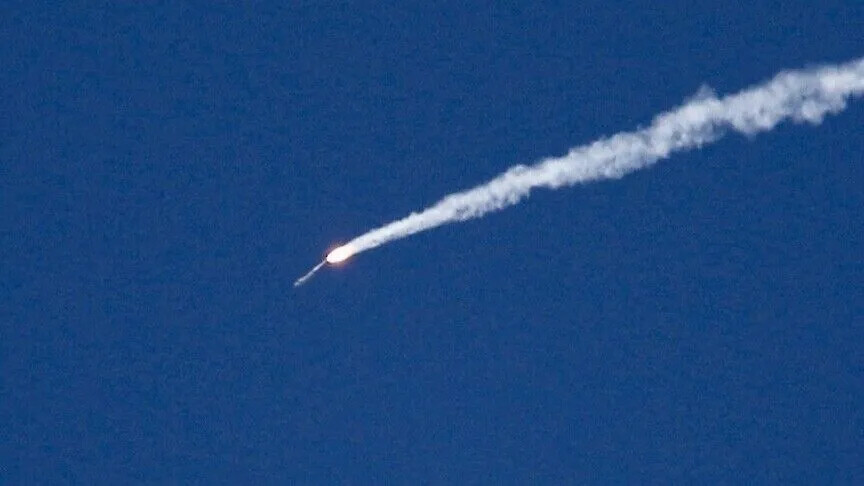
Air defences were activated in Tehran and neighbouring Pakdasht and Parchin on Thursday. The Iranian military said an MQ-9 drone was downed over the city of Andimeshk.
CENTCOM, in a separate statement on Thursday, said it was enforcing a naval blockade reimposed on Tuesday by disabling a “non-compliant” oil tanker that was attempting to sail towards Iran’s Kharg Island using Hellfire missiles.
How has Iran responded?
Iran’s army claimed retaliatory attacks on US military assets in Kuwait and Bahrain on Thursday.
Kuwait: The Iranian army said in a statement it targeted radar systems, the Patriot defence system and fuel tanks belonging to US forces at the Ali Al Salem airbase in Kuwait. In an earlier statement, it said it hit a radar and gathering point for US soldiers in Kuwait, as well as US communications systems and fuel depots in Jordan’s al-Azraq airbase.
Bahrain: Drones also targeted US Super Hawk radars and Patriot defence systems at the Sheikh Isa airbase in Bahrain, the army added.
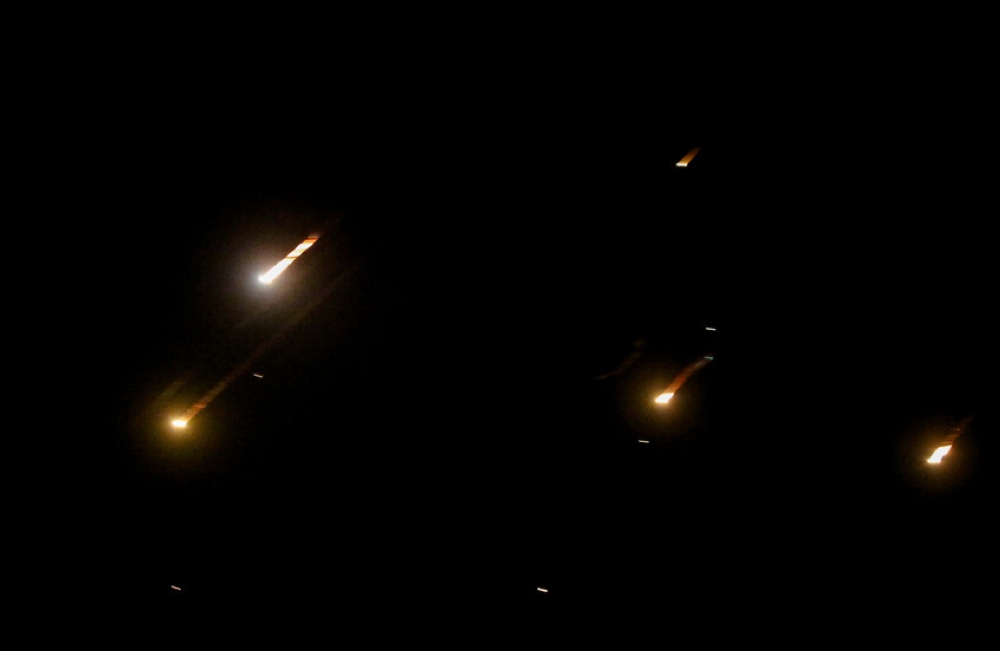
Jordan: Meanwhile, Jordan said it intercepted eight Iranian missiles on Thursday.
Iraq: Iraqi authorities said five drones attacked the city of Erbil, with two crashing near a US base and one shot down near the US consulate. Iran’s army has not claimed the attacks.
What are both sides saying?
Iran’s parliament speaker and lead negotiator, Mohammad Ghalibaf, said on Wednesday Iran is prepared for a fuller military confrontation if the US does not live up to the terms of the interim deal. The country is fighting an “existential” battle, he added.
The IRGC has, meanwhile, threatened to halt all energy exports from the Middle East over the US’s naval blockade, which was reimposed on Tuesday.
“The export of oil and gas from the region will be either for everyone or for no one,” it said in a statement.
Speaking at the US Army War College in Pennsylvania on Wednesday, President Donald Trump reiterated his claims that Iran was pushing to strike a peace deal behind the scenes but did not provide details.
“They don’t like what we’re doing, and they do want to settle. We’ll find out whether or not we settle with them, or we just finish it off,” he said.
However, in a rare show of gratitude on Wednesday, Trump thanked Iran via his Truth Social platform for the release of Dena Karari, an American citizen the US says was “wrongfully” jailed in the country since 2024.
Meanwhile, US Vice President JD Vance, in an interview with podcaster Joe Rogan released on Wednesday, defended the war on Iran but added that an agreement was needed between the two sides to end the conflict.
These strikes mark a significant escalation in the US-Iran conflict, hitting sites near Tehran for the first time. The US objective is to degrade Iran's capacity to disrupt shipping in the Strait of Hormuz, while Iran retaliates by targeting US assets in the Gulf. The situation remains highly volatile, with both sides continuing offensive operations.
Original source: Al Jazeera


Comments (0)
Be the first to comment.