Iran war live: Tehran attacks Bahrain, Kuwait, Jordan after US bombings

Live updates,
Iranian state media report explosions in port cities of Bandar Abbas, Sirik and Jask, as well as Qeshm Island.
Published On 13 Jul 2026
- Iran claims attacks on Bahrain, Kuwait and Jordan, saying it hit US military sites, in retaliation for Washington’s renewed bombardment of its southern coast.
- The US attacks on southern Iran comes amid an intensifying standoff over the Strait of Hormuz, with explosions reported in port cities of Bandar Abbas, Sirik and Jask, as well as Qeshm Island.
29 Updates
33s ago
(04:00 GMT)
Oil prices jump as US and Iran trade attacks over Strait of Hormuz
Oil prices have jumped amid the latest outbreak of hostilities between the United States and Iran over the Strait of Hormuz.
Brent crude, the main international benchmark, rose more than 4 percent on Monday as Washington and Tehran traded attacks amid their escalating standoff over control of the critical waterway.
Brent futures for September delivery stood at $79.17 a barrel as of 03:00 GMT, the highest since June 22.
Read more here.
7m ago
(03:53 GMT)

Kuwait says air defences engaging ‘hostile aerial targets’
The General Staff of Kuwait’s Army says air defence systems are engaging “hostile aerial targets” inside the country’s airspace.
It said any explosions heard were the result of air defence systems intercepting the attacks, and urged the public to follow safety and security instructions.
10m ago
(03:50 GMT)

Neither US nor Iran ‘can change facts on the ground’ with military action
Trita Parsi, a leading expert on Iran, says misunderstandings between the US and Iran over the governance of the Strait of Hormuz during the interim period are driving the current tensions.
“There were obviously some ambiguities in that memorandum [signed on June 16]. It was necessary in order to get to an agreement within a timely fashion,” said Parsi, executive director of the Quincy Institute for Responsible Statecraft, a US-based think tank.
“But some of those have proven crucial in the sense that the two sides have very different ideas of what it should actually mean.”
Parsi said he did not believe military action “can change the fundamentals of the situation” in favour of either of the sides.
“At best, I think it can lead to scenario in which – after this round of fighting, which seems to be much more intense than the previous ones – they will return to the table, realising that neither one of them can really change the facts on the ground, and as a result, [realise that] some form of a compromise is necessary,” he said.
“I do not see military action by either side really being able to change the fundamentals of the situation, differently from what it did in the previous war,” he added.
24m ago
(03:36 GMT)
Iran’s army says ‘drone attacks continue against US bases in the region’
We now have a new statement from Iran on the attacks on Kuwait. This time, it’s from the Iranian Army.
The statement, carried by the IRNA news agency, said drone attacks were continuing on US bases in the region and that the army launched “destructive drone” assaults on US forces in Kuwait, including defence and missile systems, bunkers and support shelters.
The army went on to condemn what it described as repeated US attacks on military sites, civilian infrastructure and civilians in Iran, calling them a “blatant violation” of the fundamental principles of the United Nations Charter.
The army said Iran’s armed forces would use their full capabilities to defend the country’s sovereignty, territorial integrity, independence, and population against any further aggression.
As we’ve been reporting, Iran’s IRGC earlier claimed attacks on Kuwait’s Ali Salem and Ahmad Al-Jaber bases.
30m ago
(03:30 GMT)
US, Iran ‘almost back to war’ over ‘misunderstandings’ about Hormuz
Reporting from Doha, Qatar
The MoU was signed several weeks ago. We are now almost at the end of the first month of the 60-day period given for a final deal. So that’s not a very hopeful situation, but countries in the region are continuing their [diplomatic] efforts.
Qatar sent a delegation just a couple of days ago to Iran, and there has been negotiations between Iranians and Omanis to try to come to a deal regarding how to manage the Strait of Hormuz.
Of course, that misunderstanding between the Americans and the Iranians is key here.
The Iranians think that they have the prerogative, according to the MoU, to organise traffic in the Strait of Hormuz, which means they can give or deny permissions to ships, and [they believe that] any ships that cross the strait without advance Iranian permission have violated the MoU.
But according to the American understanding, the Iranians have to step aside and allow free, unhindered traffic in the Strait of Hormuz. So that’s the subject of this conflict right now, and we are almost back to war because of this particular point and the misunderstanding about it.
So that’s something that is hindering the peace efforts, and regional countries are still continuing to try to overcome this particular obstacle, including Pakistanis, Qataris and Omanis.
43m ago
(03:16 GMT)
Sirens sound again in Bahrain
Bahrain’s Interior Ministry says that sirens have been sounded again, warning people to remain calm and head to the nearest safe place.
The siren has been sounded . Citizens and residents are urged to remain calm and head to the nearest safe place.
— Ministry of Interior (@moi_bahrain) July 13, 2026
45m ago
(03:15 GMT)
With war on Iran, Trump took a ‘complex system and broke it’
We have more from Alan Eyre, the former senior US diplomat and member of the US negotiating team for the 2015 Iran nuclear agreement.
He said the US and Israel’s war on Iran has disrupted the region’s strategic balance.
“With the war in June, and to a lesser extent last year as well, President Trump took the complex system and broke it,” Eyre told Al Jazeera. “It’s going to take time for this complex system in the Persian Gulf area to find a new balance, a new homeostasis. I don’t know how long it will take; I don’t know what it’ll be. But we do know it won’t be like it was before.”
And “that’s unfortunate, because the new region is going to be far less stable, and Iran will be far more dangerous”, he said.
Eyre suggested that the US may have to “accept increased Iranian control” of the Strait of Hormuz to reach a nuclear deal. He also pointed to a growing divergence between the US and Israel over how to proceed.
“The US and Israel, at this point, have differing strategic goals,” Eyre said. “The US just wants to cut its losses, get the strait open, and move away, because it’s a quagmire. Israel thinks this is unfinished business – it wants to resume attacks, and wants the US to resume attacks against Iran and against Hezbollah.”
“So it’s an incredibly dynamic situation”, he added, “with a lot of different variables in play”.
1h ago
(03:00 GMT)
Iran claims attacks on Kuwait airbases
The IRGC says it has “completely destroyed” fuel tanks and Patriot air defence systems at the Ali Al-Salem airbase, as well as a strategic FPS radar system at the Ahmed Al-Jaber airbase.
In a statement, the IRGC said the attacks were carried out by its aerospace forces during the third phase of its “eye-for-an-eye” operation in response to US military action against Iran.
The IRGC said the operation was continuing.
It also warned against further US involvement in the Strait of Hormuz, saying that Iran would not allow continued foreign military interference in the waterway.
Sign up for Al Jazeera
Americas Coverage Newsletter
1h ago
(02:47 GMT)
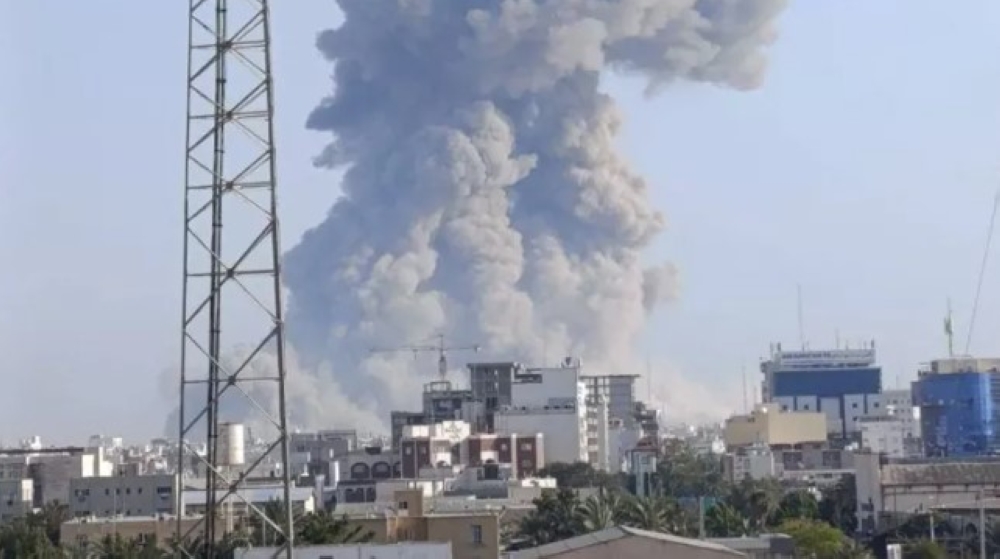
Explosions heard in Iran’s Bandar Abbas
The IRNA news agency reports that at least two powerful explosions have been heard in Bandar Abbas, in Iran’s southern Hormozgan province, in the past hour.
The report came moments before US Central Command announced that its latest wave of attacks on Iran was over.
1h ago
(02:45 GMT)
Iran claims attack on Bahrain’s Sheikh Isa airbase
The IRGC says it targeted several facilities at the Sheikh Isa airbase in Bahrain in the second phase of its retaliatory operation.
In a statement, the IRGC said its aerospace forces struck helicopter maintenance facilities, a hangar housing a P-8 aircraft and a US military drone command-and-control centre.
The IRGC said the attacks were carried out in response to continued US military action against Iran. It added that its retaliatory attacks were continuing.
1h ago
(02:40 GMT)

US military says ‘dozens of targets’ hit in Iran, including air defence systems
More from the CENTCOM statement.
It said it hit “dozens of targets at multiple locations with precision munitions to degrade Iran’s ability to continue attacking international shipping flowing through the Strait of Hormuz”.
These targets include “Iranian military air-defense systems, coastal radar sites, missile and drone capabilities, and small boats”.
CENTCOM said it deployed “US fighter aircraft, naval vessels, one-way attack aerial drones, and one-way attack sea drones for the first time”.
1h ago
(02:37 GMT)
US military says latest wave of attacks against Iran now over
US Central Command says it has “completed a new wave of offensive strikes against Iran”.
We’ll bring you more shortly.
1h ago
(02:27 GMT)
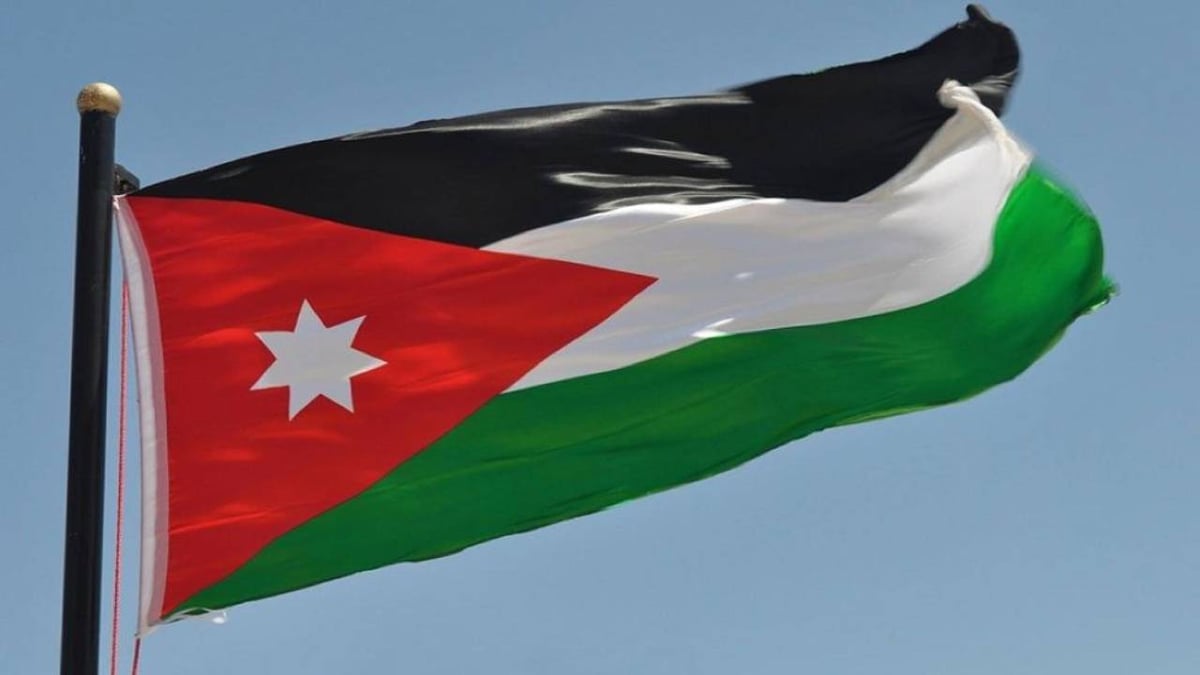
Iran claims attacks on Jordan’s Prince Hassan airbase
The Islamic Revolutionary Guard Corps says it targeted the Prince Hassan airbase in Jordan with missiles and drones, setting fire to several fuel depots and ammunition storage facilities.
In a statement, the IRGC said the attack was the first phase of its response to US strikes on Iranian coastal military bases.
It said the US attacks followed an operation by the IRGC Navy to stop two ships in the Strait of Hormuz, which it accused of “switching off their tracking systems, travelling illegally and endangering navigation”.
The IRGC said its retaliatory operations are continuing and that the results would be announced in subsequent statements.
1h ago
(02:20 GMT)
Iran launches missile, drone attacks on ‘enemy bases’, state media report
Iran’s Nour News Agency reports that the Iranian Army and the IRGC have launched “large-scale missile and drone attacks” on “enemy bases in the region”.
Citing an Iranian military official, the agency said the operation was launched in response to the US’s continuing attacks on Iran and targeted sites identified following “enemy movements” over the past 48 hours.
1h ago
(02:15 GMT)
US strikes cannot ‘sufficiently degrade’ Iran’s ability to disrupt Hormuz shipping
Alan Eyre, a distinguished diplomatic fellow at the Middle East Institute, says Iran views control of the Strait of Hormuz as its primary strategic deterrent and is not yet prepared to relinquish it.
But “this is something that the US is not yet willing to accept”, said Eyre, who served on the US team that negotiated the 2015 nuclear deal with Iran, which Trump later withdrew from.
“So, forget about talking about the nuclear issue. This is the main speed bump that has to be negotiated and navigated if we want a resolution for the nuclear issue. And right now, I don’t see that happening,” Eyre said.
He added that the US’s ongoing strikes would not “sufficiently degrade” Iran’s ability to threaten shipping through the strait.
“The US is, again, doing what it does best: attacking Iran militarily, because we do have military supremacy. But the unfortunate reality is that no matter how much we strike the coastal areas, we cannot sufficiently degrade Iran’s potential to threaten shipping through this strait,” Eyre said.
And that’s “because Iran has so many missiles, so many drones, so many smaller attack craft that can threaten vessels”, he added.
2h ago
(02:00 GMT)
Trump claims he has 59 percent approval rating
The US president has said in a Truth Social post that he has a 59 percent approval rating, while also claiming that prices are falling, alongside oil and gas costs.
“59% Approval Rating. Prices coming down along with the lowering of oil and gas,” Trump wrote in the brief post.
He did not specify the source for the approval rating figure, but the latest polls, including from HarrisX and Quantus Insights this month, show that some 43 percent of Americans approve of Trump’s performance, while some 54-55 percent disapprove.
Meanwhile, global oil prices are also surging amid the renewed tensions in the Gulf, with Brent crude climbing about 3.3 percent to about $78.50 a barrel.

US President Donald Trump at the Oval Office of the White House in Washington, DC [Saul Loeb/AFP] 2h ago
(01:52 GMT)
Sirens blare in Bahrain
Bahrain’s Ministry of Interior has said air raid sirens have been activated.
The ministry also advised people to avoid using or obstructing main roads unless necessary and said that further safety instructions would follow.
2h ago
(01:45 GMT)
WATCH: US launches more strikes on Iran as Strait of Hormuz standoff deepens
The US has launched a new wave of strikes on Iran targeting what it says is Tehran’s ability to threaten shipping in the Strait of Hormuz.
Trump has declared the waterway open, while Iran insists it is closed, leading to a further escalation of attacks.
Watch below:
2h ago
(01:30 GMT)
US strikes hit eight towns across Iran’s Khuzestan province, official says
We have more on the US attacks on Iran’s southwestern Khuzestan province.
Valiollah Hayati, the province’s deputy governor for security and law enforcement, told the semi-official ISNA news agency that US forces attacked at least eight locations across Khuzestan in recent hours.
The strikes landed in a series of waves between 1:35am and 2:20am local time.
He said officials were still assessing the damage in each area and denied that Ahvaz airport had been struck, saying the two impact points near the city were on its outskirts.
Earlier, Hayati had said that one person was killed and four others wounded after a projectile hit an agricultural water pumping station in Mahshahr.
2h ago
(01:15 GMT)
ANALYSIS
Oil prices could rise above $80 a barrel if violence persists
Omid Shokri, an energy expert and senior visiting fellow at George Mason University, told Al Jazeera that Brent crude, the main benchmark for oil prices, could rise above $80 if the violence persists, “as traders add a larger geopolitical risk premium”.
“The much greater upside risk would emerge if the fighting restricts tanker traffic through the Strait of Hormuz, or damages Gulf production and export infrastructure,” he added.
Shokri said prices are likely to remain elevated for as long as traders perceive the agreements underpinning the truce between Iran and the US as fragile.
“As a result, price volatility is likely to remain elevated even during periods of relative calm,” he said. “Ultimately, the duration of elevated oil prices will be determined by the extent of actual supply disruptions, not by fragile agreements alone.”
Original source: Al Jazeera


Comments (0)
Be the first to comment.