Yemen targets Sanaa airport runway to prevent Iranian plane landing
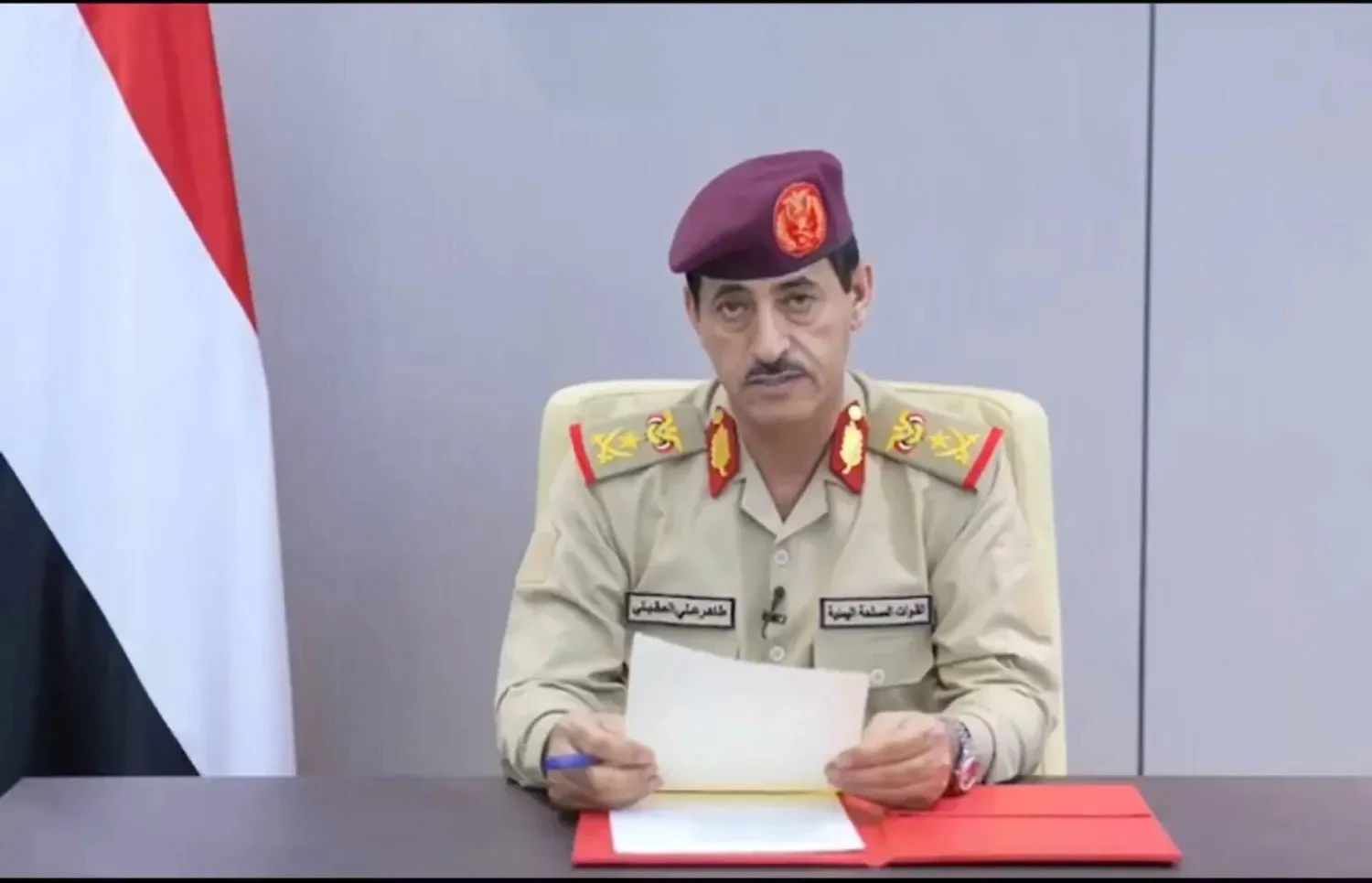
The Yemeni Ministry of Defense announced that the armed forces targeted the runway of Sanaa International Airport, confirming that the step was taken to prevent an Iranian plane from landing in Yemen, after the Houthi group insisted on receiving the flight and preventing the Yemeni national airline from using the airport.
Houthi militias prevented the Yemeni national airline from landing at Sanaa airport.
The ministry said in a brief statement that "the terrorist Houthi militias, backed by the Iranian regime, prevented the Yemeni national airline from landing at Sanaa airport and insisted on the Iranian aircraft violating Yemeni territory, and therefore the airport runway was targeted."
For its part, the Yemeni Ministry of Defense on Monday called for the evacuation of Sanaa International Airport, warning citizens not to approach the airport area.
The ministry affirmed in a press statement carried by the Yemeni news agency Saba that it would deal with any entity or aircraft attempting to breach Yemeni airspace or violate the procedures and instructions issued by the competent authorities.
It indicated that this measure comes within the framework of maintaining the safety and security of citizens, and taking necessary precautionary measures to deal with developments and potential security challenges.
The ministry stressed the readiness of the armed forces to deal with any field developments and take appropriate measures in accordance with applicable laws and regulations, ensuring the protection of national sovereignty and the preservation of the country's security and stability.
This coincides with an escalation in the Yemeni leadership's rhetoric towards Iranian flights heading to Sanaa, as Minister of Defense Lt. Gen. Taher al-Aqeeli affirmed that the armed forces would deal with any aircraft violating Yemeni airspace and sovereignty "by all available means," stressing that the government has exhausted legal and diplomatic paths to address the issue in cooperation with regional and international communities.
Al-Alimi held the Houthi group fully responsible for the escalation and its repercussions.
In a statement issued by the Chairman of the Presidential Leadership Council, Supreme Commander of the Armed Forces, Dr. Rashad al-Alimi, the Yemeni government accused the Houthi group of proceeding with receiving Iranian flights outside the legal frameworks regulating civil aviation movement, despite efforts and mediations aimed at containing the situation and preventing escalation.
The statement explained that the government expressed its readiness to resume civilian flights via Yemen Airways, the legally recognized national carrier, and also offered to facilitate the transfer of the group's members from Tehran to Sanaa via a chartered plane from the national company, ensuring continued operation of the airport and respecting state sovereignty and its international obligations, but the Houthis rejected those initiatives.
Al-Alimi held the Houthi group fully responsible for the escalation and its repercussions, considering that its insistence on imposing a reality outside state institutions undermines peace opportunities and deepens division. He also directed raising the highest levels of readiness and taking the necessary political, diplomatic, and legal measures to protect Yemeni airspace and ports.
He called on the international community to move from the stage of condemnation to the stage of deterrence by implementing Security Council resolutions and applying relevant sanctions, affirming the Yemeni state's commitment to the peace option while not allowing any infringement on its sovereignty or the imposition of facts outside its legitimate institutions.
In the same context, the Yemeni Cabinet announced, during an extraordinary meeting held in the temporary capital Aden under the chairmanship of Prime Minister and Minister of Foreign Affairs and Expatriates Shaya al-Zindani, a state of permanent session to follow up on the repercussions of the escalation pursued by the Houthi group, foremost of which is receiving a new Iranian flight to Sanaa airport under its control.
The government has exhausted various initiatives and facilities aimed at sparing Yemen and the region further escalation.
The council affirmed that the government has exhausted various initiatives and facilities aimed at sparing Yemen and the region further escalation, but the Houthis' continued rejection of legal solutions and their persistence in what it described as summoning external interventions prompted the government to take additional measures to protect national sovereignty and confront potential threats.
The council approved the formation of a government crisis management team to coordinate military, political, diplomatic, legal, and media efforts, continuously follow up on developments, and submit periodic reports to ensure unified government performance and rapid response to events.
It also directed the Ministries of Defense and Interior and the relevant authorities to raise the highest levels of readiness and preparedness, and to enable the armed forces and security agencies to perform their tasks in protecting sovereignty and defending Yemeni airspace, territory, and ports, and to prevent any attempts to impose facts contrary to the constitution and law.
The council tasked the Ministry of Foreign Affairs with intensifying its communications with brotherly and friendly countries and regional and international organizations to urge them not to allow the use of their airspace, territory, or facilities to operate flights to Yemen outside official authorized channels, in line with international law and Security Council resolutions.
The Cabinet reiterated holding the Houthi group fully responsible for the repercussions of the current escalation and its potential impact on Yemen's security, stability, and peace efforts. It also held Iran responsible for its continued support of the group, considering that this contributes to prolonging the crisis and complicating settlement paths.
Original source: Akhbaar24




Comments (0)
Be the first to comment.