300 Breeds.. Dogs First Line of Defense in the World Cup
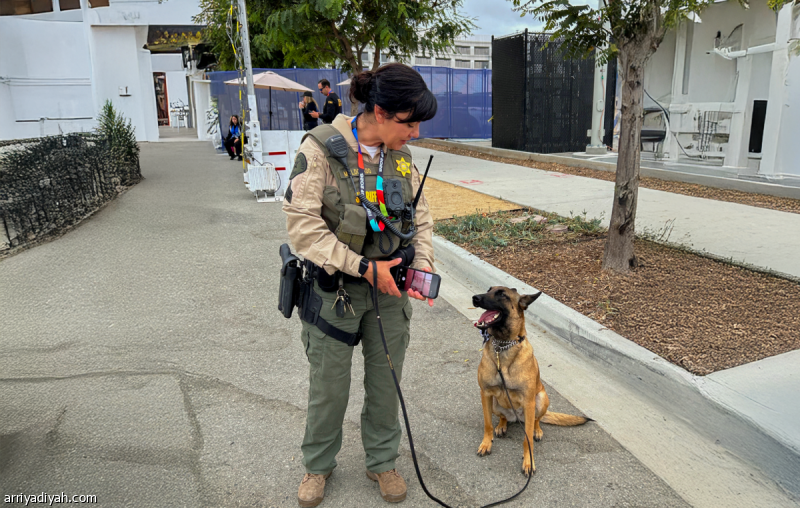
A group of dogs from several categories are actively participating in securing the stadiums of the 2026 World Cup, deployed across North America to form the first line of defense against ill-intentioned individuals in a tournament rife with geopolitical tensions before the final, scheduled for Sunday between Spain and Argentina. Among them is Kali, a five-year-old Labrador Retriever, known for her gentleness, good behavior, and ability not to frighten anyone, in addition to not allowing anyone to sneak into the Los Angeles stadium carrying explosives, fireworks, weapons, or...
Kali, sitting near one of the stadium entrances, is one of hundreds of police and security dogs. Glenn Cossera, head of Allied Universal Enhanced Protection Services, the largest provider of private security services using dogs in the United States, said: "The threat level is different when that happens." He noted that about 300 of the 1,000 dog groups from his company were deployed to secure the World Cup.
The size of the World Cup, co-hosted by the United States, Canada, and Mexico, posed challenges for security organizers. This led to a depletion of security dog resources in the United States, explaining the presence of dogs from very diverse sources around the stadiums.
Kali represents the Bureau of Alcohol, Tobacco, Firearms and Explosives, and has a strong sense of smell to detect materials that could explode. Dogs from the Los Angeles County Police Department, including the dog Buck and his handler Anthony Myers, were in a nearby area.
Private security teams were deployed around the stadium perimeter, where dogs sniffed vehicles. Anyone entering the stadium had to pass near a public security dog.
Cossera said: "That's the goal. All attendees are likely to realize they are being assessed by the nose of a security dog, which is a major deterrent to terrorists or anyone else planning something dangerous." He added: "90 percent of what we do is a visual deterrent."
Not all security risks stem from terrorist threats. In several countries, fans usually celebrate goals or victories with fireworks, so security officials were keen to prevent well-intentioned fans from bringing such materials into stadiums.
Security organizers throughout the tournament were keen to provide the visible protection that dogs offer, while at the same time making fans from around the world feel comfortable. Cossera added that this is why his company mostly used friendly dogs, like Labradors, to provide security instead of German Shepherds or more intimidating breeds. He added: "People are not afraid of Labrador retrievers... the company was trying to show that the situation is not dangerous."
Different countries and cities followed different approaches in using dogs. In Wadi al-Hijara, Mexico, robotic dogs helped detect threats involving explosives. In Vancouver, Canadian agencies developed a multi-level strategy to make dogs a key part of the threat detection process.
Original source: Arriyadiyah




Comments (0)
Be the first to comment.