48-Hour Rest: 80 Days for National Team, 44 for Asia, Remainder for Roshan Matches
8 Clubs Abroad and the 2027 Asian Cup Complicate Scheduling Calculations
48-Hour Rest: 80 Days for the National Team, 44 for Asia, and the Rest for Roshan Matches
July 24, 2026 - 03:15 | Last update July 24, 2026 - 04:17
--:--
Follow Okaz channel on WhatsApp
«Okaz» (Jeddah)
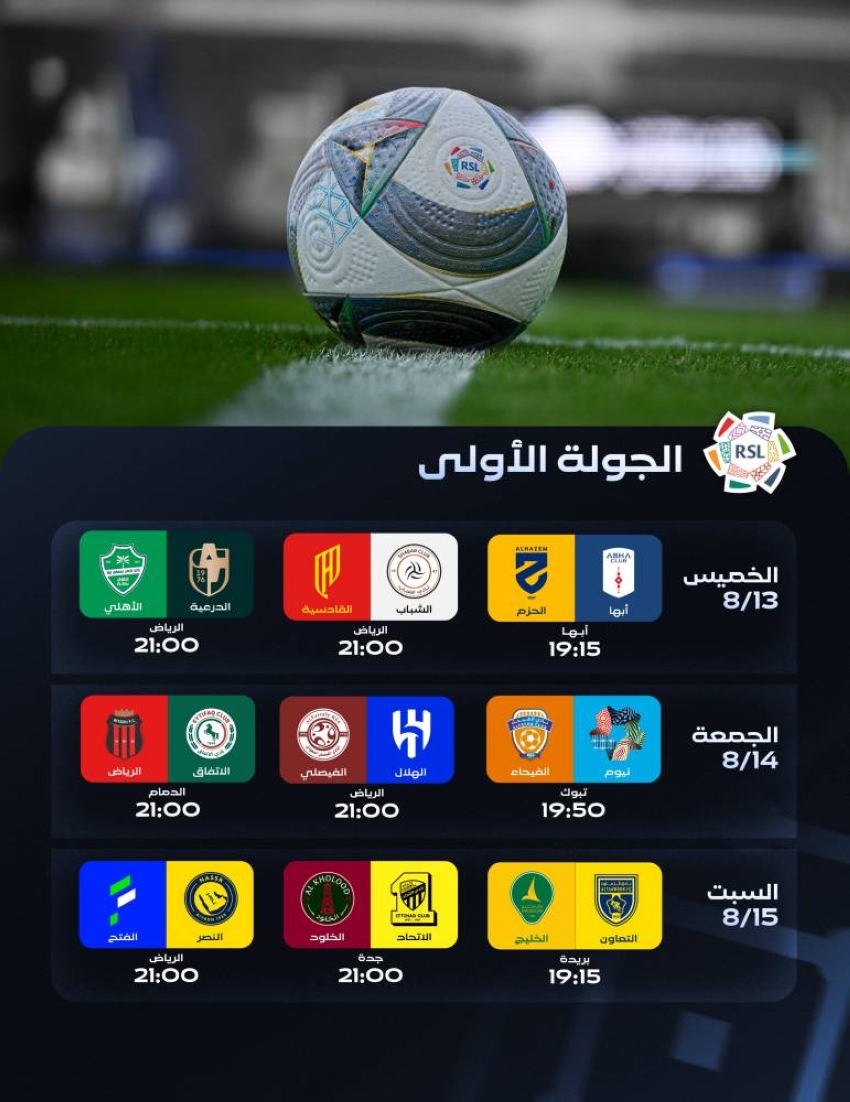
The Saudi Professional League Association has revealed the criteria and factors it relied on to build the schedule for the Roshan Saudi League for the 2026-2027 season, which will start on August 13, 2026, and conclude on May 29, 2027, in preparation for the announcement of the season's match schedule.
The announcement of the scheduling criteria comes before the unveiling of the schedule to clarify the fundamentals adopted in distributing and sequencing the matches, in light of the exceptional density of international, continental, and local commitments in the upcoming sports calendar, and to enhance the clarity of the schedule-building mechanism for clubs, fans, and media.
The association indicated that a workshop was held with all clubs to present the scheduling mechanism and calendar, and all clubs were given the opportunity to share their requests regarding the sequencing of matches and scheduling of dates.
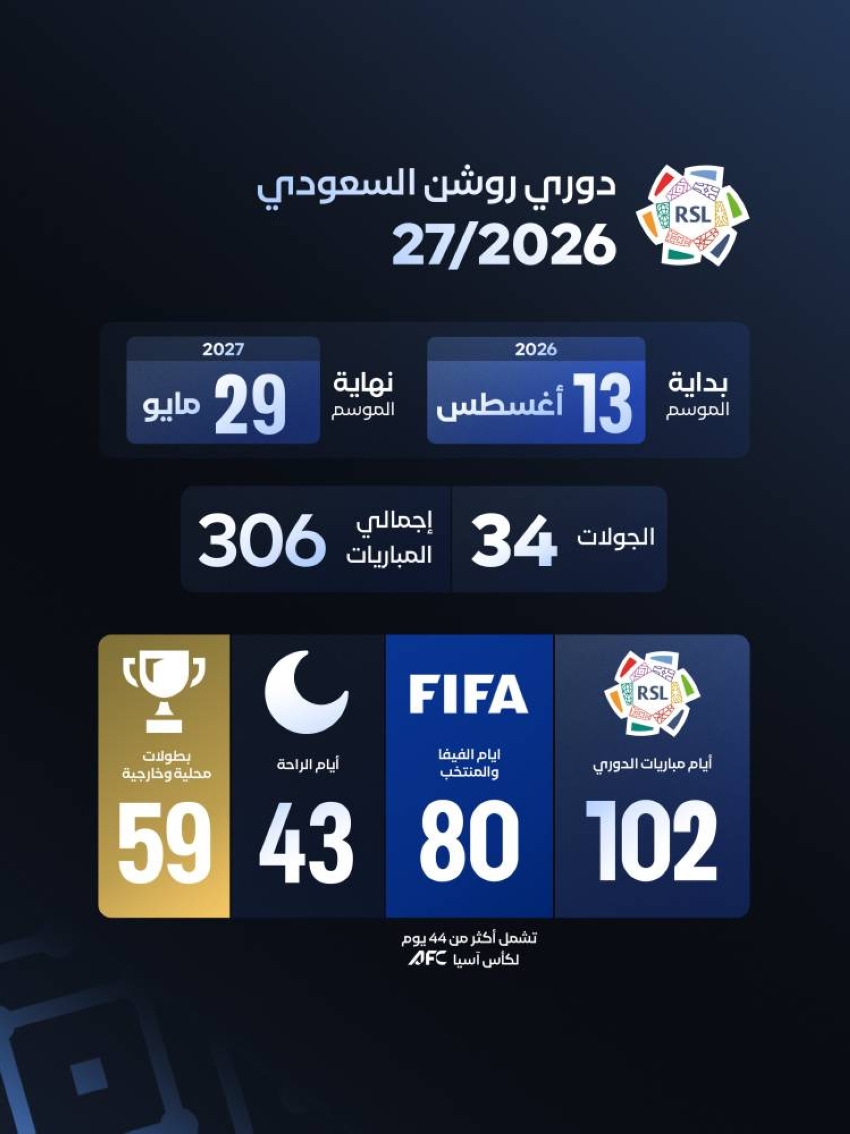
Eight Saudi clubs will participate in four external tournaments during the upcoming season, coinciding with the International Football Federation's stoppages and the Saudi national team's participation, which take up about 80 days of the calendar, in addition to hosting the 2027 Asian Cup, which requires more than 44 days, not counting the time needed to deliver the stadiums before the tournament begins.
The calendar also includes 59 days allocated for various Saudi and continental tournaments, and 43 days for rest periods between matches. In light of the overlap of these commitments, the association has 102 actual days available to schedule 306 matches within 34 rounds of the Roshan Saudi League.
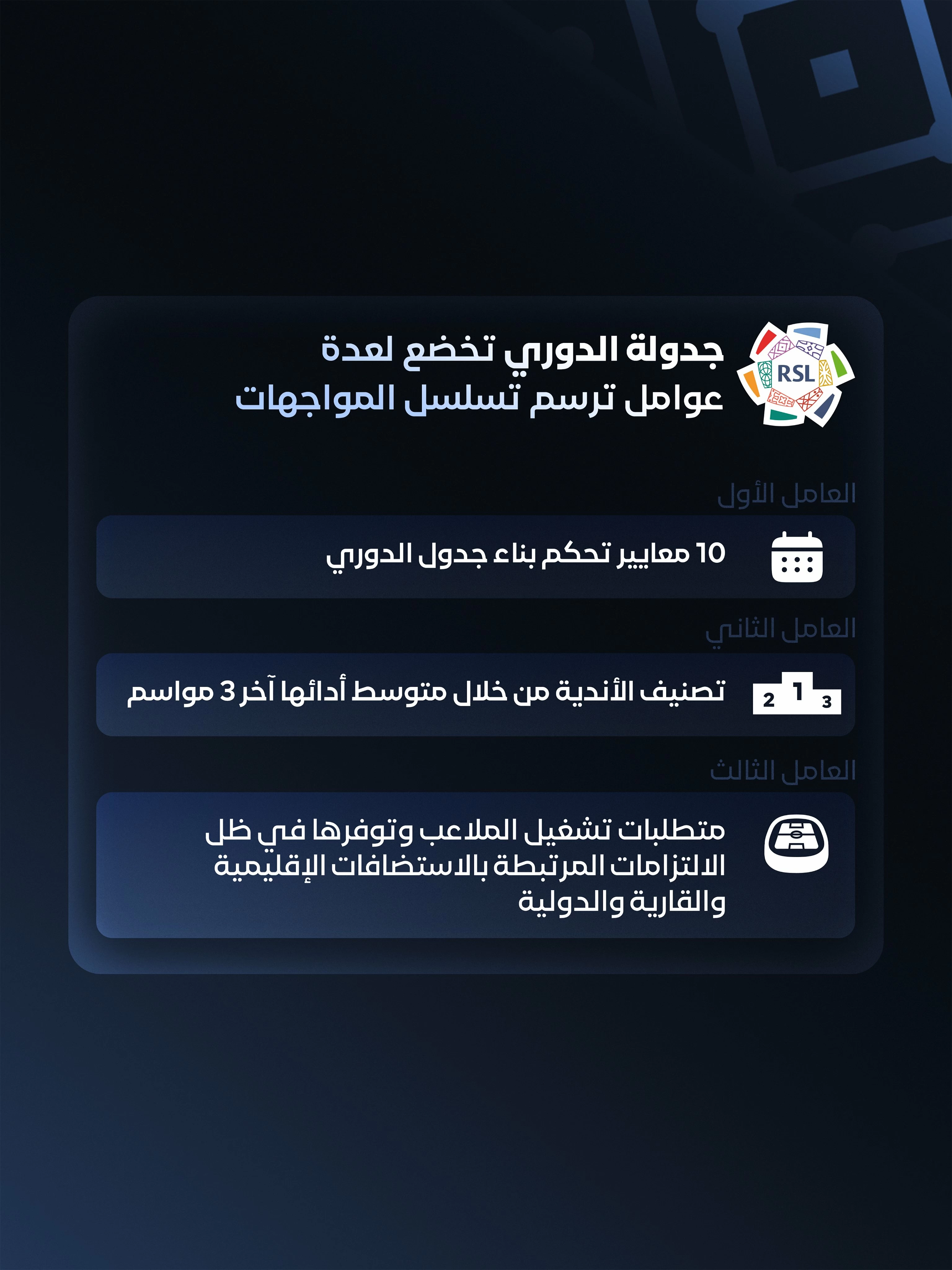
The construction of the schedule was based on three main factors that control the sequencing and temporal and geographical distribution of matches throughout the season: the criteria for building the schedule, the classification of clubs according to their sporting performance, and the readiness and availability of stadiums.
10 Criteria for Building the Schedule
The association has adopted 10 main criteria for building the schedule, most notably that no club should play more than two consecutive matches at home or away, and that each club should play one match at home and another away during the first two and last two rounds of the season. The criteria also stipulate that the rest period between two consecutive matches for any club should not be less than two days, regardless of the competition in which it participates, taking into account the players' safety and the regularity of clubs' participation in various tournaments.
Classification of Clubs to Achieve Balance in Match Sequencing
The clubs were classified into four levels; level (A) and level (B) each include five clubs, while level (C) and level (D) each include four clubs.
The classification aims to achieve greater balance in match sequencing, so that no club faces level 'A' clubs in two consecutive rounds, thus reducing the accumulation of difficult matches within close time periods.
The evaluation is calculated based on the results of three seasons, using fixed time weights that give greater weight to the most recent season.
Readiness and Availability of Stadiums
The requirements for the operation and availability of stadiums in light of commitments related to regional, continental, and international hosting were among the influential factors. The association confirmed that the construction of the season's schedule came in light of studying these factors together, to serve the regularity and competitive fairness of the competition, consider the participation of different clubs, and contribute to providing a better experience for fans, in an exceptional season in terms of density and overlap of sports commitments.
The association is scheduled to announce the schedule of matches for the Roshan Saudi League for the 2026-2027 season in the next phase, including the distribution of round matches throughout the season.
The Saudi Professional League Association has revealed the criteria and factors it relied on to build the schedule for the Roshan Saudi League for the 2026-2027 season, which will start on August 13, 2026, and conclude on May 29, 2027, in preparation for the announcement of the season's match schedule.
The announcement of the scheduling criteria comes before the unveiling of the schedule to clarify the foundations used in distributing and sequencing the matches, in light of the exceptional density of international, continental, and local commitments in the upcoming sports calendar, enhancing the clarity of the schedule-building mechanism for clubs, fans, and media.
The association indicated that a workshop was held with all clubs to present the scheduling mechanism and calendar, and all clubs were given the opportunity to share their requests regarding the sequencing of matches and scheduling of dates.
Eight Saudi clubs will participate in four external tournaments during the upcoming season, coinciding with the stoppages of the International Football Federation and the Saudi national team's participation, which will take up about 80 days of the calendar, in addition to hosting the AFC Asian Cup 2027, which requires more than 44 days, not counting the time needed to prepare the stadiums before the tournament begins.
The calendar also includes 59 days allocated for various Saudi and continental tournaments, and 43 days for rest periods between matches. In light of the overlap of these commitments, the association has 102 actual days available to schedule 306 matches within 34 rounds of the Roshan Saudi League.
The construction of the schedule is based on three main factors that control the sequencing and geographical distribution of matches throughout the season: the criteria for building the schedule, the classification of clubs according to their sporting performance, and the readiness and availability of stadiums.
10 Criteria for Building the Schedule
The association has adopted 10 main criteria for building the schedule, the most notable of which is that no club should play more than two consecutive matches at home or away, and that each club should play one match at home and another away during the first two and last two rounds of the season. The criteria also stipulate that the rest period between two consecutive matches for any club should not be less than two days, regardless of the competition in which it participates, taking into account the players' safety and the regular participation of clubs in various tournaments.
Classification of Clubs to Achieve Balance in Match Sequencing
The clubs were classified into four levels; level (A) and level (B) each include five clubs, while level (C) and level (D) each include four clubs.
Original source: Okaz




Comments (0)
Be the first to comment.