Saudi Pro League Announces 2026-2027 Saudi League Match Schedule

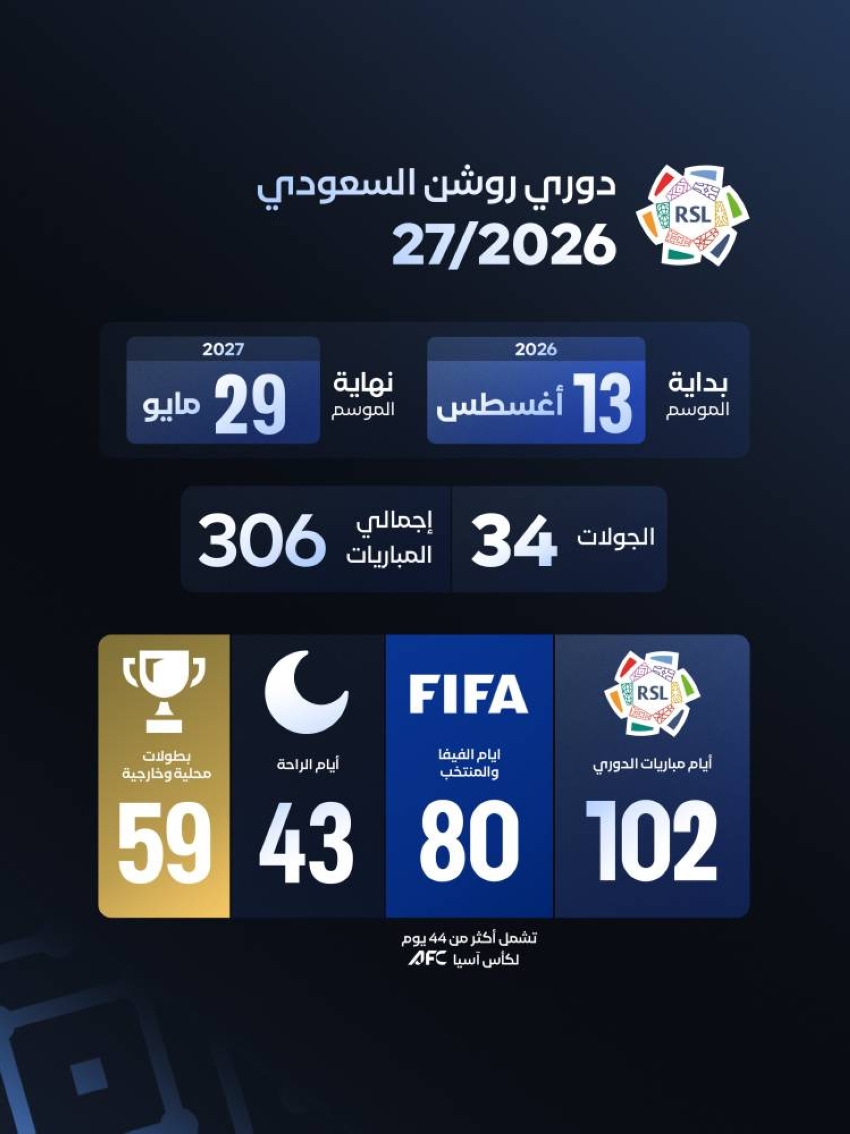
The Saudi Pro League has announced the match schedule for the 2026-2027 Saudi Roshn League season, which kicks off on August 13, 2026 and concludes on May 29, 2027, featuring 306 matches across 34 rounds.
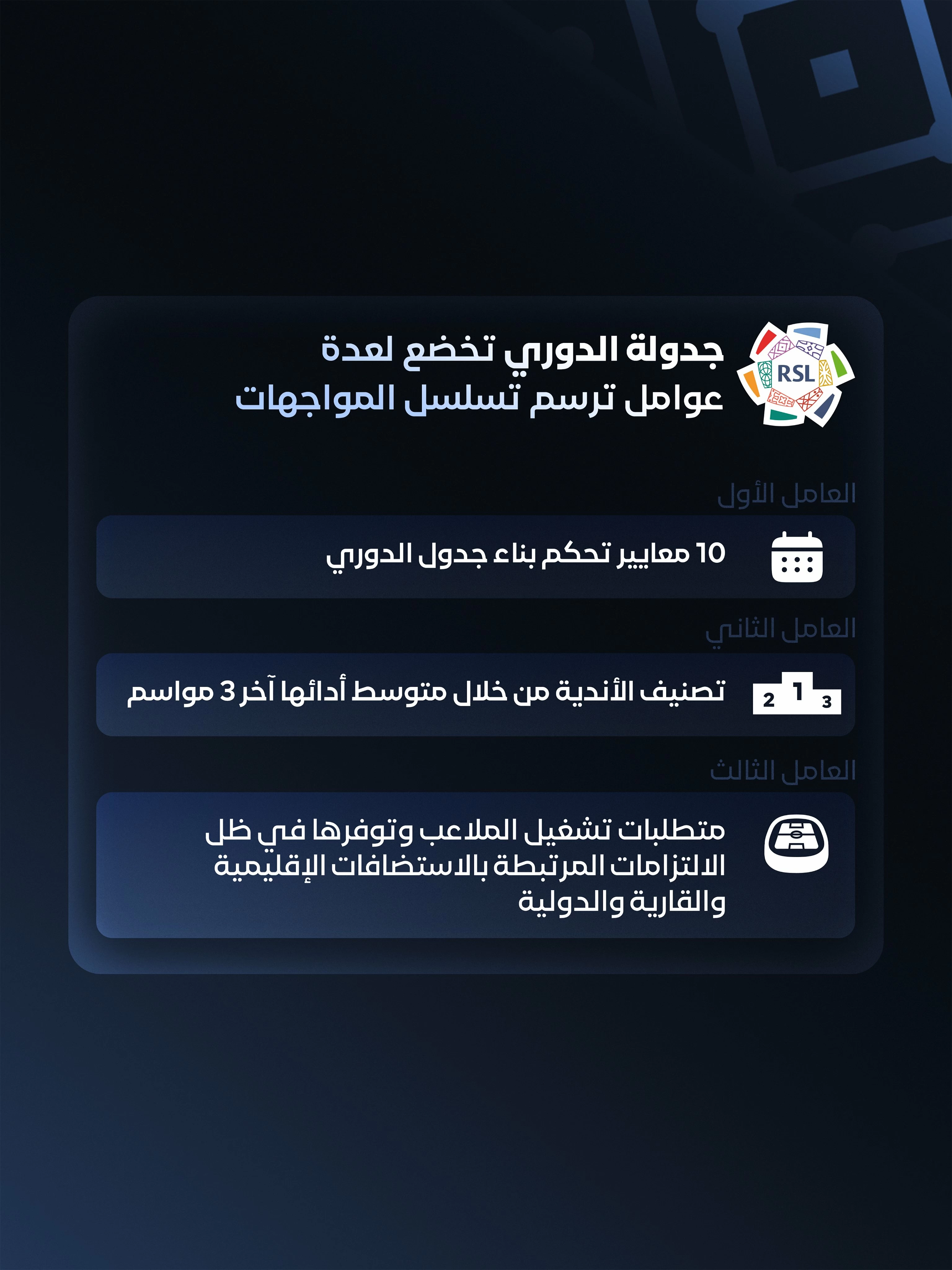
The schedule announcement comes after the League held a workshop with all clubs to review the scheduling mechanism and the sports calendar for the season, and gave all clubs the opportunity to submit their requests regarding match sequences and timing before finalizing and approving the schedule.
The schedule was prepared amidst a calendar with exceptional density of international, continental, and domestic commitments, as eight Saudi clubs will participate in four external tournaments next season, in addition to FIFA international breaks, Saudi national team commitments, and hosting the 2027 Asian Cup.
In light of these overlapping commitments, only 102 days are available to schedule the 306 matches of the Saudi Roshn League across 34 rounds.
The schedule was built according to ten main criteria aimed at achieving balance and regularity in competition, most notably that no club plays more than two consecutive matches at home or away, that each club plays one home and one away match in the first two and last two rounds of the season, and that the rest period between two consecutive matches for any club is no less than two days, regardless of the competition in which it participates.
A classification of clubs into four levels was also included, aiming to achieve balance in match sequences and reduce the accumulation of difficult matches within close time periods, so that no club faces Level 'A' clubs in two consecutive rounds.
The classification of clubs is as follows:
Level A: Al-Nassr, Al-Hilal, Al-Ahli, Al-Qadsiah, and Al-Ittihad.
Level B: Al-Taawoun, Al-Ettifaq, Al-Fateh, Al-Khaleej, and Al-Shabab.
Level C: Neom, Al-Hazem, Al-Fayha, and Al-Kholood.
Level D: Al-Riyadh, Abha, Al-Faisaly, and Al-Diriyah.
The classification was based on the clubs' sporting performance according to an evaluation mechanism that calculates results over three seasons, applying fixed time weights that give greater weight to the most recent season, providing a more balanced basis for distributing clubs across the levels used in building the match sequence.
The requirements for operating and availability of stadiums amid commitments related to regional, continental, and international hosting were among the factors influencing the determination of match sequences and venues.
The League confirmed that the schedule was prepared in light of studying all these factors together, achieving the best possible balance between the regularity and competitive fairness of the competition, the various clubs' participation, operational requirements related to stadiums, and the fan experience.
Original source: Al-Riyadh


Comments (0)
Be the first to comment.