A Clash of Glory: The European Champions Face the Defending World Titleholders

Millions of football fans turn their eyes to the New York New Jersey Stadium this Sunday, July 19, 2026, for the FIFA World Cup final between Spain and Argentina, pitting Spanish tactical prowess against Argentine experience in a battle for footballing supremacy.
Millions of football fans are turning their eyes this Sunday evening, July 19, 2026, to the New York New Jersey Stadium, which hosts the FIFA World Cup final between Spain and Argentina in one of the most powerful matchups global football can offer.
The final brings together the Spanish national team, winners of the 2024 European Championship, and the Argentine national team, holders of the 2022 World Cup and Copa América champions, in a clash representing a collision between Spanish technical power and Argentine experience in major matches.
Spain is searching for its second global star in history, while Argentina aspires to claim its fourth title and retain the cup for a second consecutive time—a feat not achieved since Brazil won the 1958 and 1962 titles.
Spain... A Steady Journey
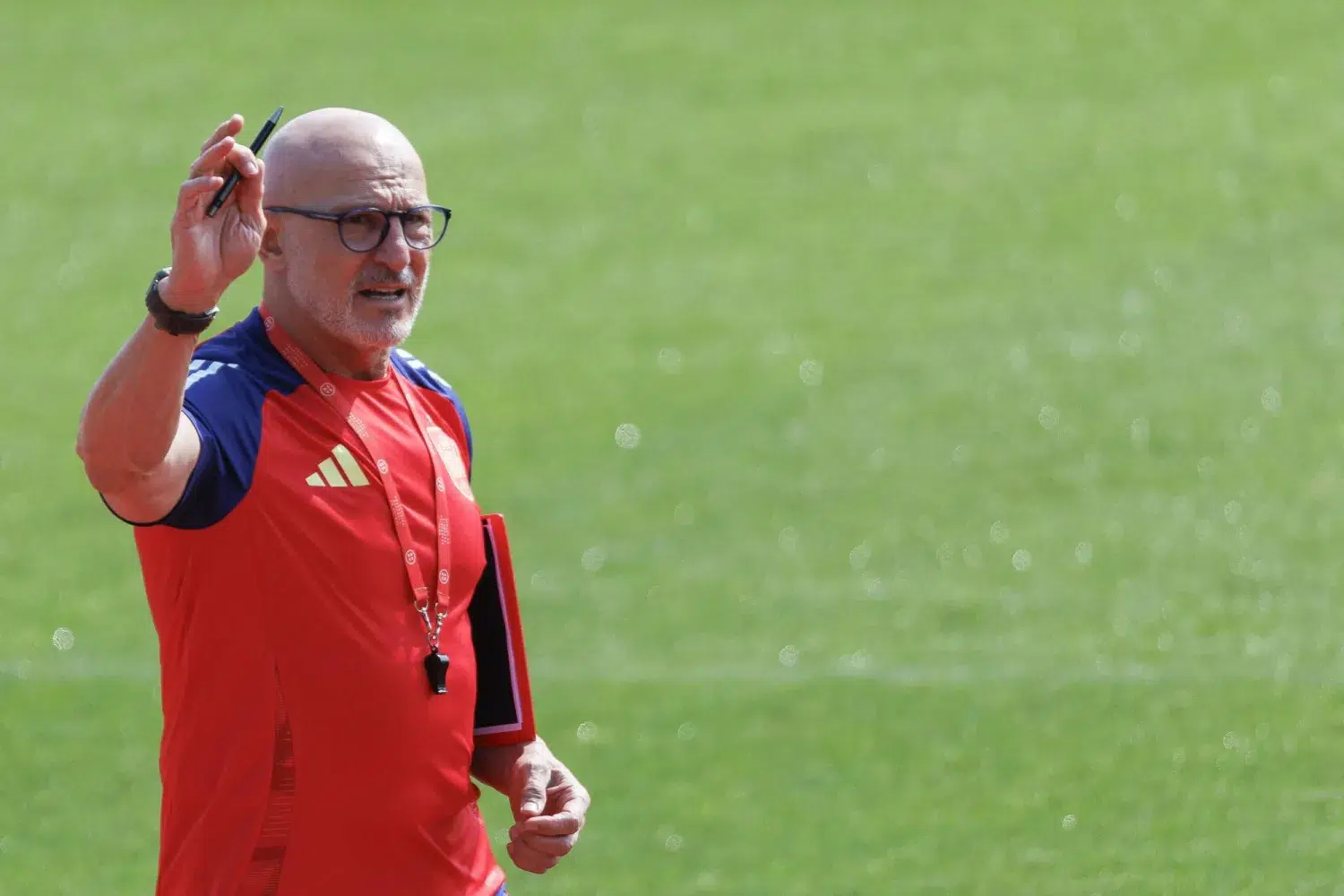
The Spanish national team entered the 2026 World Cup finals as one of the most prominent contenders for the title, benefiting from the technical stability and distinguished results achieved over the past years under the leadership of coach Luis de la Fuente.
The Spanish team managed to top Group H, which included Cape Verde, Saudi Arabia, and Uruguay, confirming from the first round its ability to handle different styles.
In the Round of 32, the Spanish delivered a strong performance against Austria, winning three goals to nil in a match where they asserted their control from the first minutes and demonstrated their ability to combine possession with attacking efficiency.
The Spanish national team set a date with their Portuguese neighbors in the Round of 16 in a European summit characterized by caution and high competitiveness. Spain succeeded in settling the matchup with a goal to nil, benefiting from defensive organization and control of the midfield.
In the quarter-finals, Spain faced Belgium and emerged with a valuable 2-1 victory, continuing their advance to the final stages despite the great difficulty they faced against the individual skills of the Belgian players.
The toughest test was against France in the semi-finals, but the Spanish team played one of their best matches in the tournament, winning 2-0 with goals from Mikel Oyarzabal and Pedro Porro. The Spaniards dominated most of the match and succeeded in limiting the threat of the French attack to reach the World Cup final for the second time in their history.
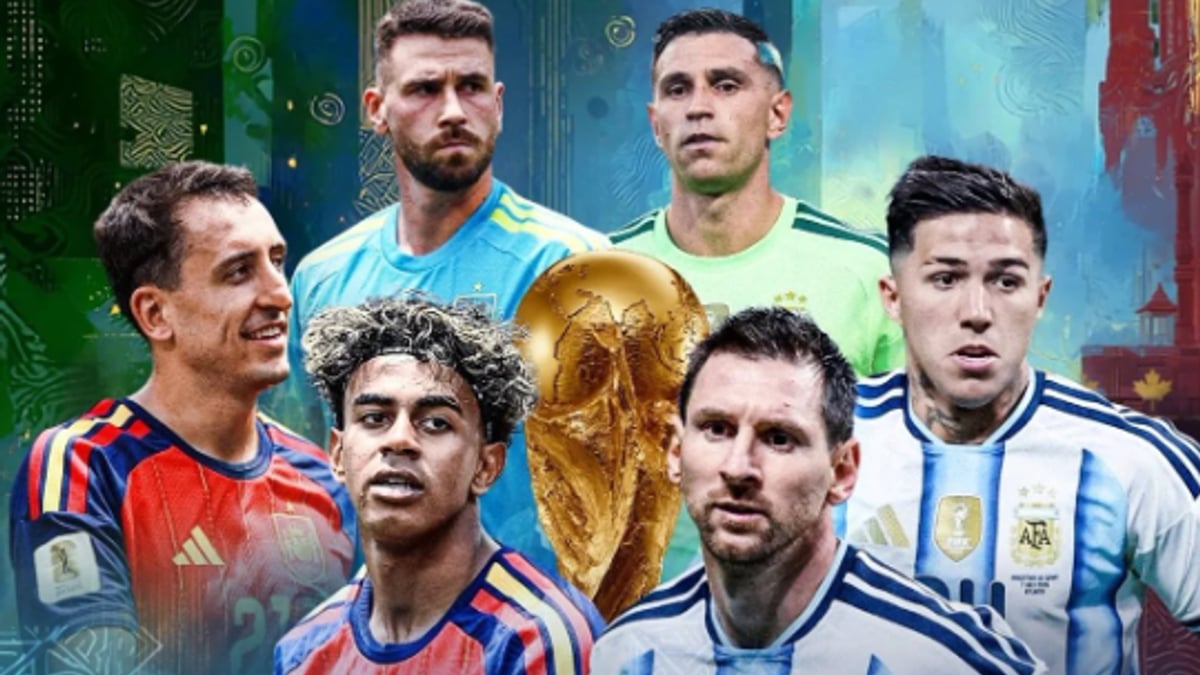
Young Talent Yamal vs. The Genius of the Legend Messi
Argentina... The Champion's Character
On the other side, Argentina began the tournament carrying the pressure of defending the title won in Qatar in 2022, but coach Lionel Scaloni’s squad showed strong character and a great ability to overcome difficult moments.
Argentina topped its group in the first round before beginning its knockout stage journey by facing Cape Verde in the Round of 32. It was not an easy match for the title holders, but Argentina managed to win 3-2, overcoming their first knockout test.
In the Round of 16, the Argentine team faced Egypt in an exciting match, during which they managed to win 3-2 after a showdown that revealed some defensive issues but simultaneously confirmed that Argentina possesses multiple attacking solutions.
Argentine performance improved in the quarter-finals when the team defeated Switzerland 3-1, in a match where Julián Álvarez excelled, proving Argentina's ability to raise its level as the tournament approached its decisive stages.
In the semi-finals, the defending champions clashed with England, who took the lead with a goal scored by Anthony Gordon in the 55th minute. It appeared that England was approaching qualification before the character of the Argentine team emerged in the final minutes.
Enzo Fernández succeeded in scoring the equalizer in the 85th minute, before substitute Lautaro Martínez scored the winning goal in stoppage time, benefiting from a decisive assist provided by Lionel Messi, who created both of his country's goals to lead Argentina to its second consecutive final.
Spain's History in Finals
Spain is playing in the second final in the history of their World Cup participation, after the South Africa 2010 final.
The Spanish golden generation succeeded at that time in achieving the title after defeating the Netherlands with a goal to nil, scored by Andrés Iniesta in the 116th minute of extra time, granting his country its first global title.
In the 2026 final, Spain seeks to maintain its perfect record in finals, add the second star to its shirt, and confirm the superiority of the current generation, which has succeeded in combining skill, speed, and tactical discipline.
The Spaniards also hope to restore the golden era that saw the team win the 2008 European Championship, the 2010 World Cup, and the 2012 European Championship.
Argentina... A Long History
Argentina possesses more experience in World Cup finals, as they are competing in their seventh final in history.
Argentina appeared in the first final in the tournament's history in 1930 but lost to Uruguay 4-2. They waited until 1978 to achieve their first title on home soil after defeating the Netherlands 3-1 after extra time.
In 1986, Diego Maradona led his country to its second title after defeating West Germany 3-2 in the final. Four years later, the two teams met again, but Germany won the 1990 final with a goal to nil.
Argentina returned to the final in 2014 and lost to Germany after extra time, before succeeding under the leadership of Lionel Messi in winning the 2022 Qatar edition after defeating France on penalties, following a 3-3 draw in regular and extra time.
Thus, Argentina has achieved three titles from six previous finals and is looking against Spain for its fourth title, which would make them equal with Italy and Germany in the number of championship wins.
The Dream Final: Between Spanish Elegance and Argentine Power
Lamine Yamal and the Stars of Spain
The Spanish national team possesses a distinguished group of players, led by Lamine Yamal, who has become one of the most prominent stars of global football thanks to his speed, skills, and ability to create chances and score goals.
Nico Williams represents an additional source of danger on the other wing, while Pedri gives the Spanish midfield an artistic touch and the ability to control the pace of the game.
Rodri is considered one of the team's most important elements due to his ability to intercept balls, build attacks, and maintain the team's balance. The midfielder delivered a distinguished performance against France in the semi-finals and showed a glimpse of the level that led him to win the 2024 Ballon d'Or.
Spain also relies on Fabián Ruiz, Dani Olmo, and Mikel Oyarzabal, in addition to goalkeeper Unai Simón, who gives the backline a great deal of confidence.
Messi Leads the Star Squad
Lionel Messi remains the most prominent name in the ranks of the Argentine national team, despite his advancing age, as he continues to play a pivotal role in playmaking and leading his teammates on the pitch.
Messi proved his impact in the semi-final against England after creating both winning goals, confirming that his value is not linked only to scoring, but to his ability to read matches and make a difference in decisive moments.
Alongside Messi, Argentina possesses top-class strikers, led by Julián Álvarez and Lautaro Martínez, the scorer of the goal that qualified them for the final.
Original source: Al-Riyadh



Comments (0)
Be the first to comment.