Al-Hamdan: A Saudi Coach Crosses Three Continents
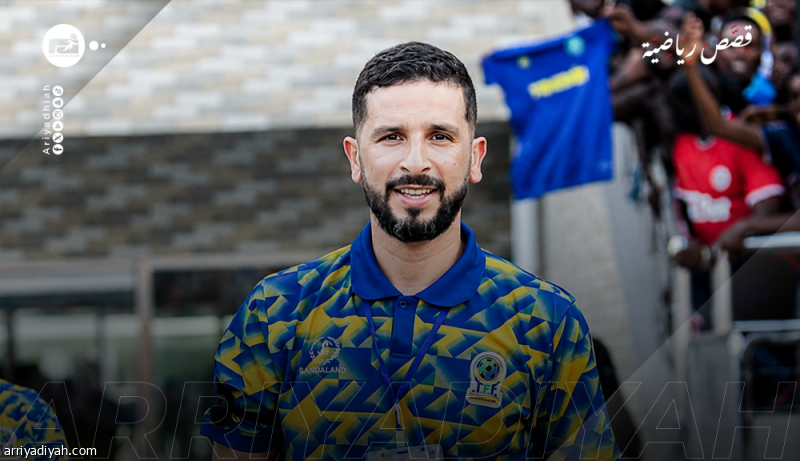
Osama Al-Hamdan faces balls with a young body dreaming beyond the net, his heart leaning to the other side of the white lines. He hung up his boots and headed to the coaching bench, after the Saudi goalkeeper launched his first journey from the fields of Algeria, passing through clubs such as Al-Ettifaq, Al-Nahda, Al-Fayha, Al-Dir'iyah, and Al-Watani, until he became assistant coach of the Tanzania national football team. Osama, 37 years old, with an Algerian mother and Saudi father, finds himself more in a world that builds players, not just faces them. He enrolled in training courses and obtained certificates from France, benefiting from his mastery of its language, and others from the Saudi Federation, including a Level 2 Goalkeeping Coaching License, as well as the Asian "C" license. Then the real journey began. In Paris, he joined as a goalkeeper coach for the team Lassa Lissian de Paris. His days were full of cold winds, foreign language, and new faces; it was not easy. He slept and woke to the sound of the training whistle, trying to prove that a Saudi coach could leave his mark in Europe. Then he moved to Egypt, where he worked as a goalkeeper coach for Ismaily. There, amid the noise of Cairo and the heat of the fields, he honed his experience step by step, but the biggest challenge was in Africa. Osama decided to venture into national team coaching, an experience that forges men. He became assistant coach of the Tanzania national team and its goalkeeper coach at the same time. The trips were long, the fields far, and the cultures different. He participated with the Olympic team in continental tournaments in Egypt, in the African Nations Championship, then with the senior team in Ivory Coast, then came the immortal moment in Morocco. In the Africa Cup of Nations, Osama stood as part of the technical staff for Tanzania. They qualified for the round of 16, a historic achievement for Tanzanian football, and they exited with a goal against hosts Morocco, but the joy was greater than the defeat. Osama watched the players celebrating their arrival at this stage, and he felt tears of joy welling up in his eyes. In the qualifiers for the 2026 World Cup, they finished second behind Morocco. Those were the most beautiful moments of his career. One night, Osama sat in his simple room after a match, remembering all the sacrifices, the long years away from home, living between Algeria and France, and double work in difficult environments. There were no similar internal experiences in Saudi Arabia because the external journey imposed itself on him. He became the first Saudi coach to work in Europe, then in Africa at the club and national team level. "These distances keep us away from the spotlight, but achievements ultimately impose themselves," he would tell himself. He knew well the difference between the world of clubs and the world of national teams; clubs require diligent daily follow-up, while national teams are a responsibility to an entire nation. It requires precise follow-up of each player and igniting the fire of patriotism in their hearts so that they give more than technical effort. Today, Osama Al-Hamdan stands on the threshold of a great ambition, dreaming of leading a prestigious national team, whether Arab or international, to give a bright image of the Saudi coach. And deep inside, his life's wish remains to one day return to his country as a coach of one of the Saudi national teams, to complete the journey that began with a small goalkeeper in Algeria and became a moving sign between continents.
Original source: Arriyadiyah




Comments (0)
Be the first to comment.