Argentina and Spain: A clash of numbers for the 2026 World Cup crown
ISTANBUL / Ahmed Hassan / Anadolu Agency
Clash between the top two teams in the FIFA rankings
Experience of 'Albiceleste' against youth and vitality of 'La Roja'
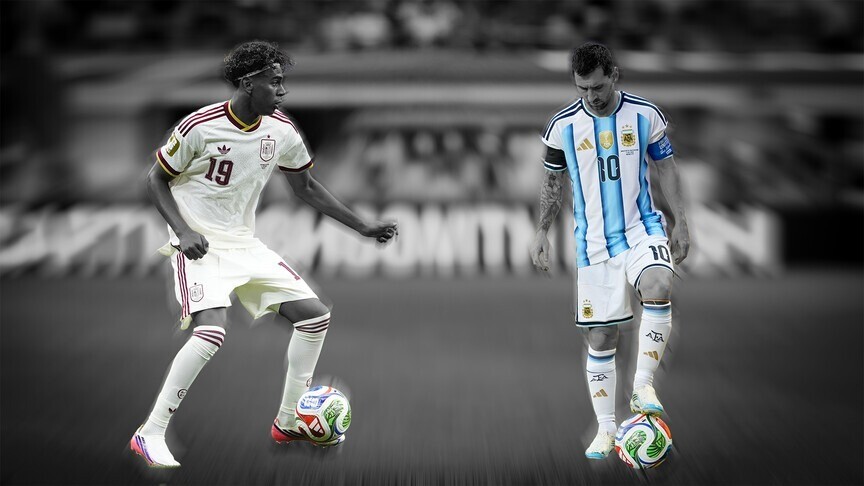
Messi in his sixth World Cup faces Yamal on his debut
Spain surpasses in market value, Argentina in finals appearances and digital presence
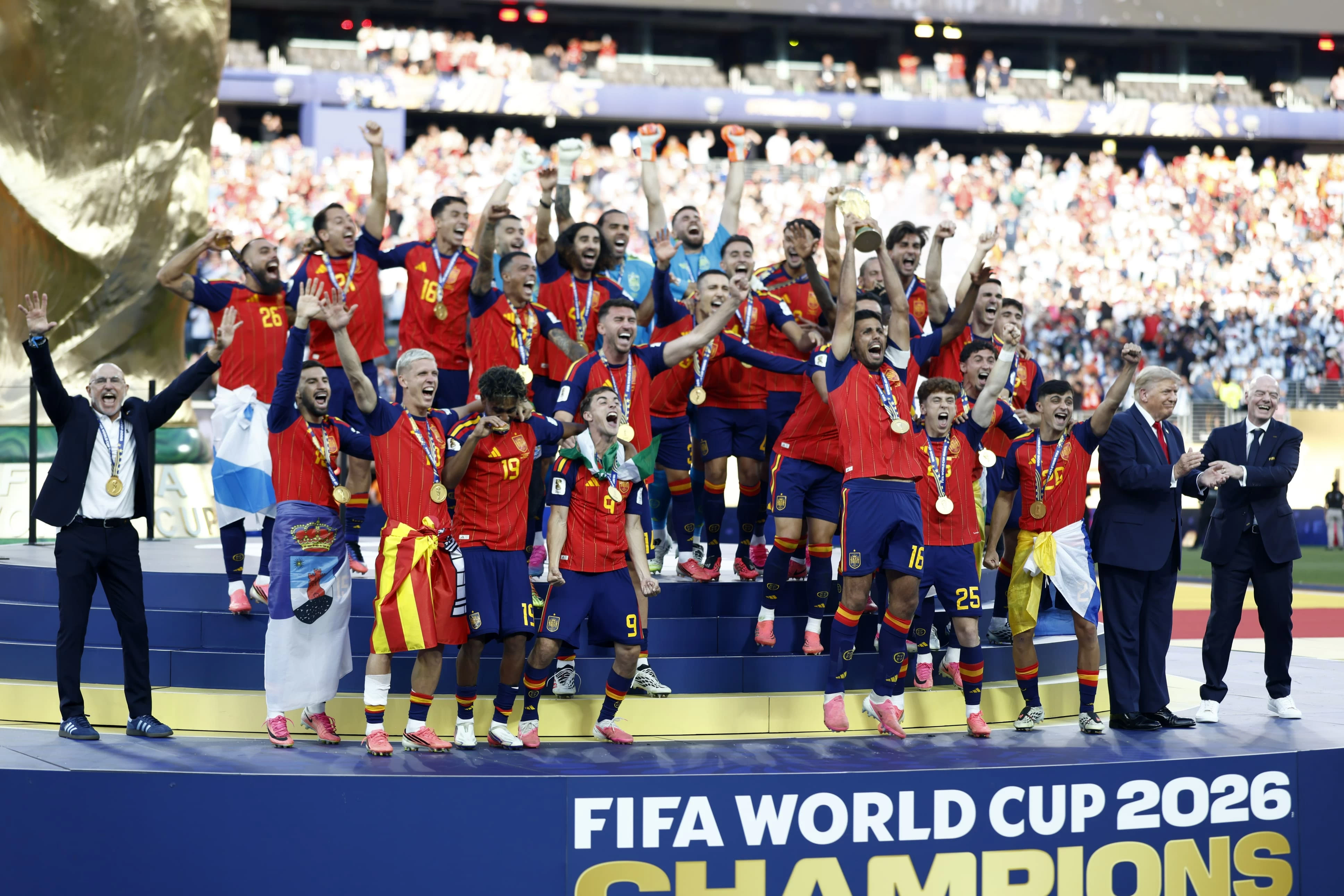
The 2026 FIFA World Cup final on Sunday brings together defending champion Argentina and European champion Spain in a clash between the top two teams in the FIFA rankings at the start of the tournament.
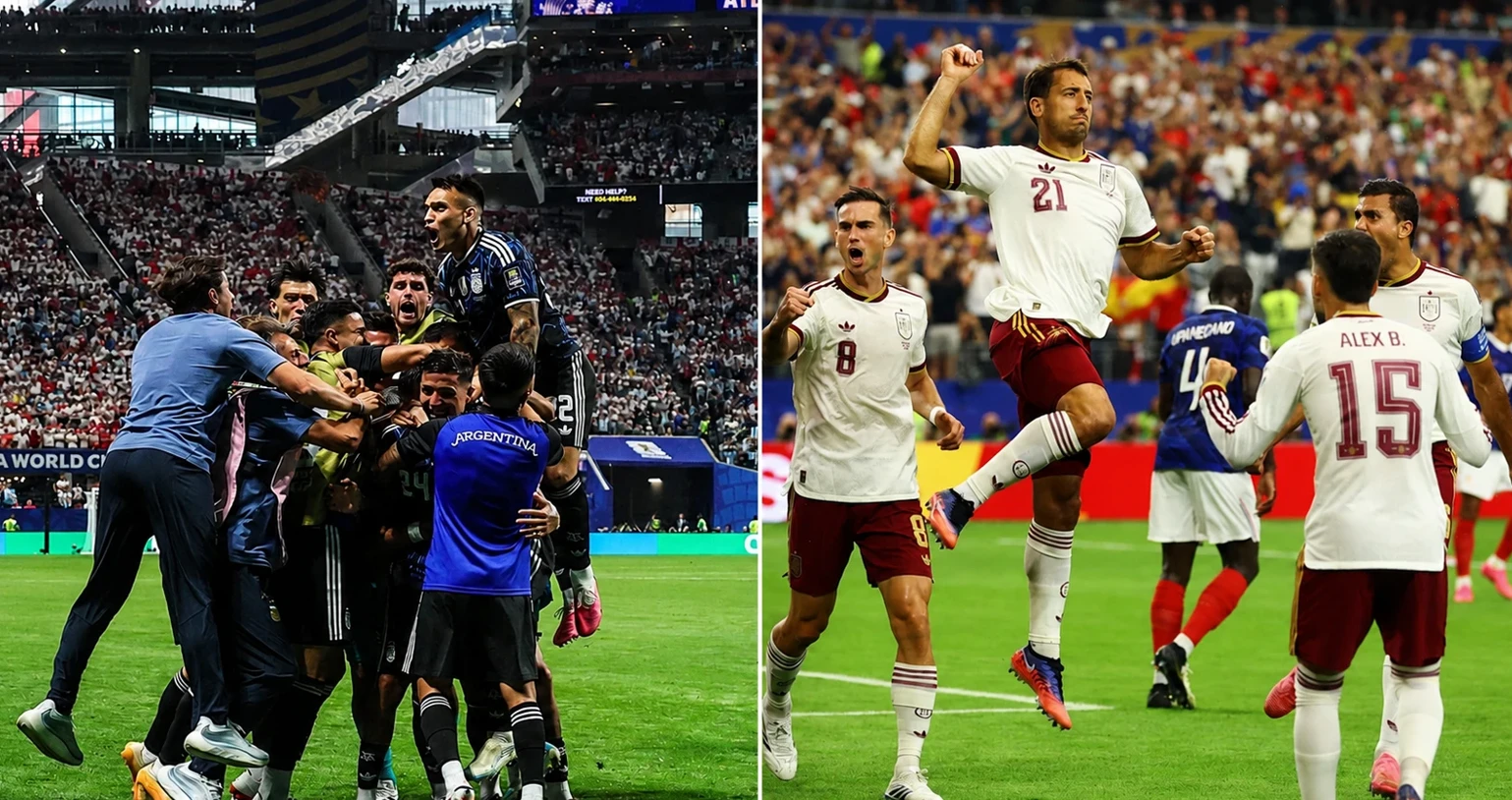
The two teams' arrival in the final was no surprise, as they maintained unbeaten records and overcame prominent opponents in the knockout rounds.
But their paths to the decisive match reflect different models; Argentina relied on the experience of its players and their ability to handle pressure, while Spain imposed its style based on possession, high pressing, and teamwork.
**First and second in the world**
Argentina entered the tournament as the top-ranked team in the FIFA rankings, followed by Spain in second place, before the results confirmed their status as leading contenders for the title.
Argentina coach Lionel Scaloni's squad reaches the final driven by the experience of a group accustomed to decisive matches, led by Lionel Messi in his sixth World Cup appearance.
In contrast, Spain coach Luis de la Fuente's team relies on ball control and a group of young talents, foremost Lamine Yamal, who is playing in his first World Cup edition.
**Market value difference in favor of Spain**
According to the Football Benchmark platform, Spain entered the tournament with a market value of €1.47 billion, compared to €818 million for Argentina, making Spain's squad about 80 percent more valuable.
A large part of the difference is due to Yamal, whose market value was estimated by the platform at €292.2 million, making him the most expensive player in both teams.
Pedri was valued at €139 million, Pau Cubarsí at €110 million, compared to €104 million for Enzo Fernández and €88 million for Julián Álvarez.
The combined highest-value lineup for both teams included seven Spanish players, with a total value of over €1 billion.
**Youth against experience**
Spain holds an advantage in terms of younger average age of its players, which is 26.7 years, compared to 29.1 years for Argentina, one of the oldest squads in the tournament.
The contrast is embodied in Messi, aged 39, and Yamal, 19, in a matchup that brings together one of the game's greatest stars with one of the standout talents of the new generation.
But Argentina enjoys greater experience in finals, having reached the decisive match in three of the last four editions, in 2014, 2022, and 2026.
Spain, meanwhile, plays its first final since winning the 2010 edition in South Africa.
**Argentine digital dominance**
Argentina holds a significant lead in social media presence, with its players having a total of 667 million followers on Instagram, compared to 140 million for Spain's players.
The bulk of this difference is due to Messi, who alone has over 512 million followers.
Between June 11 and July 14, the Argentine national team account gained 2.4 million followers, a 16.2 percent increase, reaching 17.2 million.
The Spanish national team account added about 500,000 followers in the same period, a 6.7 percent increase, reaching a total of 8 million.
The top five most-followed Argentine players gained 11.8 million new followers, compared to 5.6 million for their Spanish counterparts.
Messi topped the list with about 6 million new followers, while Julián Álvarez, Emiliano Martínez, Leandro Paredes, and Lisandro Martínez each added more than 1 million.
**Minutes burden**
Argentina goalkeeper Emiliano Martínez leads the list of most minutes played among both teams with 795 minutes, having played every minute of his team's journey to the final.
His teammate Alexis Mac Allister is second with 730 minutes.
In Spain, Marc Cucurella, Unai Simón, and Pau Cubarsí each played 717 minutes, while Aymeric Laporte and Rodri surpassed the 700-minute mark.
Despite the differences in market value, age, digital presence, and playing time, the final remains open to small details.
Between Spain's quest to reclaim the title after 16 years and Argentina's ambition to retain the World Cup, the language of numbers will recede as the match begins, leaving the final word to the teams' performance on the pitch.
Original source: Anadolu Agency


Comments (0)
Be the first to comment.