War of Regulations and Influence: Balogun Case Brings FIFA-UEFA Clash to the Fore

UEFA believes that disciplinary sanctions should be applied equally to all players to preserve the integrity and credibility of competitions.
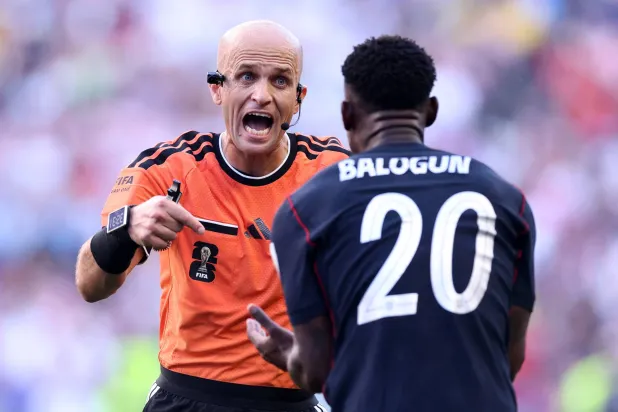
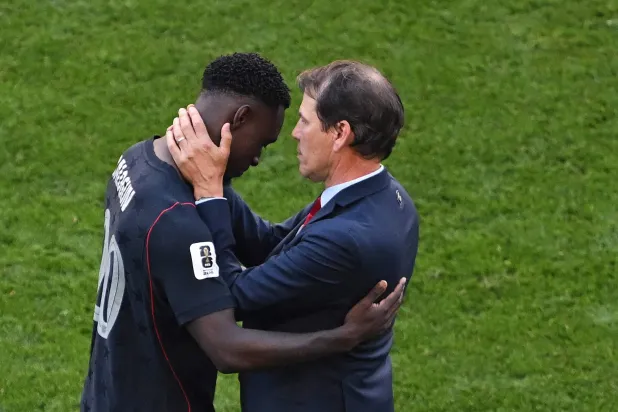
The case of US national team striker Folarin Balogun is no longer just a disciplinary matter in the World Cup; it has become a new chapter in the ongoing dispute between FIFA and UEFA, after FIFA decided to freeze the automatic suspension that would have been imposed on the player following his red card.
The decision sparked strong reactions from UEFA, which considered that bypassing the principle of automatic suspension after a red card undermines the principle of equality in the application of regulations, especially in a tournament of the World Cup's magnitude, after the same penalty had been applied to other players without exception.
UEFA believes that disciplinary sanctions must be applied uniformly to all players to safeguard the integrity and credibility of competitions.
The case grew more complex after US President Donald Trump announced that he had spoken to FIFA President Gianni Infantino, urging him to reconsider the penalty imposed on Balogun.
Balogun attempts to score against Belgian goalkeeper Thibaut Courtois (AP)
Despite FIFA later affirming the independence of its judicial and disciplinary bodies, the announcement of the call sparked broad debate about the relationship between sporting decisions and political pressure.
The case also highlighted the contrasting approaches of the two organization's presidents. In recent years, UEFA President Aleksander Čeferin has taken clear stances on a number of international issues, including the continued ban on Russian clubs and national teams due to the war in Ukraine; UEFA also issued a statement in 2025 condemning the targeting of civilians and children in Gaza.
In contrast, Infantino maintains a close relationship with US President Donald Trump, which has added to the controversy surrounding the Balogun case, despite FIFA denying any political influence on its decisions.
This crisis comes in the context of long-standing disputes between FIFA and UEFA over several issues, most notably the international calendar, the expansion of the World Cup, revenue distribution mechanisms, and FIFA's push to expand its authority in managing global tournaments.
The FIFA Club World Cup project stands out as one of the main points of contention between the two sides. FIFA aims to develop and expand the tournament by increasing the number of participating clubs and matches and enhancing its commercial value, while UEFA views this step as direct competition for its continental competitions, foremost the UEFA Champions League.
Although UEFA has also expanded some of its own competitions, it expresses concerns that FIFA's expansion in club tournaments could reduce its influence in this area, as the two sides compete for the same players, the same calendar, and commercial markets and broadcasting rights.
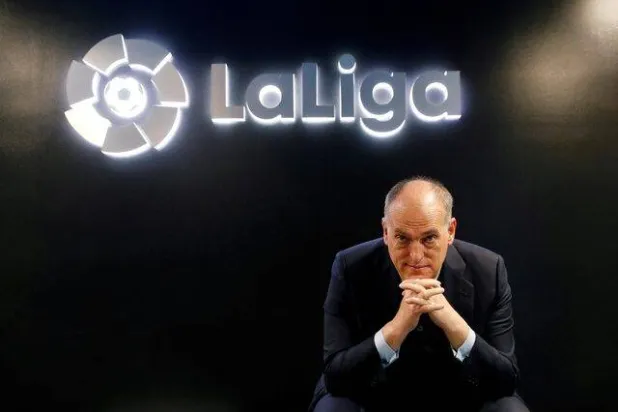
The dispute is no longer confined to sports aspects, as the International Federation of Professional Footballers in Europe, the European Leagues, and La Liga have filed a formal complaint against FIFA with the European Commission, objecting to the mechanism for managing international competitions.
This complaint raises questions about FIFA's dual role as both the body that sets the rules for world football and the body that organizes tournaments from which it generates direct commercial revenue.
As this tug-of-war between the two largest organizations in world football continues, the Balogun case remains the latest chapter in the conflict between FIFA and UEFA, reflecting a broader dispute that goes beyond disciplinary sanctions to issues of influence, the governance of the game, and the future of its global tournaments.
Original source: Asharq Al-Awsat


Comments (0)
Be the first to comment.