Record Viewership for World Cup Final in the US Reflects Major Shift in Soccer's Popularity
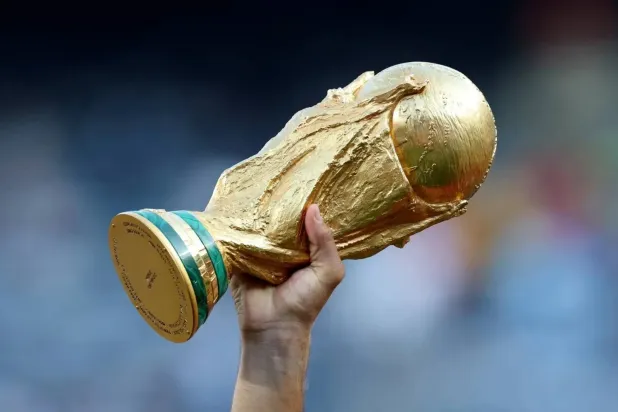
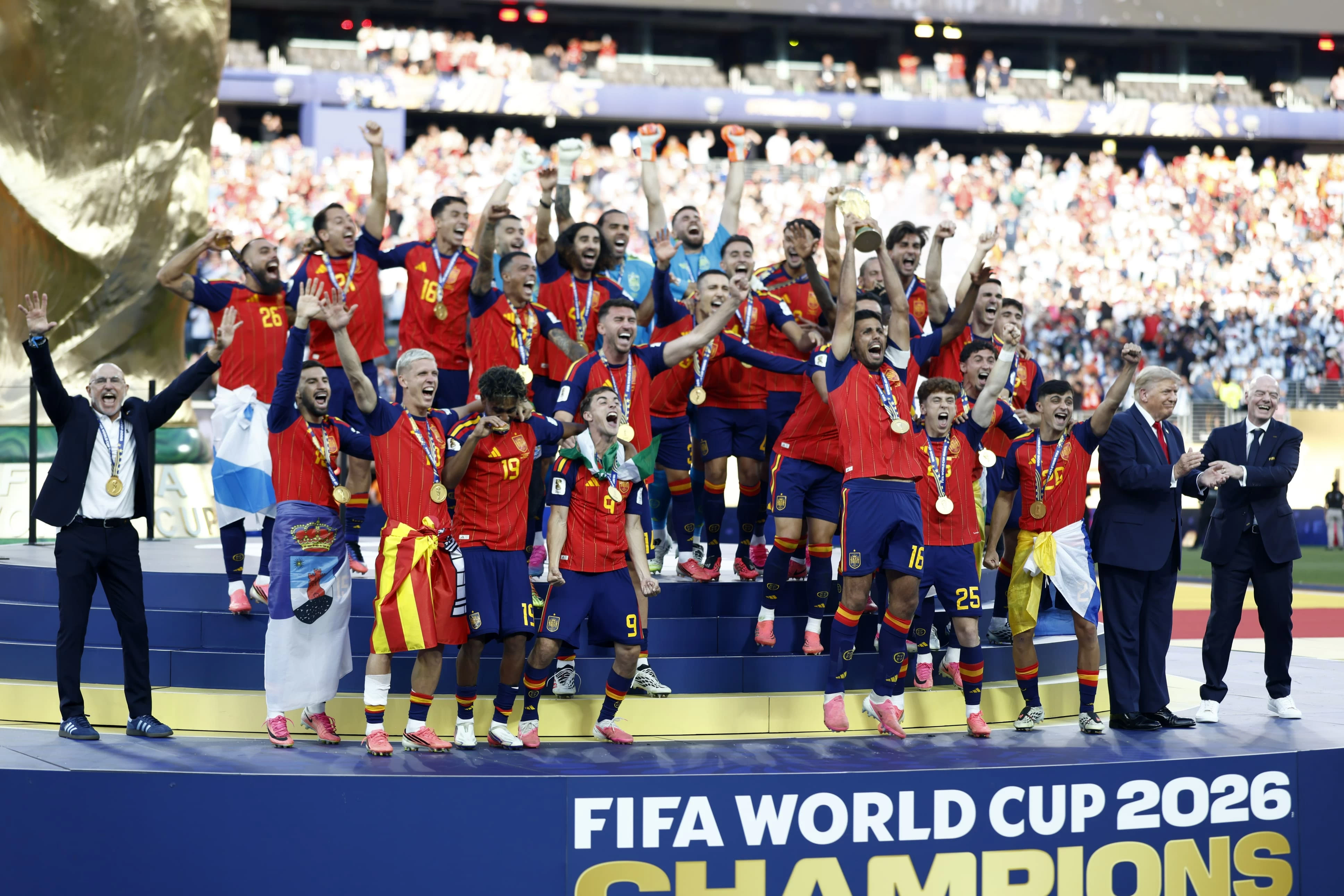
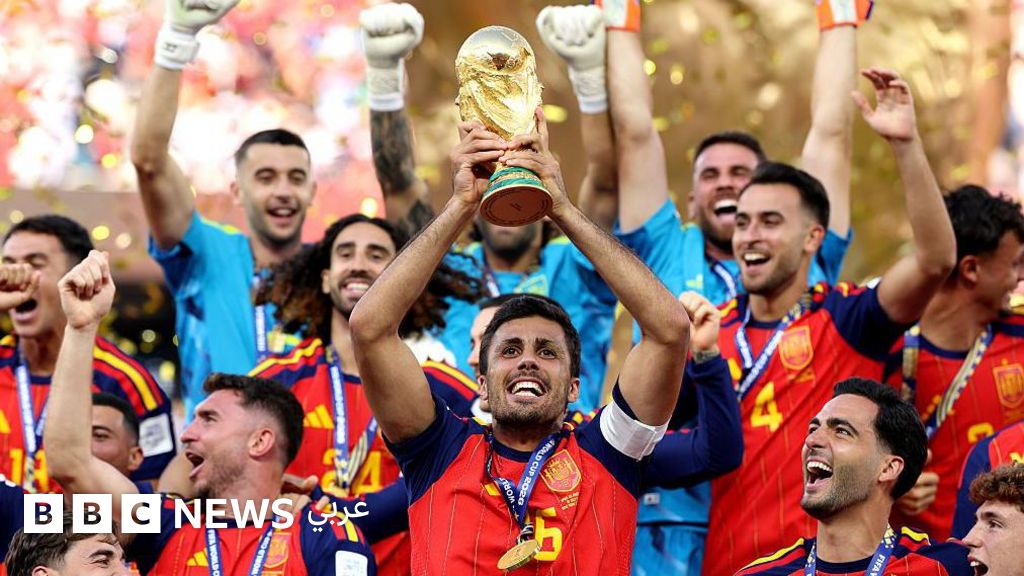
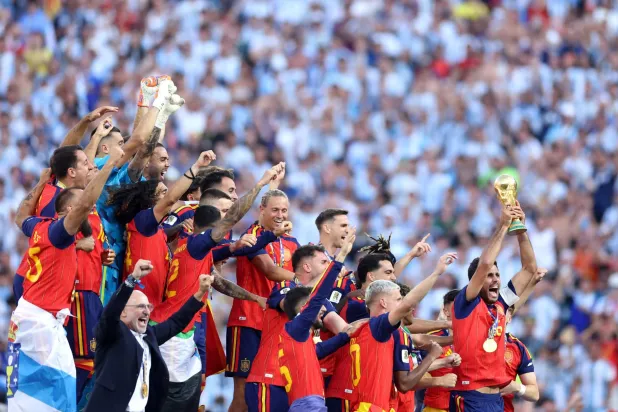
Nearly 63 million Americans watched Spain's victory over Argentina in the World Cup final last Sunday, breaking viewership records.
Nearly 63 million Americans watched Spain's victory over Argentina in the World Cup final last Sunday, breaking viewership records and confirming the growing popularity of the sport in the United States after decades of efforts to expand its fan base.
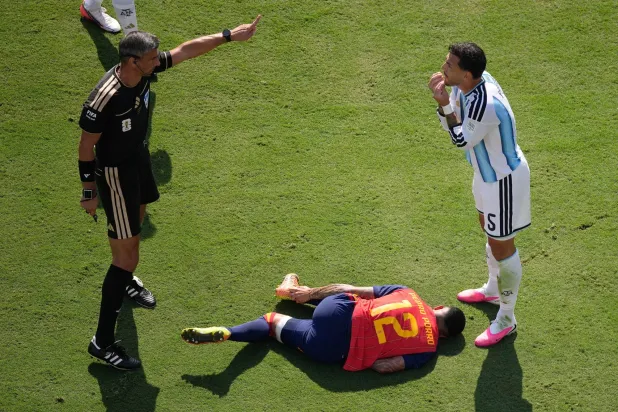
The final was held in New Jersey, and remained scoreless until Spain scored the winning goal in the 106th minute to seal the title 1-0.
The English-language broadcast on Fox drew 38.9 million viewers, while Comcast's Telemundo and the Peacock streaming platform attracted an additional 23.9 million viewers for the Spanish-language coverage, according to data from the two companies. Thus, the total viewership far exceeded the record for the 2022 World Cup final in Qatar, which was watched by 22.3 million viewers in the United States.
These strong numbers capped what analysts described as an outstanding performance by the broadcast networks covering the tournament. Fox and Comcast had paid about $485 million and $600 million, respectively, for broadcast rights packages that included World Cup competitions, according to media reports.
Several knockout-round matches also outperformed major American sporting events in viewership. The England-Mexico Round of 16 match attracted about 45 million viewers, far surpassing the roughly 27 million who watched a baseball game in which the Los Angeles Dodgers beat the Toronto Blue Jays, and the about 25 million who saw Game 5 of the NBA Finals, in which the New York Knicks ended a 53-year title drought by beating the San Antonio Spurs.
Although these numbers remained below the roughly 126 million who watched the Super Bowl, in which the Seattle Seahawks beat the New England Patriots, they represent a milestone for a sport that has long trailed American football, basketball, and baseball in popularity in the United States.
The tournament, co-hosted by the United States, Canada, and Mexico for the first time, benefited from matches held at convenient times for the American audience. The possibility of some of the sport's biggest stars making their final World Cup appearances—including Argentina's Lionel Messi and his rival Portugal's Cristiano Ronaldo—also boosted fan interest. The last time the United States hosted the finals was in 1994.
Fox One, the owner of English-language broadcast rights in the United States, recorded 2.8 million subscriptions in June, its best month since its launch in August, and more than double the 1.1 million subscriptions it recorded during the NFL playoffs in January, according to Antenna, a company specializing in tracking streaming performance.
The great popularity of soccer among Americans of Latin descent also contributed to strong viewership for the Spanish-language Telemundo channel. Vicente Navarro, a senior executive at Got Digital, a sports marketing firm, said: 'Viewership exceeded internal expectations for both networks, and by a wide margin.'
He added that the cost of a prominent 30-second ad during knockout-round matches reached up to $1 million, more than double the levels recorded in 2018. Leading advertisers included PepsiCo, Home Depot, Anheuser-Busch, and Coca-Cola, according to Sensor Tower, a market intelligence firm. For comparison, a 30-second TV ad during the Super Bowl typically costs about $8 million or more.
Along with its popular success, the tournament also proved its commercial viability for broadcasters, thanks to the so-called 'hydration break' that split matches into four quarters and provided additional advertising opportunities.
Experts said these additional breaks helped offset the high cost of broadcast rights and attracted interest from food and beverage companies. According to a report published by The Hollywood Reporter in June, Fox, led by Lachlan Murdoch, is expected to generate at least $250 million from hydration break ads alone, while Telemundo did not air ads during those breaks.
Luke Stillman, managing director of research firm Madison & Wall, said: 'The new ad spaces are certainly generating greater spending on the World Cup.' He added: 'It would be surprising if this model does not become a permanent part of the tournament going forward, which will likely lead to higher broadcast rights fees in the coming years.'
However, it remains unclear whether some of the American-style features seen in the tournament will continue in the future, including the extravagant halftime show reminiscent of the Super Bowl, which extended the break to 27 minutes, compared to the traditional 15-minute interval in soccer.
The International Federation of Association Football (FIFA) also announced that the World Cup champion would receive a commemorative ring for the first time, a clear nod to one of the most famous American sports traditions.
Spain, Portugal, and Morocco are set to host the 2030 World Cup, while Saudi Arabia will host the 2034 edition. The match timings in both tournaments are likely to be less favorable for American viewers, which could negatively impact future viewership levels.
Original source: Asharq Al-Awsat


Comments (0)
Be the first to comment.