"Ashhab al-Lal".. From Ibn Rifa to Mather
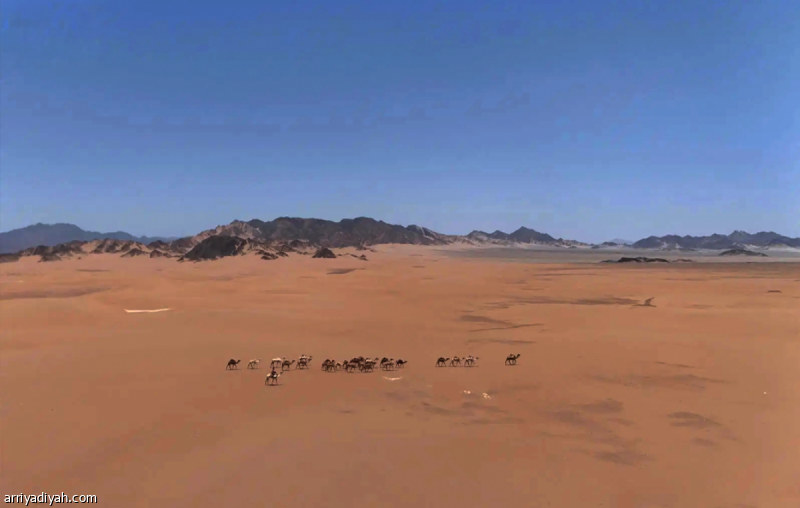
Folk expressions regain their presence as the summer heat intensifies, as part of the linguistic memory, especially in poets' vocabularies such as "Ashhab al-Lal". This phrase is common in folk poetry and everyday speech, referring to a clear mirage that appears with extreme heat over barren land. "Al-Lal" is the mirage, while "Ashhab" is a color mixing white and black, making the mirage highly visible to the naked eye, a visual image embodying the uniqueness of the desert environment. This phrase was not just a description of a natural phenomenon but turned into a literary image that poets drew inspiration from, becoming a symbol of the desert's harshness and intense heat. The poet Farraj bin Rifa, may God have mercy on him, invoked it in describing his she-camel capable of crossing the summer heat, saying: "O God, I ask You for a reddish one that has captured my heart, / Reddish from the army, its flanks overflowing, / Neither the soul of the army nor the guiding mirage, / Neither does it drink from wide cisterns nor does its rider rest." The poet prince Badr bin Abdul Mohsen bin Abdulaziz, may God have mercy on him, also drew inspiration, saying: "O bringer of the thirsty camels in the heat, / When summer drives them through the ashhab al-lal, / You are the journey, the path, and the guide, / You are the safety of the people when panic strikes." The presence of "Ashhab al-Lal" was not limited to poetry and folk heritage but extended to contemporary art, where Saudi artist Ahmed Mather drew inspiration from this term for his artwork "Ashhab al-Lal", which he is executing as part of the "Wadi Al-Fan" project in AlUla Governorate, based on the mirage phenomenon as a central idea exploring the relationship between light, visual perception, and the desert landscape. The work is located amidst the rock formations of AlUla, consisting of an engineered structure carved into the ground that relies on natural light and a precise system of mirrors to simulate the mirage phenomenon without using any energy source.
Original source: Arriyadiyah



Comments (0)
Be the first to comment.