Coronation Stadiums.. Political Crises.. Shocks.. and Architectural Masterpieces
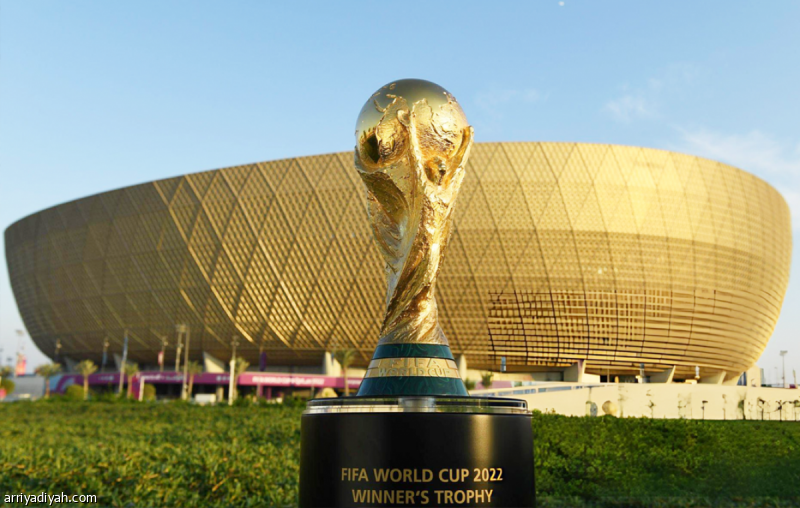
Uruguay's Estadio Centenario became the cradle of the World Cup legend in 1930 when it hosted the first final in history, witnessing a tension-filled match between the hosts and Argentina to the extent that the two teams played the first half with an Argentine ball and the second with a Uruguayan one, ending with the hosts crowned after a 4-2 victory. The World Cup story began in 1930 at the Estadio Centenario in Montevideo, Uruguay, a historic structure built specifically to celebrate the centenary of the country's independence, with a capacity of about 90,000 spectators. The importance of this stadium lies in the fact that it is the cornerstone of the World Cup...
Uruguay's Estadio Centenario became the cradle of the World Cup legend in 1930 when it hosted the first final in history, witnessing a tension-filled match between the hosts and Argentina to the extent that the two teams played the first half with an Argentine ball and the second with a Uruguayan one, ending with the hosts crowned after a 4-2 victory. The World Cup story began in 1930 at the Estadio Centenario in Montevideo, Uruguay, a historic structure built specifically to celebrate the centenary of the country's independence, with a capacity of about 90,000 spectators. The importance of this stadium lies in the fact that it is the cornerstone of the World Cup. Four years later, in 1934, Rome's Stadio del Partito Nazionale Fascista hosted the second final, with a capacity of 50,000 spectators. Its significance lies in being the first European stadium to host the event, and it was heavily politicized in that era. There, Italy succeeded in winning its first title by defeating Czechoslovakia 2-1 in extra time. In 1938, the Olympic Stadium "Yves-du-Manoir" in Paris, which had a capacity of 45,000 spectators, hosted the last final before World War II. It held great importance as it cemented the tournament's global standing before the long hiatus, and witnessed the Italians retaining their title after beating Hungary 4-2.
The tournament resumed in 1950 after the planet recovered from the shock of World War II, witnessing the birth of the biggest shock in the history of the game at the Maracanã Stadium in Rio de Janeiro, Brazil. The stadium was the largest in the world at the time with a staggering official capacity exceeding 173,000 spectators. The final was attended by 199,854 spectators. The stadium's importance lies in being the spiritual home of Brazilian football, but it is associated with the biggest football setback for the samba nation, as Uruguay stunned the massive crowd and defeated Brazil 2-1 in what became known as the "Maracanazo." In 1954, the Wankdorf Stadium in Bern, the Swiss capital, with its capacity of 64,000 spectators, was the stage for a match of enormous political and economic significance for post-war Germany, known as the "Miracle of Bern," where West Germany came back from a two-goal deficit against legendary Hungary with Puskás to win 3-2 in a miraculous victory.
The Råsunda Stadium in Sweden, with a capacity of 50,000 spectators, witnessed during the 1958 edition the beginning of the era of Brazilian dominance. Its importance lies in the birth of the legend Pelé on the world stage, as he scored two goals at the age of 17 and led Brazil to its first title by beating the hosts 5-2. Brazil repeated the feat in 1962 at the Estadio Nacional in Santiago, Chile, a stadium with a capacity of 66,000 spectators. Its significance was in Chile's challenge to overcome the devastating earthquake that struck the country before the tournament, and there Brazil retained its title against Czechoslovakia by winning 3-1 despite Pelé's absence due to injury. In 1966, the old Wembley Stadium in London, with its famous twin towers and a capacity of 98,000 spectators, shook. The match's importance lies in the fact that the cradle of modern football, England, won its only title, which remains solitary to this day. The final saw the most controversial goal in history when Geoff Hurst scored the "ghost goal" in extra time against West Germany, leading England to a 4-2 victory. Four years later, the Estadio Azteca in Mexico entered history in 1970. It is an architectural masterpiece, elevated above sea level, with a capacity of 107,000 spectators. Its exceptional importance lies in immortalizing the greatest generation in Brazil's history, and Pelé's World Cup farewell after defeating Italy 4-1. In the 1974 edition, the West German machines succeeded in taming the "Total Football" of the Netherlands led by Cruyff at the Olympiastadion in Munich, distinguished by its innovative glass design and capacity of 75,000 spectators. The significance of the match was in the clash of football philosophies and the rise of Beckenbauer as a leader, with the Germans winning 2-1. Argentina had its first crazy night in 1978 at the Estadio Monumental in Buenos Aires, with a capacity of 71,000 spectators. It gained great importance as it gave Argentina its first title in history in a raucous atmosphere, witnessing their victory over the Netherlands 3-1 in extra time. The 1982 World Cup in Spain saw the explosion of Italian striker Paolo Rossi at the Santiago Bernabéu Stadium in Madrid, the home of Real Madrid, which then had a capacity of 90,000 spectators. That day, Italy restored its old glories after a resounding 3-1 victory over West Germany, with its legendary president celebrating in the stands.
In 1984, the Estadio Azteca in Mexico became the first stadium to host the final twice in history, with a huge capacity of 114,000 spectators. It gained legendary importance as the stage that crowned Diego Maradona as the king of football after a dramatic match in which Argentina defeated Germany 3-2. In the 1990 edition, the two teams met again in a revenge final characterized by excessive roughness at the Stadio Olimpico in Rome, which had been renovated to a capacity of 73,000 spectators. The stadium witnessed the political unification of Germany and its winning of the title with a late penalty kick 1-0 against Maradona's Argentina. By 1994, the Rose Bowl in California, United States, with its capacity of 94,000 spectators, took the tournament to new commercial horizons, as it was the first final to end goalless and be decided by a penalty shootout, where Brazil won the title after the famous scene of Italian Roberto Baggio missing his kick. In Paris, the Stade de France in 1998, built specifically for the World Cup with a capacity of 80,000 spectators, experienced a mysterious night due to Ronaldo's health crisis before the match. That day, the French curse was broken, and the "Les Bleus" team entered the world champions club thanks to Zinedine Zidane's two historic headers and a 3-0 victory over Brazil.
Original source: Arriyadiyah



Comments (0)
Be the first to comment.