Video: VAR sends off Switzerland player and saves Argentina star... Favor or application of the law?
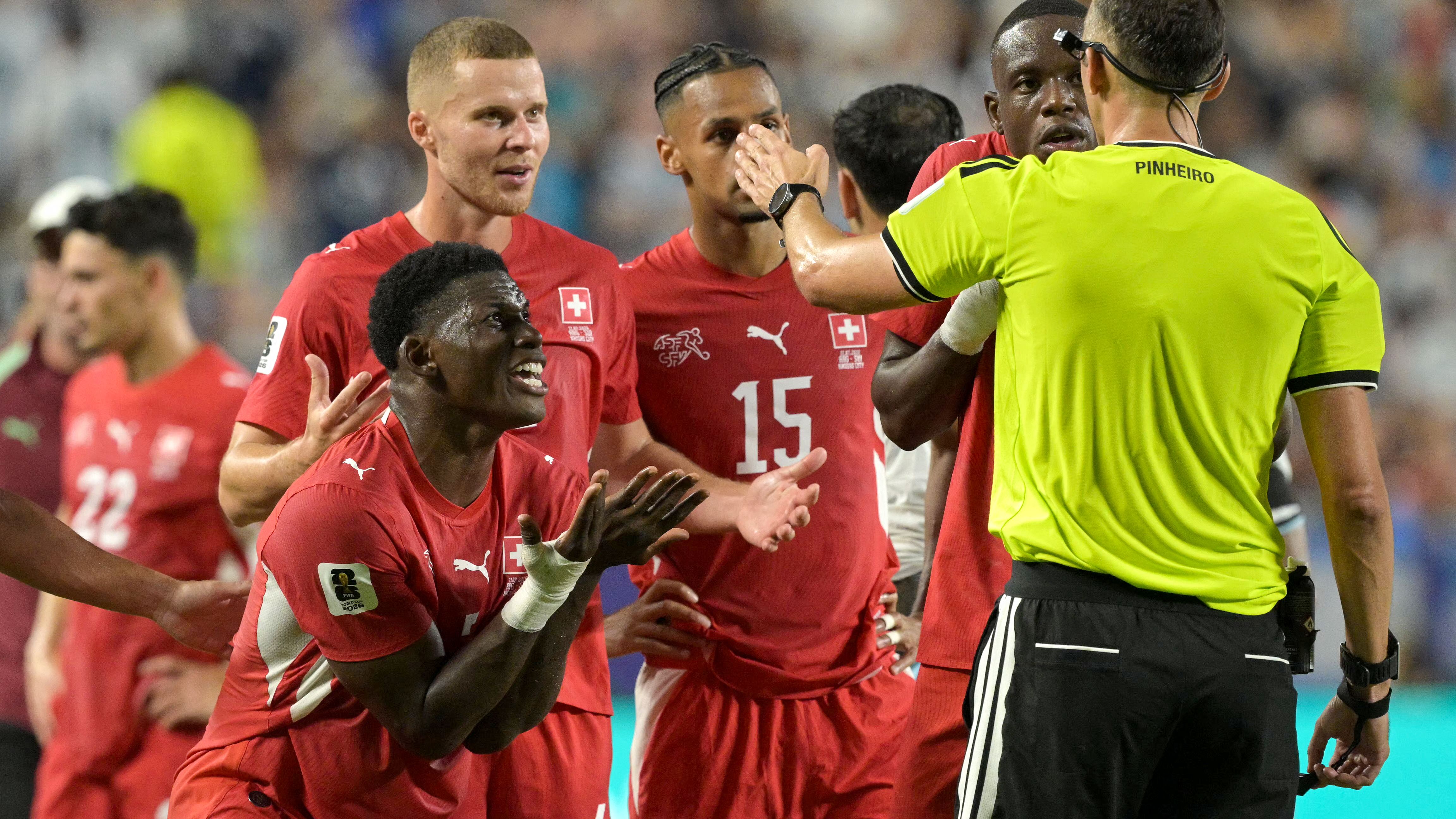
A unprecedented refereeing incident in the 2026 World Cup quarter-final between Argentina and Switzerland sparked widespread debate about whether the intervention of the Video Assistant Referee (VAR) to send off Swiss striker Breel Embolo was a 'favor' to Argentina, after Portuguese referee João Pinheiro withdrew the yellow card from Argentina's Leandro Paredes and reissued it to Embolo, who was then sent off in the 72nd minute with the score tied 1-1.
Embolo left the field in Kansas City in tears, surrounded by teammates trying to console him, a touching scene reflecting the shock experienced by the Swiss player after his dismissal.
The controversial incident began in the 69th minute, when referee Pinheiro showed a yellow card to Paredes for a foul on Embolo, but the VAR room intervened suddenly, issuing an urgent alert that the card was given to the wrong player, prompting the referee to go to the monitor to review the incident.
After reviewing the replay, Pinheiro made a shocking decision to cancel the warning received by Paredes, ruling that Embolo had simulated a fall and feigned the foul, then gave him a second yellow card after a previous caution in the 44th minute, resulting in an automatic red card, at a critical time that forced Switzerland to play with 10 men and without their top striker.
Why did VAR intervene?
🟥 Portuguese referee João Pinheiro shows the red card to Switzerland star Breel Embolo after receiving two yellow cards! The decision was made after using video technology (72). #WorldCup2026 pic.twitter.com/JfiPScxWGJ — beIN SPORTS (@beINSPORTS) July 12, 2026
The sudden intervention of VAR raises questions about the real motives behind this decision, especially since second yellow cards are not usually subject to VAR review, and the technology cannot recommend a send-off in the case of a second yellow card.
However, the door opened in this incident was the 'mistaken identity' door, as the card was shown to the wrong player. This assumption allows the referee to correct the card and reassign it to the correct player, according to international laws which state that VAR can intervene in only four cases: goal/no goal, penalty, direct red card, and mistaken identity in awarding a card.
'Favor' or application of the law?
Although the decision seems technically compliant with the laws, the timing and surrounding circumstances have raised widespread suspicions about whether it represented a 'favor' to Argentina, especially since the incident came at a crucial moment with the score tied, and that Paredes escaped a caution while Embolo paid a heavy price with a red card.
In short, if Pinheiro had not penalized Paredes with a yellow card in the first place, VAR could not have intervened, but by issuing the wrong card, the door was opened for a review that ended Embolo's match and decisively affected the course of the game, which ended with Argentina winning by goals from Mac Allister and Ndoye.
Original source: Kooora



.jpg)


Comments (0)
Be the first to comment.