Kevin Keegan: An English Heart That Wrote Timeless Stadium Tales
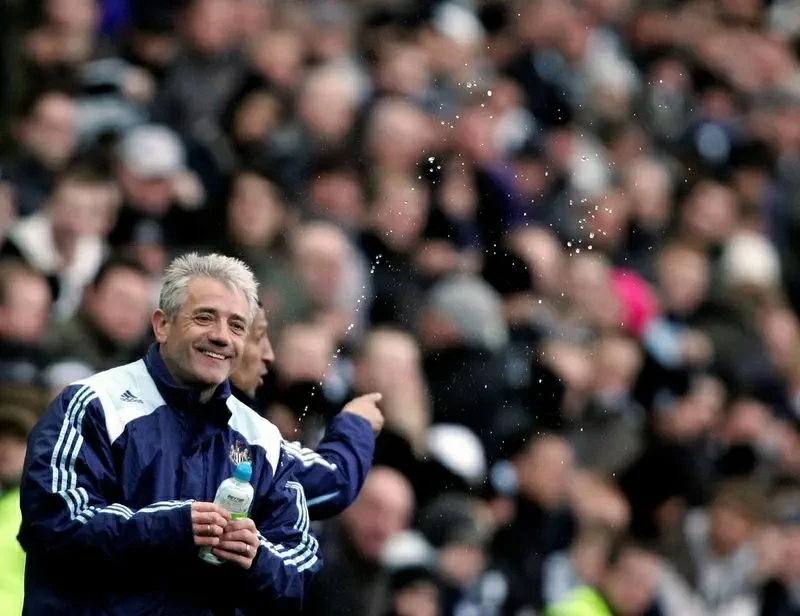
On a cold Northern English evening, as the stands blazed with the roar of passionate crowds like a stormy sea, a slender, spirited young man emerged with a glint in his eyes like an ancient promise. A star was born of light and stubbornness; no one expected that this short youngster, running as if chasing a dream, would one day become the talk of the global press.
That young man was Joseph Kevin Keegan, the player who would later turn the tumult of the stadiums into an unforgettable novel, with the flashes of the international press racing to capture his shadow ahead of his footsteps.
He was not an ordinary player; he was the project of a legend slowly taking shape, like poems drawn in the pulse of a poet who knows that beauty is only granted to those who know how to wait. He resembled that kind of player who creates his presence not by skill alone, but by the light emanating from his depths—the light the crowd touches before they even touch the ball. With every step he took, the outlines of his story became clearer, writing a new chapter for him in every match.
Men Who Awaken Cities
In football history, there are moments not measured by goals or titles, but by what they stir in the soul of cities. When Maradona arrived in Naples, he was not merely a player seeking new glory, but a spark that awakened an entire city from a long slumber, restoring its original pulse to football and creating a glory with the team that still echoes in the alleys to this day. Naples was a city waiting for a miracle, and a man came to it carrying it in his feet, rearranging its dreams just as the sea rearranges its waves every morning.
On the other side of Europe, a few years later, Kevin Keegan was crafting a story no less glowing, even if its features differed. He did not descend upon Newcastle as a miracle; he came as a heart that knew how to restore life to a city that had lost its voice. Newcastle back then was a city searching for a pulse, searching for a man to restore what it had lost in passion and what had faded in light. And just as Maradona redrew the map of Southern Italy, Keegan redrew the map of Northern England, not through skill alone, but through a passion resembling light rising from the mist, returning to the city its absent voice.
Thus, the two stories run parallel without intersecting, and meet without being identical: Maradona gave Naples a new dawn after a long wait, and Keegan gave Newcastle a heart that knew how to lift it from the ground. Both created glory; every glory bore the traits of its maker, and every city rediscovered itself through a man who came to it at the moment it needed him most.
A Journey That Always Glows
Reuters wrote in one of its historical reviews that Keegan «was not just a talented player, but a moving spirit»—a spirit that began in the fourth tier, on small wind-swept pitches, and from a father (a coal miner) who believed his son would achieve something unique. Those details, which seemed marginal in his beginnings, later turned into part of his grand narrative: the narrative of a player who made himself, who carried weights in the stands to strengthen his body, and who ran in the rain to strengthen his willpower.
A Heart That Composes Football
In Liverpool, where legends are forged like timeless songs, Keegan found himself in a place that resembled him. The English press wrote about him at the time: «This boy doesn't play football... this boy plays it like an instrument.» With every goal he scored, the crowds raised their voices higher, and the newspapers wrote of him as «the player who possesses a heart bigger than his body.» Then European glory arrived, followed by the Ballon d'Or twice, and the international press declared that Keegan had become the first English player to conquer the summit of Europe twice consecutively.
A Map Re-drawing Itself
When he transferred to Hamburg, it felt as though all of Europe was rearranging its football map. The German press wrote about him: «The tireless super-mouse,» and AFP wrote that his transfer was «an unprecedented event in the transfer market,» doubling the German record fee of that era. In every match, Keegan added a new chapter to his novel—a chapter written with his feet and edited with his heart—until he became the idol of fans in a city that barely knew him a few months prior.
A Cry That Restores Life
When he stepped into Newcastle, Keegan was not entering a club seeking a better league standing, but rather a city searching for a pulse to restore its life. The stands back then were dormant, and the fans exhausted after long years without light, but his arrival was like rain falling on parched earth. The English press wrote during that period that «Keegan didn't come to manage... he came to awaken.»
And while Europe talked about his transfers as a player, England was now talking about his presence as a spiritual leader. He led Newcastle back to the Premier League, restored the fans' voices, and gave the city back its self-confidence. Reuters wrote: «Keegan didn't just change Newcastle's results... he changed the mood of the city.»
In the 1995–1996 season, as Newcastle chased the league title with a passion bordering on madness, that moment arrived which became etched in sports media memory: his famous cry in the face of Manchester United. It was not a cry of anger, but the cry of a man who loved his club more than he loved his silence. The Guardian stated: «In that cry, the first television icon in the history of the modern Premier League was born.»
An Incomplete Chapter
Then came the dramatic ending—for Keegan's life to be a series of scenes written by the pulse rather than the mind. He left Newcastle, but the city never left him. He remained in the memory of its fans like the fading light at dusk; never fully gone, never fully present, yet lingering there... in a place seen only by those who love.
When he took over as manager of the England national team, it seemed as though fate was granting him the chance to write the final chapter of his epic, but the ending unfolded dramatically, like a scene from a movie that refuses to end in complete happiness. Keegan resigned after a defeat against Germany, inside a small room within the old Wembley Stadium—a moment described by Reuters as «one of the most honest scenes in the history of English football.»
A Memory That Does Not Leave
And when Keegan passed away, the global press wrote words akin to a elegy, but it was an elegy for a man who lived his life the way a lover lives his first romance. AP News stated: «He was not just a player, he was a cultural phenomenon.» The Guardian wrote: «His legacy cannot be reduced to a moment of passion, but rather an entire life lived as a lover lives his first story.»
As for the fans, they bid him farewell the way great cities bid farewell to their great men: with a prolonged silence and a tear unashamed to show itself... Thus, Kevin Keegan remained in the memory of the global press as if he were a character from an endless novel. A player who forged glory, a manager who sparked debate, and a human being who created love. His voice remained, his footsteps remained, and that spark remained, making the crowds believe that football is not merely a game, but a story to be told... and Keegan's story was the most beautiful of all.
Original source: Okaz


Comments (0)
Be the first to comment.