Messi's doctor tells Okaz: Lionel only feared one thing
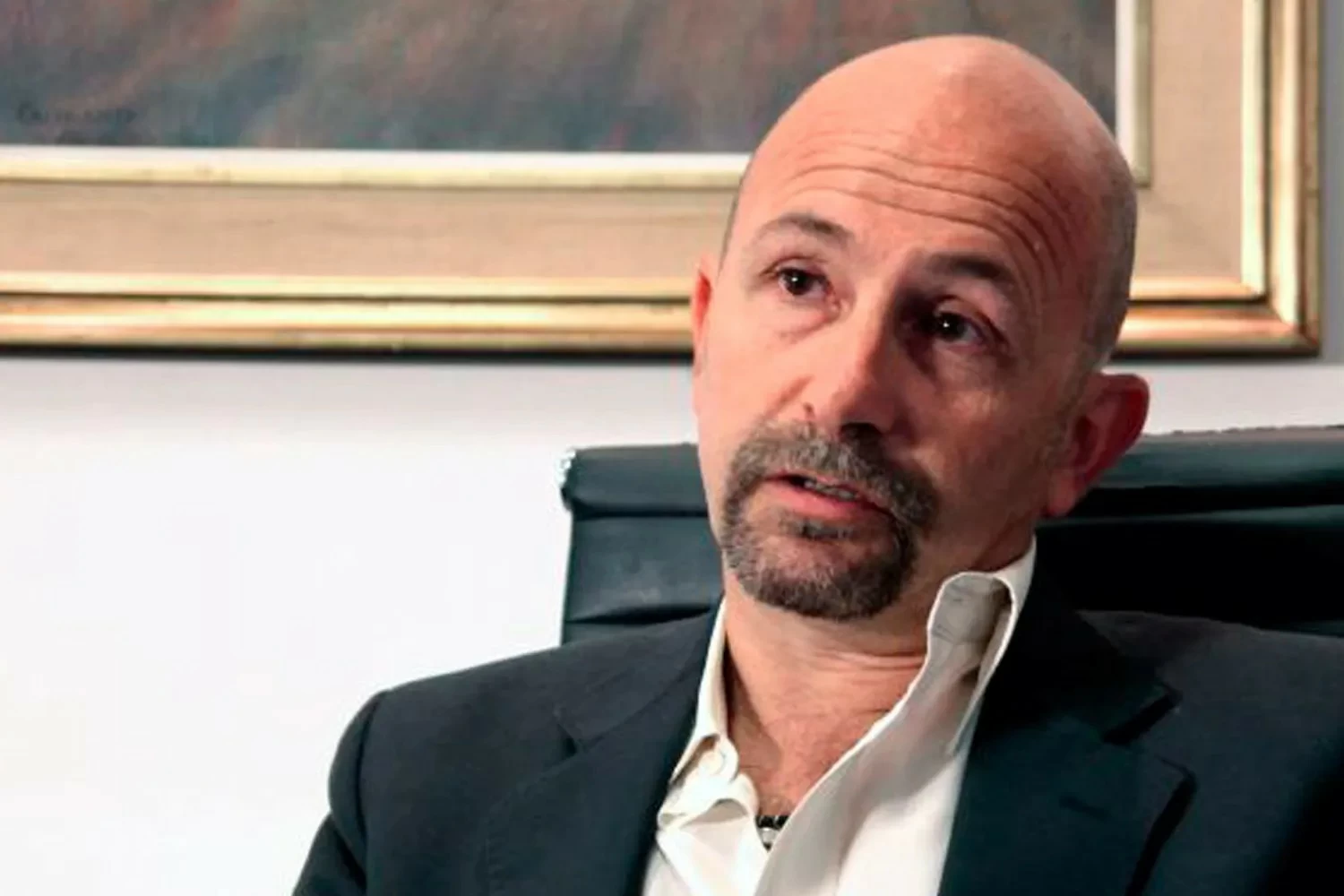
Argentine endocrinologist Diego Schwartzstein never imagined that the short, thin child who came to him in the 1990s seeking a glimmer of hope to increase his height to achieve his dream of becoming a professional footballer would one day break down the world's strongest defenses and surpass the masters of the beautiful game. True, he knew his name was Lionel Messi, but he did not expect that child to become one of the greatest players in football history.
Schwartzstein played the most important chapter in Messi's life, as the Flea's football career was threatened with ending before it began due to his suffering from growth hormone deficiency, but receiving treatment in time saved his career and gave fans of the game the opportunity to enjoy a talent that may never be repeated.
In an exclusive interview with Okaz, Schwartzstein spoke about Messi's treatment for growth hormone deficiency while playing for Argentine club Newell's Old Boys, how the player dealt with the disease, the impact of the treatment on his career, and the reflection of Messi's story on his own professional career as a doctor.
• At the beginning... how did you feel at the start of Messi's treatment phase?
•• There was no special feeling; I was treating him like any other patient; a child suffering from short stature who came for consultation to try to improve his height, something we cannot always achieve. I did not have before me the best footballer in the world or the greatest in history, but rather a small boy suffering from short stature seeking help to solve his problem; that's all. So, I felt towards him what I feel towards every patient of mine: the desire to help him, and gratitude for the trust they place in me.
Lionel was a completely normal child, and there was no difference between him and any other child; he was quiet, shy, a football lover, very polite, and did not differ in anything from his peers. If I could turn back time, or if I had known he would become the best in history, I would certainly have taken some pictures with him. In that era, phones were not equipped with cameras like today, but if I had had the chance, I would have taken some photos in my office with the one who would become the best player in the world while he was still a child.
• How did Messi deal with the disease? And what was on his mind during the treatment period?
•• Like any child when you tell him he has a problem related to his growth and that you will give him treatment to help solve it, he experiences a conflicting feeling. On one hand, he feels the frustration that anyone feels when told they have a health problem or difficulty, and on the other hand, he felt joy or hope knowing that he was able to solve this problem, and that this issue that bothered him (his short stature) would eventually disappear from his life.
His question revolved around whether he would grow enough to become a professional footballer; that was his concern. I answered him that he would be able to, and I asked him to rest assured because all indicators showed that he would grow and be able to play professionally. There was no doubt on their part or my part about the success of the treatment, because when the disease is accurately diagnosed and its treatment correctly determined, with the right dose and at the appropriate time, the treatment is successful, and it is very rare not to achieve the desired results. Therefore, there were no doubts on either side. Moreover, this treatment is very well tolerated, and his case did not experience any side effects or complications during treatment.
• What would have happened if Messi had delayed treatment or not received it?
•• I don't remember Messi's height exactly at the start of treatment; it was about 125 or 127 centimeters. Now he is 170 centimeters tall, because the earlier treatment begins, the faster and better the results. Messi started it at the age of nine, which is a very early and appropriate time, and his response was excellent. If he had started treatment earlier, the results would not have been much better. If he had started it late, it depends on the delay duration; if delayed six months or a year, nothing changes, but if treatment starts close to puberty or after its onset, the response is much lower. In Messi's case, he started treatment at the right time.
If Lionel had not received treatment, his height would have been much shorter than it is now. There is no evidence based on counterfactual hypotheses with which I can determine his exact height, but we can predict that he would have been about 15 centimeters shorter. Would he have played football or not while being 15 centimeters shorter? No one knows. I believe -and there is no evidence for this, it is just a personal guess- that he was so genius that he would have had the ability to play at any height, but I do not know if being 15 centimeters shorter, despite his high quality, he would have been able to play at elite levels as he has done for so many years. Therefore, the answer to this question remains highly speculative and not based on supporting evidence.
• What if Messi had continued treatment for a longer period?
•• Nothing, because treatment is only given until the body's natural growth phase ends, and after that there is no benefit in continuing it, as it will not provide any additional results.
• How did Messi's story affect your professional career?
•• Some are surprised, others know it, because the search engine 'Google' makes this information easily accessible. As for Messi's impact on my professional career, it undoubtedly gave me media exposure; being Messi's doctor gives you great popularity. But for me, Messi was a patient like any other patient, and the exceptional thing is what he himself achieved in his football career. My role was limited to helping him grow when he was a child, as I did with many other children who did not become famous football players.
• What would you like to say to Messi today?
•• I would like to tell him that I am very proud to have been a very small part of his life, and that I made a small contribution to help him grow so that he could show the world his extraordinary football talent. I say to him: Thank you for all the happy moments you gave us, and thank you for the football you have given. Finally, I would just like to hug him.
• When was the last time you met him? And what is your relationship with his family?
•• The last time I spoke with Leo was a few years ago, when I went on a tourist trip to Barcelona and stopped by to greet him at the club's headquarters, and we spent some time together. As for my relationship with his family, especially his father Jorge, it is a very friendly relationship, though not a friendship in the strict sense. We talk regularly, and he is a wonderful person and very grateful for what happened many years ago. In short, we have a very good relationship.
• What is the most special moment for you with Messi?
•• The most special moment was when he became a global star. He was undergoing recovery and rehabilitation at a training ground in the city of Rosario. My son was seven or eight years old and was crazy about Messi. I called Leo, he welcomed us to visit, and I took my son to meet him and spend some time with him at the training ground. It was a wonderful moment. Then we met him two or three more times, but that memory remained the most special for me.
Original source: Okaz


Comments (0)
Be the first to comment.