Post-World Cup Depression: Why Do Fans Feel Empty?
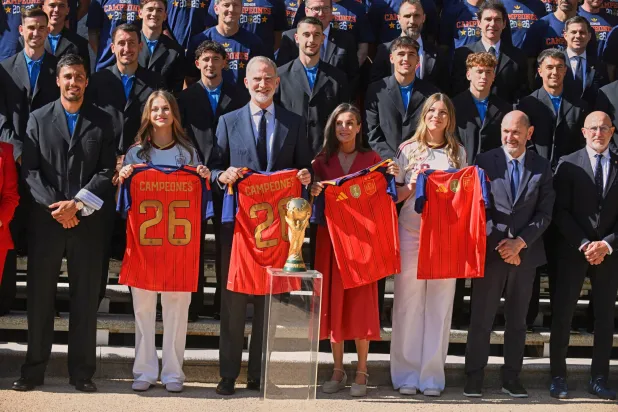
In the early hours of Monday morning, the curtain fell on the 23rd edition of the World Cup, after Spain was crowned with its second title in history, following a 1-0 victory over Argentina in a final match that went into extra time at MetLife Stadium in New York.
This edition was not ordinary; 48 teams participated for the first time, and it was co-hosted by three countries: the United States, Mexico, and Canada. It witnessed a notable Arab presence, most notably the outstanding performance of the Egyptian and Moroccan national teams.
While millions celebrated the crowning moment, many around the world began to feel a sudden emptiness as the daily rhythm that accompanied them for over a month came to a halt, a condition that psychologists call 'post-World Cup depression'.
What is 'post-World Cup depression'?
The term is not an official medical diagnosis within the classifications of mental disorders, but rather a common expression used by specialists to describe a temporary psychological state that some fans may experience after the conclusion of an exceptional event that captured their attention and emotions for an extended period.
Mental health specialists emphasize that it is not a mental illness but rather a natural reflection of the sudden change in the level of excitement and emotional engagement that accompanied the tournament.
The concept is not new; the American NPR agency used the phrase 'post-tournament blues' to describe a similar situation that swept South Africa after hosting the 2010 World Cup. Websites like 'Doha News' also addressed a similar phenomenon following the 2022 edition in Qatar, explaining that the condition is sometimes compared to the feeling of returning to work after a long vacation, and that it is fundamentally different from clinical depression, which lasts for months and is an independent mood disorder.
Researchers observe similar phenomena in other major sporting events, such as documented in an academic study published by the journal 'Psychology of Sport and Exercise' in 2018 under the title 'Post-Olympic depression', which concluded that it is a normal short-term response in athletes returning from the Olympic Games, and not a chronic pathological condition.
Deep bonds between fans and the tournament
Psychological studies indicate that the effects of major tournaments are not limited to entertainment, but create deep social and psychological bonds between fans and their favorite teams. With successive matches, the audience experiences a daily state of anticipation; victory becomes an occasion for collective celebration while defeat becomes a source of shared sorrow, causing moods to rise and fall continuously throughout the weeks of competition.
A study published in the journal 'Frontiers in Psychology' explains this phenomenon through what is called the 'feel-good effect of major sporting events', showing that belonging to a team or national team enhances the feeling of social connection and may positively reflect on the mental health of fans during the tournament.
For her part, American university professor Susan Whitbourne, a specialist in fan psychology at the University of Massachusetts, explained in previous statements to NBC News that fans' attachment to their teams is closely related to their sense of identity, and that these feelings are real and psychologically beneficial during the tournament, but its sudden end represents what she described as an 'emotional cliff' that millions fall off at once.
What does science say?
Neuroscience provides an explanation for what happens inside fans' minds. During exciting matches, the brain's reward centers are activated when the favorite team wins due to the release of the happiness-related hormone dopamine, while levels of adrenaline and cortisol (associated with stress) rise during decisive moments or upon defeat.
With the end of the tournament, this constant flow of stimuli stops, causing some to feel a temporary dip in mood due to the absence of the event that occupied an important part of their day.
This explanation intersects with what American psychologist Daniel Simons stated in previous statements to NBC News, when he compared fans' daily anticipation of a dose of football excitement to waiting for a habitual morning cup of coffee, adding that the end of the tournament suddenly forces the brain to give up its daily reward while remaining in a state of anticipation.
As for the numbers, an academic study conducted during the 2022 World Cup in Qatar, involving more than 1,330 participants, most of them from Saudi Arabia and other countries, with results published on the scientific platform 'Medarcai' in early 2026, revealed that about 41.5% of participants reported that following matches made them feel stressed or nervous, compared to 44.1% who noticed no effect on their stress levels, and 14.4% who felt more relaxed.
The study also showed that about 33% of participants reported that their sleep hours were affected to varying degrees due to following matches.
When passion turns into a physical burden
The effects of major tournaments are not limited to mental state but extend to physical health as well. In 2025, the American medical academy Houston Methodist warned that following highly competitive matches may raise blood pressure and accelerate heart rate, especially in those with pre-existing heart conditions.
A report published by Harvard University in 2024 also cited a 2017 study showing that heart rate may double in some fans during decisive moments of matches. Meanwhile, data published by the US National Institutes of Health (NIH) showed an increase in hospital cardiology department visits by approximately 15% during the 2022 World Cup, reflecting the physiological impact that major tournaments may have on groups most susceptible to health complications.
Psychiatric opinion
Dr. Azza Galal El-Din, a psychiatry specialist at Al-Farqad Medical Specialty Center in Sharjah, confirmed in statements to 'Al-Emarat Al-Youm' newspaper that feeling empty or experiencing low mood after major crowd events is a normal psychological response and does not necessarily indicate clinical depression.
She explained that the most prominent manifestations of this condition include feelings of boredom and emptiness, nostalgia for the tournament atmosphere, difficulty returning to daily routine, in addition to mild sleep disturbances among those accustomed to staying up late to watch matches, noting that these symptoms usually disappear within a few days of returning to normal life.
How do we overcome this phase?
The specialist recommends several practical steps to deal with this temporary condition, most notably gradually restoring a normal lifestyle by returning to regular sleep schedules, engaging in physical activity, resuming social gatherings away from the match atmosphere, in addition to practicing new hobbies that provide a sense of pleasure and achievement, and reducing the time allocated to following sports content after the tournament ends.
Other international press reports, including what was published by 'Doha News' after the 2022 Qatar edition, advise avoiding isolation and staying home alone, continuing to communicate with friends who share the same passion, as well as gradually engaging in daily commitments instead of postponing them.
When does the condition become concerning?
Original source: Akhbaar24



Comments (0)
Be the first to comment.