When Sports Become a State Project - Dr. Abdulmohsen Al-Rahimi
The presence of His Royal Highness Prince Mohammed bin Salman bin Abdulaziz, Crown Prince and Prime Minister, at the King's Cup final at Al-Jawhara Stadium was not merely the attendance of a leader following a mass sporting event. The image formed that night transcended the boundaries of the traditional sports scene, revealing a much deeper Saudi transformation—one that goes far beyond a final match or a team's championship victory. It was as if the packed stands, chants, and the majestic visual spectacle of Saudi sports reflected a historic moment in which the Kingdom is redefining the relationship between the state and community energy, between development and human vitality, and between the economy, identity, and national ambition.
What is happening in Saudi sports today can no longer be explained in traditional sporting terms that reduce everything to championships, investments, or major deals. The Saudi sports project has for years surpassed the idea of developing an entertainment sector or improving a sports industry; it has become part of a broader civilizational project reflecting the features of the 'new Saudi school.' This school views development not as a cold technical process measured solely by numbers and economic indicators, but as a comprehensive rebuilding of the relationship between the individual and the state, between society and ambition, and between national identity and the country's image before the world. Development thus transforms from mere government plans into a general emotional state that society experiences as part of its daily identity and renewed sense of the future.
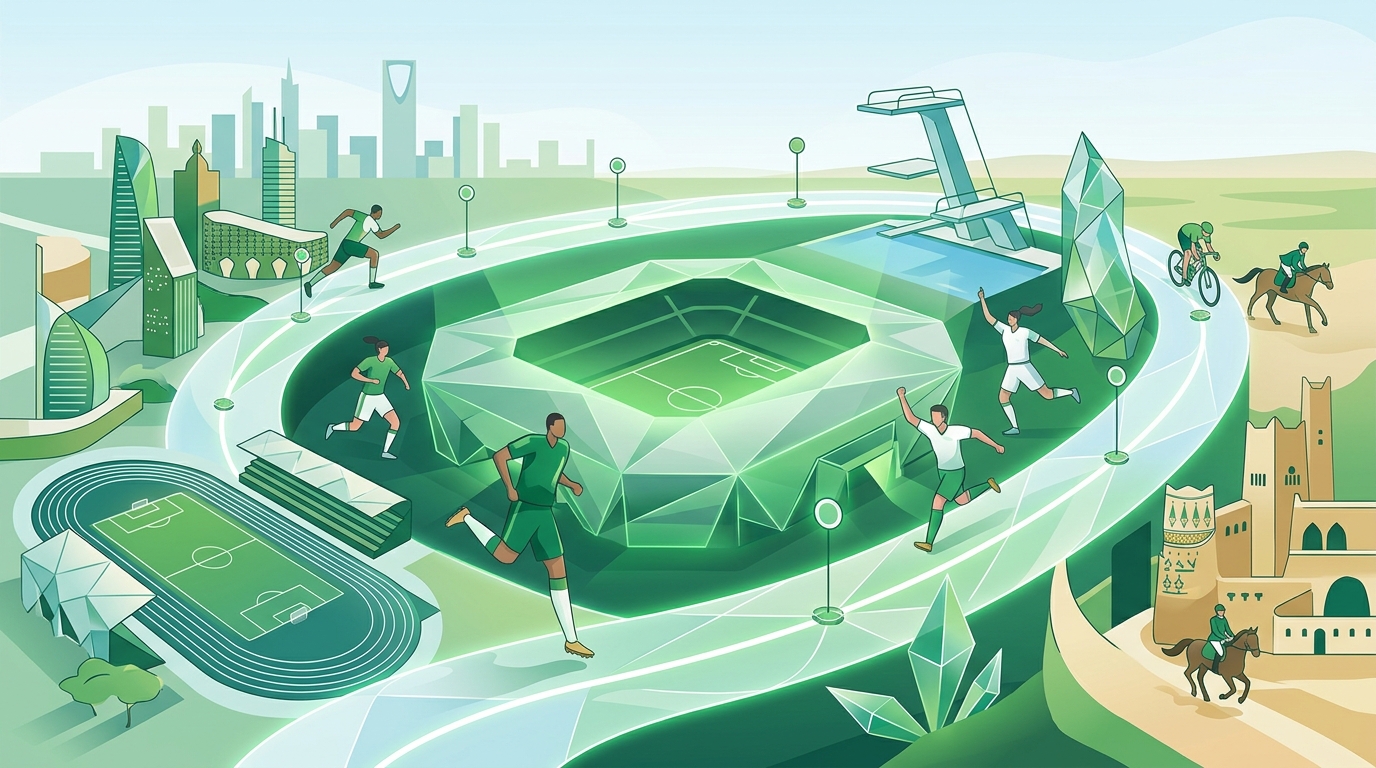
Therefore, the privatization project of Saudi clubs was not just an administrative step aiming to improve efficiency, develop governance, or increase economic returns for sports clubs. At its core, it was an announcement of the transition of sports in the Kingdom from a traditional entertainment activity to a 'national project' capable of reshaping the relationship between society, ambition, identity, and the mental image of the state all at once. It seemed as if Saudi sports were no longer moving only within the boundaries of athletic competition, but within a broader vision that sees stadiums as part of the psychological and civilizational structure of modern society, and part of the soft power through which the Kingdom's regional and global presence is being reshaped.
In major global experiences, sports are no longer a sector isolated from the economy, culture, or general social mood. Instead, they have become one of the most capable spaces for generating collective energy, building confidence, and redefining the image people have of themselves and their society. Thus, the Saudi sports transformation in recent years cannot be reduced to attracting stars, developing infrastructure, or raising the league's market value. What is happening goes much deeper: it is about building a new national state where sports passion becomes part of a broader project that reproduces social vitality and gives society a growing sense of presence, confidence, and ability to compete globally.
From here, Saudi stadiums today seem no longer just venues for temporary competition; they have transformed into spaces where development intersects with identity, ambition with belonging, and the economy with the psychological energy of society. The sports scene itself has become a reflection of a new Saudi philosophy that attempts to build a different model of development—one that does not separate building the individual from building the economy, nor modernizing the state from maintaining society's vitality. It sees that the greatest successes are not those measured solely by numbers, but those that make society more confident, more capable of dreaming, and more feeling that it is a living part of a great historical moment in which the Kingdom moves with unprecedented confidence towards the future.
What gives the Saudi sports transformation this exceptional dimension is that it did not come as a project separate from the comprehensive national transformation the Kingdom is undergoing. Rather, it is deeply aligned with the new Saudi vision that seeks to redefine the state's position in the modern world, not only as a rising economic power, but as a model capable of combining modernity and identity, development and vitality, economy and humanity, global presence and cultural specificity—an equation that has become rare in many contemporary modernization experiences that succeeded in building economies but failed to maintain the psychological and cultural balance of societies.
Today, the world is experiencing a crisis that goes beyond economics and politics into a genuine crisis of meaning. Many countries have achieved unprecedented levels of material prosperity, yet at the same time face a clear rise in social isolation, psychological exhaustion, loss of trust in the future, and erosion of human bonds. Modern humans live in technologically advanced societies that suffer from increasing fragility in the sense of belonging, vitality, and meaning.
The current Saudi model seems to be trying to overcome this disconnect early by building a development project that sees that the economy alone is not enough. The greatest forms of power are not those that merely make the state richer, but those that make society more confident, more capable of dreaming, and more feeling that it is a living partner in shaping the future. Hence, Saudi sports have become one of the most prominent spaces for expressing the 'Saudi school' in leadership and transformation—a school that does not treat humans as mere economic elements within a production and consumption system, but as the real core of development and its deep spirit.
From here, one can understand the personal presence of His Highness the Crown Prince in the sports scene as more than just symbolic support for a successful sector. It reflects a deep awareness that modern sports have become one of the most important spaces for producing soft power and community energy in the world. Major powers no longer build their international presence through economic and military strength alone, but also through their ability to create vitality, transform popular passion into national energy, and make society feel that it is moving within a project that gives it meaning, confidence, and a sense of participation in shaping the future.
Therefore, the great popular interaction with the Crown Prince's presence at Al-Jawhara Stadium was not merely public enthusiasm for a popular leadership figure, but a reflection of a deeper transformation the Saudi society is undergoing today. The national transformation vision is no longer just economic plans or official speeches announced at conferences; it has become a tangible daily experience that citizens see in the details of their lives, in the shape of their cities, in the vitality of the cultural scene, in the development of sports, in the changing lifestyle, and in the image of the Kingdom moving before the world with growing confidence and a rhythm entirely different from what the region has known for decades.
The crowds that filled the stands were not just celebrating a final match; they were indirectly expressing a new state of national confidence—a state where society feels its country is no longer reacting to the world, but is instead forging its own presence and redefining its image by itself. This gives the Saudi sports scene a dimension that transcends sports itself, making it part of the broader psychological and civilizational transformation the Kingdom is experiencing in this historic phase.
Original source: Al-Jazirah


Comments (0)
Be the first to comment.