World Cup Semifinals: Political Interference, Maradonian Nights, and Brazilian Tears
Throughout the history of the World Cup, the semifinals have been defined by moments where the thin line between eternal glory and collapse is drawn. Beyond tactical plans, this pivotal stage has hosted extraordinary tales, conspiracies, iconic injuries, historical meltdowns, and lethal strikes that changed the course of history. Every time the tournament reaches this stage, the pages turn back to its most memorable events.
1962: Political Interference
The 1962 semifinal between host nation Chile and Brazil was incredibly intense. After Brazilian star Garrincha scored twice and delivered a miraculous performance, he was subjected to constant, violent fouls by Chilean players without protection from the referee. This caused him to lose his temper and kick a defender, resulting in a red card—a verbal dismissal, as colored cards had not yet been invented. This meant an automatic absence from the final. Brazil did not accept this, and given the lack of strict automatic suspension regulations at the time, political pressure was applied. Chilean President Jorge Alessandri himself joined the Brazilian administration in filing a petition to FIFA. In an extraordinary and controversial decision, the ban was lifted, allowing Garrincha to play in the final and Brazil to win the title.
1970: 7 Goals
Played between Italy and West Germany on Mexican soil at high altitude, the match took place amidst stifling temperatures that exhausted the players. Italy took an early lead in the 8th minute and defended throughout the match. In the 90th minute, German defender Karl-Heinz Schnellinger scored a dramatic equalizer, sending the teams into extra time, which turned into a footballing epic featuring five goals. Germany took the lead, then Italy equalized and surged ahead, only for Germany to level the score through Gerd Müller in the 110th minute. Scarcely a minute later, Italian Gianni Rivera scored the historic winning goal to make it 4-3. In that match, German legend Franz Beckenbauer suffered a dislocated shoulder. Since Germany had already used its allowed two substitutions, he refused to leave the pitch, insisting on finishing the match with his arm strapped to his body in a famous heroic display.
1982: The Night of Terror in Seville
A charged footballing clash in Spain between European powers France and West Germany. Regulation time ended in a 1-1 draw. In extra time, France shocked everyone by taking a 3-1 lead, but the Germans rallied back to level the match at 3-3. The second half saw a breakaway for French substitute Patrick Battiston, met by German goalkeeper Harald Schumacher charging wildly and jumping into the air, colliding directly with Battiston's face. The French player fell unconscious, lost three teeth, and suffered damaged vertebrae and three broken ribs. Dutch referee Charles Corver did not call a foul, and Schumacher stood cold-bloodedly waiting for the goal kick to be taken. The match headed to the first penalty shootout in World Cup history, where Schumacher excelled to give the Germans a 5-4 victory.
1986: The Legend's Solo Performance
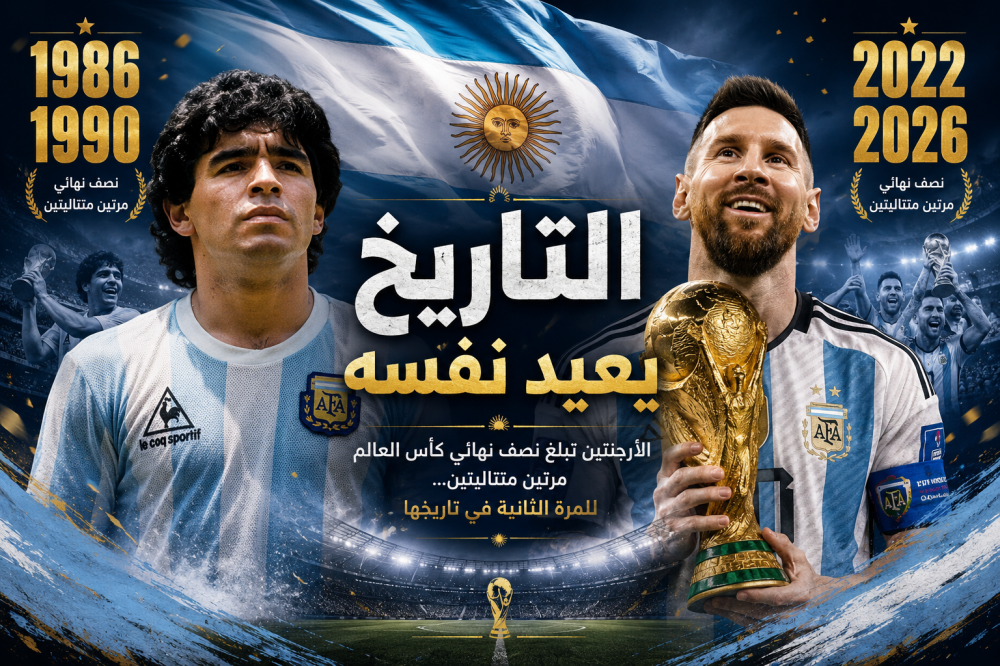
This entire tournament was a stage for a solo performance by Argentine legend Diego Maradona in Mexico. Argentina faced a rigid Belgian defensive setup in the first half that ended goalless. In the second half, Maradona decided to dismantle the defense with his supernatural skill. In the 51st minute, Maradona received a through ball, spotted the Belgian goalkeeper coming out, and flicked the ball with the outside of his boot to score the first goal. The second goal in the 63rd minute was a work of art; Diego received the ball 40 yards from goal, sprinted past four Belgian defenders with deft moves, and fired into the net to secure Argentina's spot in the final, which they went on to win.
1990: Maradona Splits the Heart of Naples
The 1990 semifinal between Italy and Argentina took place in the Italian city of Naples. Maradona was the captain and star of the Napoli club, considered by the city's inhabitants to be a loyal 'footballing emperor.' Before the match, Maradona made clever and controversial statements to the media, asking the people of Naples to support Argentina instead of their own country, Italy, telling them: 'The authorities in Rome only remember you on the night of the match and accuse you of being backward, while I bring you joy all year round.' The stands of the San Paolo stadium were strangely divided between national loyalty and love for Maradona. The epic ended with Argentina eliminating Italy on penalties, after which Maradona faced a fierce campaign of hostility from the Italian media and public (outside of Naples), who considered him 'the devil who stole the country's dream.'
1994: The Swedish Conspiracy
In the 1994 US World Cup semifinal, Sweden faced a strong Brazil side and held firm defensively thanks to tight tactics and strict organization. In the second half, specifically the 63rd minute, a harsh moment occurred for the Swedes when Swedish captain and star Jonas Thern received a straight red card for a strong challenge on Brazil's Dunga—a dismissal the Swedes considered harsh and worthy of only a yellow card. This numerical disadvantage opened the door for Brazilian attacks, leading to the precious winning goal from a Romario header in the 80th minute. After the match, Swedish coach Tommy Svensson made angry, thinly veiled remarks, implying that the 'great powers' at FIFA preferred to see the 'commercially and popularly appealing' Brazil in the final at the expense of Sweden, sparking widespread debate about refereeing fairness.
1998: Thuram the Defender-Goalscorer
Tournament hosts France clashed with dark horse Croatia in Paris. At the start of the second half, Croatian striker Davor Šuker broke the offside trap and shocked the French fans by scoring the opening goal. The player primarily responsible for breaking that offside trap was French right-back Lilian Thuram. Feeling a great sense of responsibility and guilt, Thuram suddenly transformed from a defensive back into a fierce attacker. Just one minute after the Croatian goal, Thuram won the ball himself and exchanged passes with Youri Djorkaeff to score the equalizer. He did not stop there; in the 70th minute, he pressed again, won the ball back, fought for it, and unleashed a wonderful curling left-footed shot that found the Croatian net, securing a 2-1 victory. The miraculous irony is that Thuram played 142 international matches for France throughout his historic career, yet never scored any other goals in his life—only those two, which led France to the historic final and their first title.
2002: Ronaldo's Lock
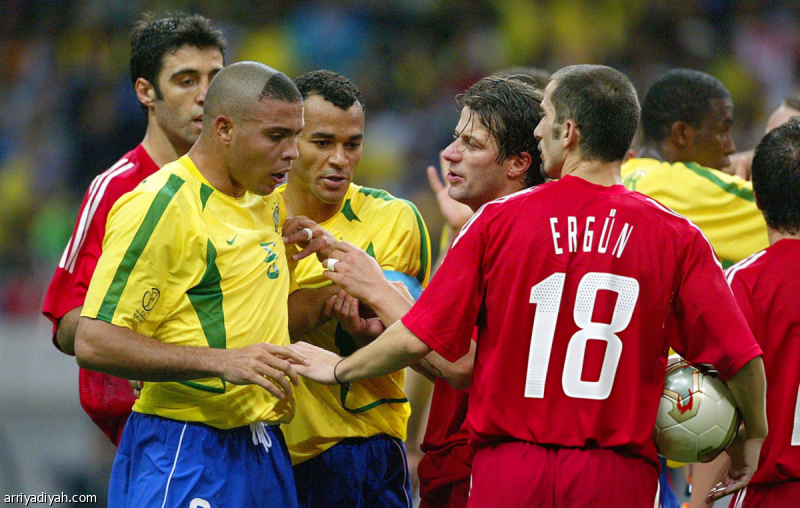
Before the 2002 World Cup semifinal against Turkey, Brazilian star Ronaldo suffered a thigh muscle injury, and the world press talked day and night about his inability to play, creating immense psychological pressure on him and his teammates. To escape the media pressure and distract them from the details of his injury, Ronaldo shaved his hair completely, leaving only a strange lock of hair at the front of his head—a look that later became a famous historical icon. The trick succeeded completely, as the media discourse shifted entirely to mockery and curiosity about his new hairstyle. Ronaldo entered the match free from pressure and scored the ingenious winning goal with the tip of his boot—a 'surprise flick'—leading Brazil to the final where they won the title, with Ronaldo finishing as the tournament's top scorer.
2006: Grosso's Scream
Original source: Arriyadiyah
.jpg)

Comments (0)
Be the first to comment.