Europe fines Google $1 billion for undermining competition
In a decision likely to fuel transatlantic trade tensions and anger President Donald Trump, the European Union imposed a $1 billion fine on Google.
In a decision likely to fuel transatlantic trade tensions, a European Union regulatory body on Thursday fined Google $1 billion, accusing it of 'violating digital antitrust laws and illegally undermining competition through its dominance of the search engine market.'
The action was taken despite the risk of angering President Donald Trump, who has sharply criticized the digital laws of the 27 EU member states. He has previously threatened retaliation if American technology companies are penalized. He is currently considering imposing new tariffs on the European Union and other major trading partners.
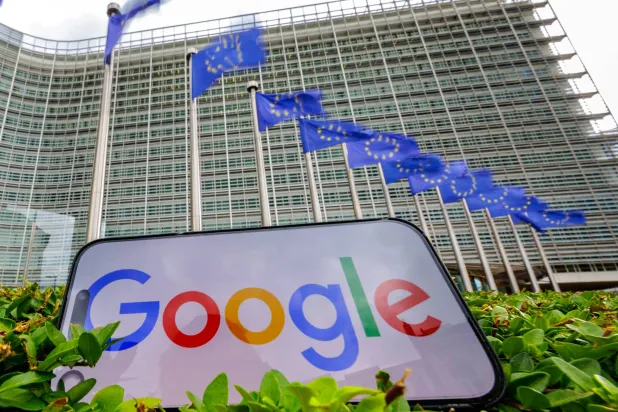
EU headquarters in Brussels (Reuters)
In explaining the fine of 890 million euros, the regulator in Brussels said that 'Google exploited its position as the world's largest search engine to unfairly promote its services in areas such as shopping, travel, games, and translation.' It added that the American company prominently displayed its services at the top of search results pages while hiding competing services at the bottom, and also used unfair restrictions on the Google Play app store that prevent app developers from communicating with users or conducting transactions that would reduce the fees Google collects.
Digital Markets
The European Commission, the EU's executive arm, announced that Google violated the Digital Markets Act, which was enacted in 2022 to prevent the largest technology platforms from using their intertwined services to monopolize users and exclude competitors. It argued that these companies have become so dominant in areas such as online search, smartphones, e-commerce, and social media that they act as gatekeepers determining the fate of other companies, potentially harming competition.
European Commission Executive Vice President Teresa Ribera said in a statement: 'The best products should succeed because they are best, not because they belong to the company that runs the search engine.' She added: 'That is the promise of the Digital Markets Act—protecting fairness, freedom of choice, and innovation in digital markets for the benefit of all European citizens.'
Google logo displayed on a smartphone in front of the European Union flag in Brussels (AFP)
Google has 60 days to comply with the decision, including increasing the prominence of competing internet services, or face additional fines of up to 5 percent of its global revenues.
The company has long been a target for EU regulators over the past decade, having been fined more than 10 billion euros since 2017. Google’s general counsel, Kent Walker, said Thursday's decision would force the company to make changes to its product design, harming services offered to European users. He added: 'This is not fair competition; it's degrading products. Laws should improve products, not harm them.'
The fine is small compared to Google's overall business. Alphabet, Google's parent company, announced on Wednesday that its quarterly profit reached $112.1 billion, boosted by investments in SpaceX and Anthropic.
Trump's Reaction
Officials in Brussels are awaiting President Trump's reaction to Thursday's decision. The White House is expected to announce new tariffs on trade with the European Union and other countries on Friday.
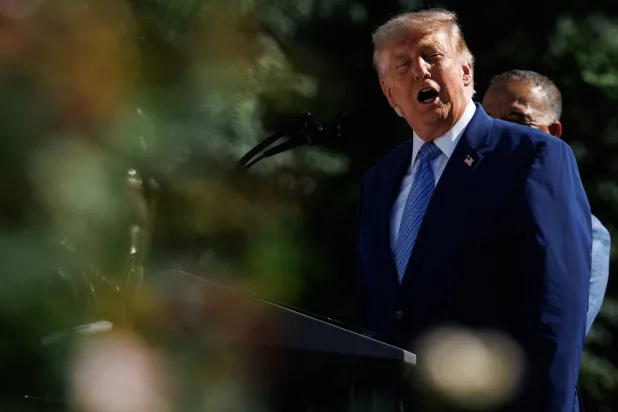
President Donald Trump in the Oval Office at the White House on Tuesday, July 21, 2026 in Washington (AP)
An EU official said the announcement of the fine on Thursday was based on prior expectations—without regard to American trade developments—and would not surprise the Trump administration.
Since his first days back in the White House, Trump has warned of 'retaliatory actions' against regulation of American technology companies.
Over the past month, Trump threatened to impose tariffs on countries that tax digital services of American companies. In December, the Office of the United States Trade Representative stated that European companies, including Swedish music service Spotify, German giant Siemens, and French artificial intelligence startup Mistral, could be targeted with new tariffs or restrictions.
U.S. regulators have also targeted Google. Last year, the company was ordered to share search results and some data with competitors in a historic antitrust case somewhat similar to the Brussels ruling.
European regulators have also targeted Chinese companies. AliExpress, owned by Alibaba, was fined the equivalent of $629 million last week for selling illegal, unsafe, and counterfeit products on its platform. In February, TikTok, owned by ByteDance, was asked to make changes to make its service less addictive.
"); googletag.cmd.push(function() { onDvtagReady(function () { googletag.display('div-gpt-ad-3341368-4'); }); }); }]
Original source: Asharq Al-Awsat


Comments (0)
Be the first to comment.