Astronomers detect natural sugar in space for the first time
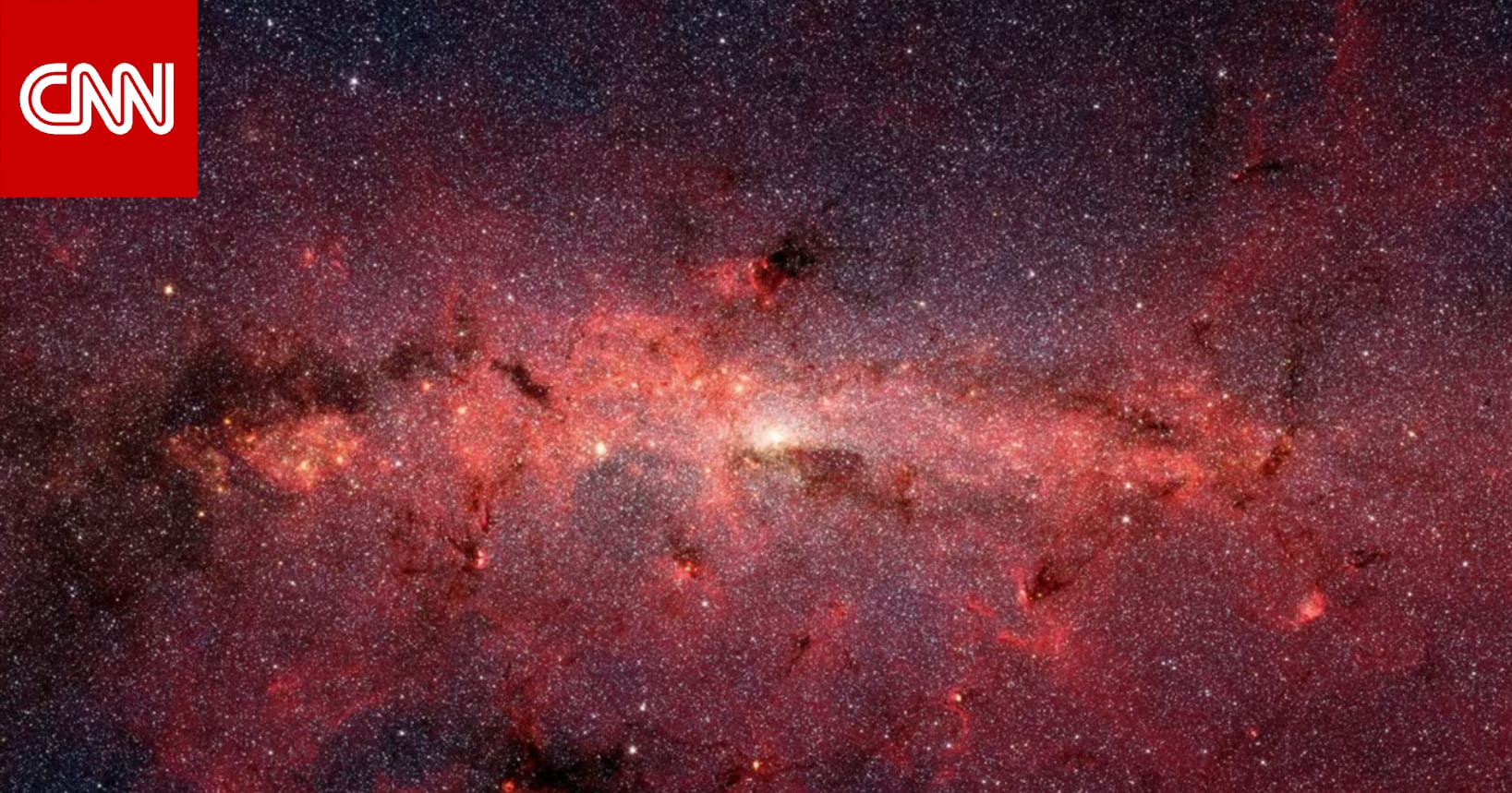
(CNN)-- Astronomers have for the first time detected a natural sugar, found in raspberries, inside clouds of interstellar dust and gas near the center of the Milky Way galaxy.
The discovery shows that compounds essential for life can form in the vast emptiness between stars, raising hopes of finding other molecules important for the origins of life in space.
What are the details?
A team led by astronomers at the Center for Astrobiology in Spain detected this sugar, called 'erythrulose', which consists of 4 carbon atoms.
Sugars are fundamental elements in living systems, providing energy, contributing to biological structures, and participating in the formation of genetic materials such as RNA and DNA.
The researchers used two radio telescopes, one at the Yebes Observatory north of the Spanish capital Madrid, and the other at the Institute of Millimeter Radio Astronomy in southern Spain, to study a molecular cloud named 'G+0.693−0.027' near the center of the galaxy.
The researchers identified the sugar by comparing its molecular fingerprint in the radio wave data from the molecular cloud with the wavelength pattern of erythrulose measured in the laboratory.
The team initially searched for simpler sugars consisting of three carbon atoms, but did not find any.
Izaskun Jiménez-Serra, an astronomer at the Center for Astrobiology in Madrid and the Spanish National Research Council, said in a statement: 'This discovery was unexpected, as the prevailing view in astrochemistry is that interstellar molecules increase in size through the sequential addition of carbon atoms.'
She added in an email: 'Our discovery proves that relatively complex sugars can indeed form in interstellar space before the birth of stars and planets.'
The study explained that erythrulose can form from simpler molecules on icy dust grains in space, and may later become part of more complex chemical systems.
Although scientists have detected more than 340 molecules in interstellar space within the Milky Way, they had not detected any sugars, according to the study.
Mark Sephton, a professor in the Department of Earth Science and Engineering at Imperial College London, who was not involved in the study, said in an email: 'Sugars and related compounds have been found in asteroids, but the detection of these compounds in interstellar space strengthens the idea that the solar system may have been supplied with pre-existing organic compounds.'
Scientists have long wondered how sugars first formed on Earth, as laboratory experiments have shown the difficulty of forming them under the harsh conditions believed to have prevailed during the planet's early history.
The discovery of sugars such as 'ribose' and 'glucose' in primitive meteorites, along with samples collected from the asteroid 'Bennu' in 2020, has supported the hypothesis that some organic compounds may have originated in space.
Sephton believes that these sugars may have been incorporated into asteroids during their formation, and then reached Earth via meteorites.
Yoshihiro Furukawa, a professor of Earth sciences at Tohoku University in Japan, said the discovery is 'interesting,' adding: 'We have been waiting for an actual detection of this kind.'
The researchers estimated that between 500,000 and 50 million metric tons of this sugar may have reached Earth's surface during the 'Late Heavy Bombardment' about 4 billion years ago, when the inner planets of the solar system underwent intense asteroid bombardment, although scientific debate continues about whether this phase occurred.
Erythrulose is found in small amounts in raspberries and some other fruits, and is used in the production of self-tanning lotions and bronzing products due to its reaction with the outer layer of skin.
Carlos Briones, a researcher in molecular evolution at the Spanish National Research Council and the Center for Astrobiology, and a co-author of the study, said in a statement: 'The detection of erythrulose represents an exciting development, because it opens the door to discovering other sugars in space, such as ribose, which is a component of RNA, as well as other molecules important for the origins of life.'
Original source: CNN Arabic





Comments (0)
Be the first to comment.