India achieves milestone with launch of first private-sector orbital rocket

PM Narendra Modi says successful launch will 'encourage countless youngsters to dream bigger and innovate fearlessly'.

By AFP and Reuters
This article was published on 18 Jul 202618 Jul 2026.
India's space programme, traditionally led by the state-run Indian Space Research Organisation (ISRO), is increasingly opening to private players following recent policy liberalisation.
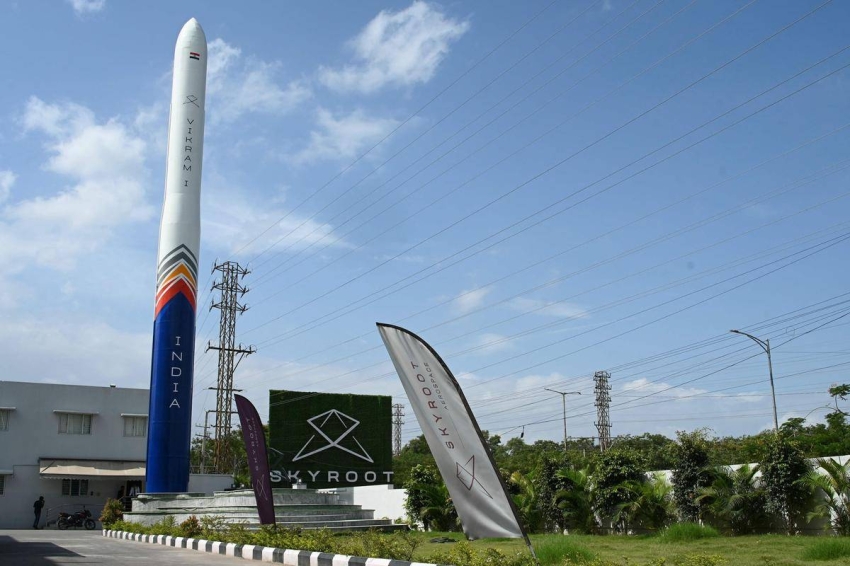
India has successfully tested its first private-sector orbital rocket, marking a milestone in New Delhi’s ambition to become a major player in the global space economy.
The three-stage, 22-metre Vikram-1 lifted off from the Satish Dhawan Space Centre in Sriharikota, successfully placing customer payloads into a 450km (280-mile) low-Earth orbit. This achievement makes India only the third nation to achieve orbital launch capability through private enterprise.
Recommended Stories
list of 3 items
- list 1 of 3India is becoming a shaping power
- list 2 of 3India succeeds in historic space docking mission: Why it’s a big deal
- list 3 of 3Tata-ASML deal: How significant is it for India’s semiconductor push?
end of list
Vikram-1 can carry a payload of up to 350kg (772lb) and is equipped with robotic arms that can clear space debris.
It also carried experimental equipment, a lab-grown diamond and a miniature 18-carat gold sculpture commemorating India’s national space programme.

Indian Prime Minister Narendra Modi praised the achievement, stating it will “encourage countless youngsters to dream bigger and innovate fearlessly”.
The test validated the rocket’s propulsion, avionics, telemetry, guidance, navigation and control systems during flight, according to manufacturer Skyroot Aerospace.
Founded in 2018, Skyroot is among a new generation of Indian space startups that have attracted backing from global investors following the sector’s liberalisation.
It became the first space-sector company in the country to hit a $1bn valuation earlier this year.
Skyroot celebrated the successful mission with a post on X stating: “Hello space, we have arrived!”
Vikram-1 improves upon Skyroot’s Vikram-S mission in 2022. That suborbital flight reached space but did not place payloads into orbit.
The company plans further test flights before starting routine commercial missions. It is another milestone for India’s burgeoning private and public space programmes.
India’s national space programme previously launched 104 satellites into orbit on one rocket in 2017, setting a record at the time.
Six years later, India became the fourth country in the world to complete a lunar landing when Chandrayaan-3 landed near the moon’s south pole.
The successful test flight validates Skyroot's technology and moves the company closer to commercial operations. With its $1bn valuation and strong investor backing, Skyroot is poised to capitalise on the growing demand for small satellite launches, boosting India's share of the global space economy.
Original source: Al Jazeera





Comments (0)
Be the first to comment.