India debuts hydrogen-powered train as part of sustainability drive

India joins a handful of countries that have successfully deployed the zero-emission technology in their rail networks.
This story was reported by Reuters and The Associated Press.
India has been aggressively pursuing clean energy alternatives across multiple sectors, including transportation.
Published On 17 Jul 202617 Jul 2026
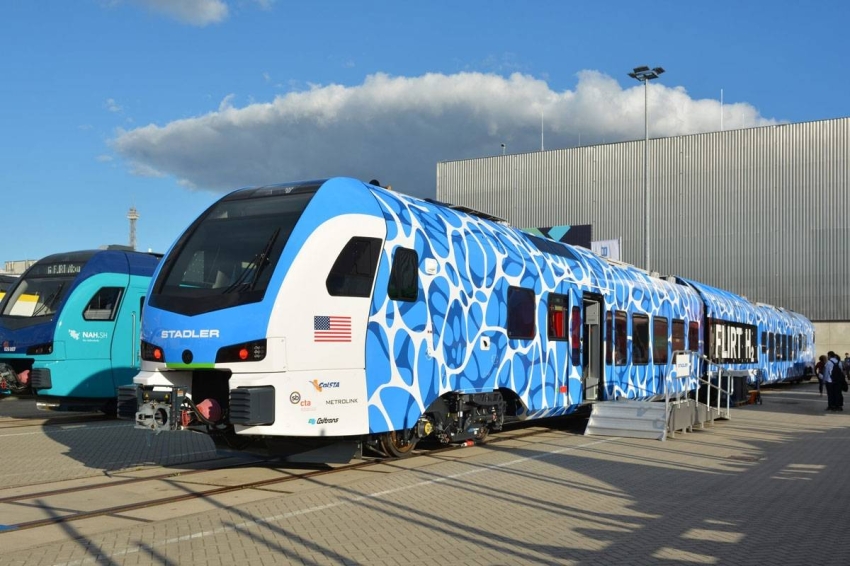
India has introduced its first homegrown hydrogen-powered train, part of its drive to broaden clean energy adoption.
Prime Minister Narendra Modi inaugurated the locomotive ahead of its first trip on Friday, hailing the event as a significant day for India’s drive to become self-reliant and sustainable. The introduction of the train sees India join just a handful of countries that have successfully deployed the zero-emission technology in their rail networks.
Recommended Stories
list of 2 items
- list 1 of 2India prepares contingency plans due to weak monsoon season
- list 2 of 2India is becoming a shaping power
end of list
Called the 'NaMo Green Rail'—an acronym incorporating the Prime Minister's initials—the train will operate two round trips daily on a 90-kilometer route between Jind and Sonipat in Haryana. The 10-car train accommodates roughly 2,600 passengers and reaches speeds of 75 km/h.
Designed, engineered and built in India, the NaMo produces only heat and water vapour when running, making it an attractive alternative to diesel.
While India has already electrified almost all of its 70,000km railway network, one of the largest in the world, hydrogen trains can plug the gap where electrification is not possible.
Other countries operating hydrogen-powered trains include Japan, China, the United States and Germany, which launched the world’s first hydrogen-powered fleet in 2022.
The rollout is part of India’s wider push to expand use of hydrogen and cut its carbon emissions, with the government aiming to make the country’s railways net-zero by 2030.
Prime Minister Modi has long pushed other clean-energy efforts too, from expanding renewables to advancing India’s nuclear energy programme.
While the country still struggles with enacting effective climate policy, the launch of NaMo Green Rail marks another step towards a green transition.
The launch of the hydrogen train underscores India's commitment to reducing carbon emissions from its vast railway network. With almost all tracks already electrified, hydrogen power fills the gaps where overhead wires are impractical. Achieving net-zero rail by 2030 will require scaling up such technologies and overcoming cost and infrastructure challenges.
Original source: Al Jazeera



Comments (0)
Be the first to comment.