KAUST develops optical digital fingerprint for devices to replace passwords
Researchers at KAUST have developed a unique optical digital fingerprint for electronic devices using laser chips and AI, promising to replace passwords and enhance network security. The technology has been tested with high speed and low power consumption.
KAUST develops optical digital fingerprint for devices to replace passwords
2026-07-08T10:29:27.296Z
Researchers at King Abdullah University of Science and Technology have developed an innovative technology that gives each electronic device a unique optical 'digital fingerprint,' based on embedded laser chips and artificial intelligence for identity recognition. The new solution promises to reduce reliance on traditional passwords and enhance security of large-scale, low-power networks.
Researchers at King Abdullah University of Science and Technology (KAUST) have developed an innovative technology that gives each electronic device a unique optical fingerprint derived from its physical characteristics, which could in the future eliminate the need for passwords and traditional security keys in verifying the identity of devices connected to digital networks.
The study, published in the journal Nature Electronics, highlights one of the growing challenges in modern digital infrastructure: the need to verify the identity of devices connected to networks has become more urgent as their numbers increase. Traditional methods rely on passwords or digital security keys that are susceptible to theft or duplication, as well as being complex to manage at scale.
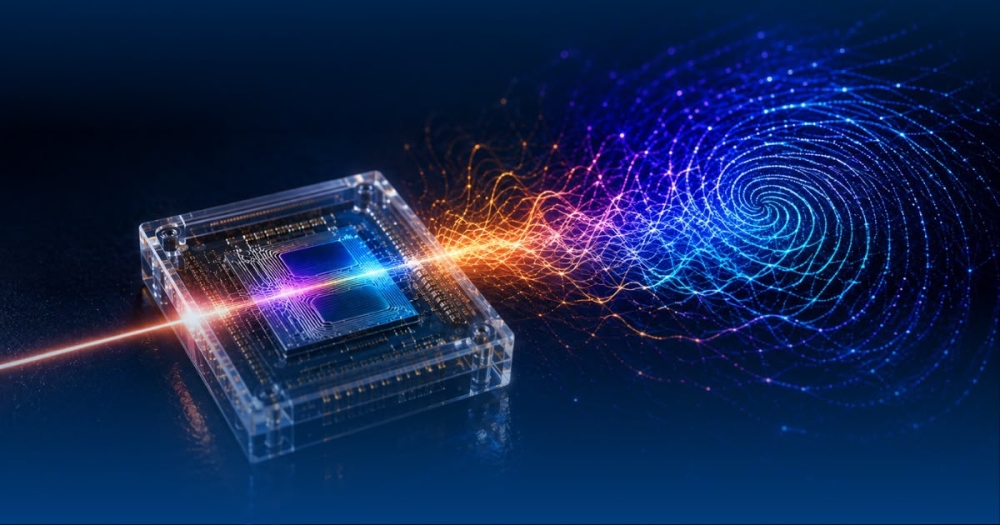
The new technology relies on tiny laser chips embedded inside each device, which produce laser beams that generate a distinctive optical code that does not match any other device, much like fingerprints. Artificial intelligence is used to recognize and verify this fingerprint at high speed, making it extremely difficult to forge or copy a device's identity.
Assistant Professor Yating Wan, who led the research at KAUST, said: 'All devices connected to digital networks need a reliable way to prove their identity. Today, this often relies on passwords or security keys stored within the system. Our approach explores the possibility that devices can rely on their inherent physical characteristics to prove their identity, without the need for traditional credentials.'
This technology holds promising potential for enhancing the security of large-scale digital networks, with potential applications including cloud computing, AI infrastructure, the Internet of Things, and digital systems in industrial and service sectors.
Laboratory tests demonstrated the system's ability to perform identity verification operations at very high speeds with low power consumption, making it suitable for future computing systems that require advanced levels of performance and efficiency.
Wan added: 'With the continuous expansion of AI applications and cloud services, the need for new security solutions that operate efficiently at scale is growing. This study highlights how optical, laser, and AI technologies can be integrated to develop innovative methods to address this challenge.'
The research team at KAUST continues to study ways to integrate this technology into future computing and communication systems, contributing to building a more secure and reliable digital infrastructure.
Original source: Sabq



Comments (0)
Be the first to comment.